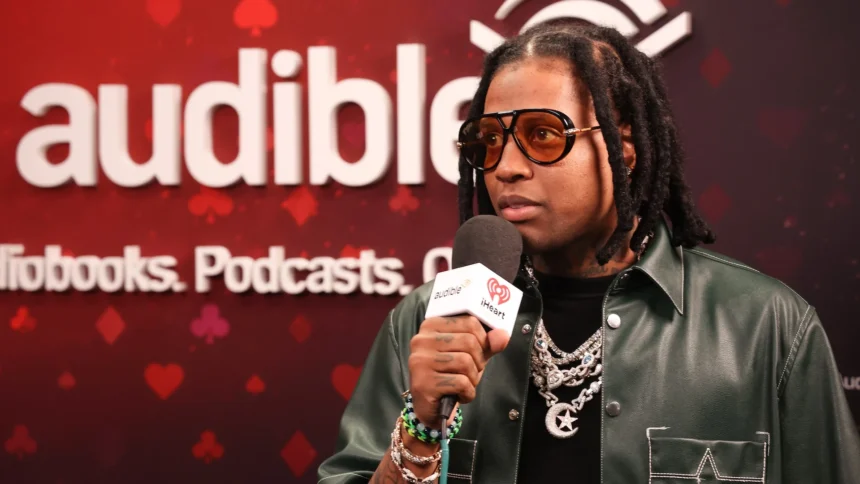

The jurors in Lil Durk’s murder-for-hire trial are already sending notes to the judge asking when it will all be over, which tells you something about how long this case has felt from inside that courtroom.
Judge Michael W. Fitzgerald addressed the jury’s note on Wednesday, September 2, letting them know the trial will tentatively wrap up by next Wednesday.
The judge has a personal deadline of his own here. Fitzgerald is planning a vacation by the end of September, and that timeline is now shaping how quickly the case moves toward deliberations.
The trial kicked off on August 24 in Los Angeles, centered on a 2022 shooting at a Mobil gas station near Beverly Center that left Saviay’a Robinson, known as Lul Pab, dead.
Robinson was a distant cousin of rapper Quando Rondo, and prosecutors allege the hit was actually aimed at Rondo himself, ordered by Durk Banks in retaliation for the November 2020 murder of King Von.
Three cooperating witnesses have already taken the stand and pointed directly at Banks as the person who orchestrated the whole thing, even though he was not physically present at the shooting.
Kacey Hester, Keith Jones, and Kayvon Grant have each testified that Banks was the mastermind behind what happened at that gas station.
Grant’s testimony added another layer this week, with him alleging that there was a previous attempted hit on Rondo in Atlanta back in 2021, and that Durk ordered him to arrange it. That detail paints a picture of a longer, more deliberate campaign rather than a single impulsive act.
Also tied to the case is Marcus Smart, known as Muwop, who is already serving a life sentence for the 2020 murder of Chicago rapper FBK Duck.
His involvement connects this trial to a wider web of violence that has already resulted in at least one life sentence for someone in the same orbit.
Co-defendants Deandre Wilson and David Lindsey are also alleged to have participated in the Robinson shooting, meaning Banks is not the only one facing serious consequences from this case.
But Banks is the one facing up to five charges, including conspiracy and use of interstate facilities to commit murder-for-hire resulting in death, which together carry a maximum sentence of life in prison.
The defense, naturally, has pushed back on the credibility of the cooperating witnesses, who all have their own legal situations and potential incentives to testify against Banks.
That tension between what the witnesses are saying and why they might be saying it is likely to be a central theme when closing arguments roll around.
The jury has now heard weeks of testimony pulling in different directions, and the fact that they are already asking about the finish line suggests the weight of the case is not lost on them.
Deliberations could begin as early as next week, and whatever verdict comes out of that room will carry consequences well beyond the courtroom.