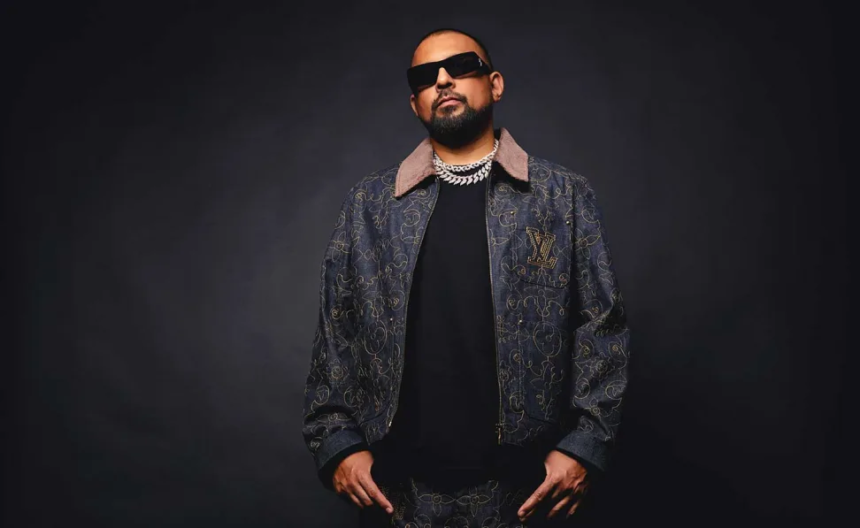

If you have ever found yourself instinctively moving to a pounding handclap rhythm on a dance floor, the track responsible may well be Sean Paul’s “Get Busy.”
The get busy meaning is deceptively direct: it is a dancehall artist’s invitation, addressed specifically to women in the dance, to move without restraint, shake their hips, and inhabit the moment completely.
But beneath that imperative lies a more layered story involving a landmark riddim, a breakthrough album, and a chart run that rewrote what dancehall could accomplish on the global stage.
Here is everything you need to know about “Get Busy,” from its production origins to its lyrical philosophy.
Basic Facts: Release, Credits, and Label
“Get Busy” is a song by Jamaican dancehall singer Sean Paul, released on 27 January 2003 as a single from his album Dutty Rock, on the VP and Atlantic labels.
The track runs 3 minutes and 32 seconds and is classified under the genres of dancehall and hip-hop. Songwriting credits are shared between Sean Henriques (Sean Paul’s legal name) and Steven Marsden, with Marsden also serving as producer.
It was the second single from Sean Paul’s breakthrough album, Dutty Rock. The album was first released on November 16, 2002, and was later re-released in September 2003 to cater more to international markets.
What Does “Get Busy” Actually Mean?
In dancehall culture, the phrase “get busy” carries a meaning rooted in the physical act of dancing. “Get busy” functions as an abbreviated way of Sean Paul saying “get busy by shaking your ass”, the song serves the specific purpose of encouraging women in the dance hall to move.
The lyrics are a celebration of female dancers, their energy, and their confidence. Sean Paul acts as both an MC and an admirer, guiding the party while praising the women who are its lifeblood.
The chorus reinforces this through a direct address to the crowd, urging women not to hold back. The line “It’s all good, girl, turn me on” functions as a cornerstone of the song, encapsulating the sensory experience it aims to deliver.
It forms the crux of an interaction that is celebratory, flirty, and exemplary of the reciprocal nature of performance.
Far from being a mere insistent plea for physical attraction, this line emphasizes consent and mutual enjoyment as integral to the experience.
Sean Paul was drawn to the riddim’s heavy drum and bass. He intentionally incorporated American slang like “jiggy” and “crunked up” to make the track more accessible to a US audience, aiming to bridge the gap between Jamaican dancehall and mainstream American pop radio.
The Women Named in the Intro: A Personal Detail
One of the most immediately recognizable elements of “Get Busy” is its opening, in which Sean Paul shouts out several women by name.
While on his way to the studio, Sean Paul’s then-girlfriend (now wife, Jodi) and her friend Cana called him, and Cana asked to be put in the song. The “Jodi” in the lyric “Shake dat ting, yo, Donna Donna / Jodi and Rebecca” is, in fact, his wife.
It is a small but telling detail: what sounds like a generic dancehall roll call was, at its origin, a spontaneous, personal gesture that made it into one of the defining records of the early 2000s.
The Diwali Riddim: The Beat That Changed Everything
To understand “Get Busy,” you must understand the instrumental foundation it is built upon. The style of this song is properly known as the “Diwali Riddim.”
The term “riddim” is the Jamaican pronunciation of the English word “rhythm,” but in Jamaican music it means specifically the instrumental accompaniment to a vocal, usually a rap.
Riddims are the primary musical building blocks of Jamaican popular songs. “Diwali,” then, is one of these riddims, created by the song’s producer, Lenky Marsden.
In 1998, Jamaican producer Steven “Lenky” Marsden created “Diwali Riddim.” Named after the Hindu festival of light, it consists of a series of distinct, syncopated handclaps, a hypnotic sound harking to the music played at Punjabi folk dances, called Giddha.
The rhythm which ties the handclaps and Giddha together is characteristic of that commonly associated with the Dhol, a large, double-headed drum whose origins can be traced back to the 15th century.
Released in May 2002, the Diwali Riddim soared across borders, genres, and generations, but were it not for Steven “Lenky” Marsden’s persistence, the dancehall blockbuster might have never left the ground.
When the producer first shopped the backing track around in 1998, nobody understood it. At best, deejays considered the clap-filled tune odd; at worst they called it annoying.
The riddim eventually gained momentum organically. Steven “Lenky” Marsden’s Diwali Riddim landed in 2002 on Greensleeves Rhythm Album #27 and through 40/40 Productions, the label Marsden founded after years as a musician and sideman.
Hearing the riddim getting airtime, and on the strength of the Rhythm Album sales, VP Records contacted Lenky about working with one of their rising stars, Sean Paul. At this point, Paul was well acclimatized to the riddim process.
Lenky was also instrumental in shaping the song’s vocal melody, pushing Sean Paul beyond a simple, linear hook to create the more melodic and catchy chorus that defines the track.
The Diwali Riddim proved to be far more than a one-hit foundation. It underpinned hits like Sean Paul’s “Get Busy,” Wayne Wonder’s “No Letting Go,” and Rihanna’s “Pon De Replay,” among others, and has had a lasting impact, recognized as one of the most influential rhythms in reggae history.
You can also hear the Diwali claps in Brick and Lace’s “Love Is Wicked” from 2007, or within Ed Sheeran’s “Shape of You” from 2017.
Chart Performance: Number One Against the Odds
The commercial story of “Get Busy” is extraordinary. Thanks to a major boost in airplay, Sean Paul’s “Get Busy” ended the nine-week reign of 50 Cent’s “In Da Club” on Billboard’s Hot 100. In making the 2-1 jump, Paul earned his first number one on the main singles chart.
Spending 32 weeks on the Hot 100 and peaking at number one, “Get Busy,” from Paul’s Grammy Award-winning Dutty Rock album, almost instantly became a party anthem when it was released in January of 2003.
The song went to the top of the US Billboard Hot 100 for three weeks and also reached number one in Italy and the Netherlands, becoming a top-10 hit in an additional 11 countries.
In the UK, the single debuted on the Official Charts on 24 May 2003, peaking at number four and spending five weeks in the top ten.
The song ranked third on the Billboard Hot 100 year-end chart in 2003 and 50th on the Billboard Hot 100 2000s total settlement chart.
The Album Behind the Single: Dutty Rock
“Get Busy” was the commercial centerpiece of an album that became a landmark for dancehall globally. Sean Paul’s Grammy Award-winning sophomore album Dutty Rock has been certified triple platinum in the United States.
The album surpassed the sales and streaming equivalent of 3,000,000 units sold in the US, as certified by the Recording Industry Association of America (RIAA).
Dutty Rock has sold over six million units worldwide.
Dutty Rock earned Sean Paul his first Grammy Award for Best Reggae Album at the 46th Annual Grammy Awards in 2004, recognizing its pivotal role in elevating dancehall music.
The album also led to a nomination for Best New Artist in the same year. He was also nominated that year for Best Male Rap Solo Performance for “Get Busy” specifically.
Dutty Rock peaked at number nine on the US Billboard 200 albums chart and featured five top-15 hits on the Billboard Hot 100, namely “Get Busy” and “Baby Boy” with Beyonce, which both peaked at number one, “Gimme the Light” which peaked at number seven, “Like Glue” which peaked at number 13, and “I’m Still in Love with You” with Sasha, which peaked at number 14.
The Legacy: Pop Culture and Enduring Resonance
“Get Busy” crossed well beyond radio and club culture into film, television, and gaming. Sean Paul performed “Get Busy” on Saturday Night Live in 2003.
It has also appeared in episodes of The Wire, in the 2003 film Grind, and even in a commercial for Carl’s Jr. restaurants. In 2006, it was featured on The Office episode “Booze Cruise.”
The song was also featured on the rhythm video game DJ Hero 2 and the 2005 dance video game Dance Dance Revolution Extreme 2.
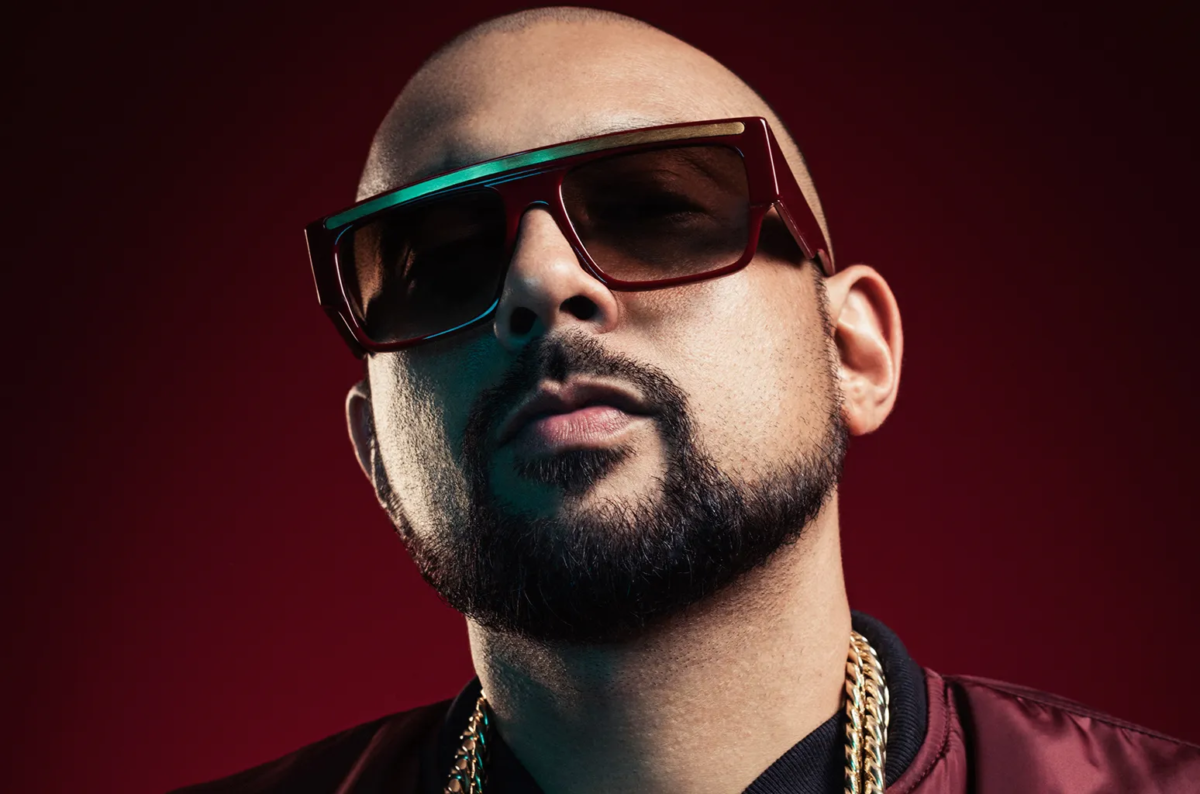
A remix also extended the track’s reach. A popular one is “Get Busy (Clap Your Hands Now),” which features guest rappers Fatman Scoop and The Crooklyn Clan.
More than two decades after its release, Sean Paul has spoken candidly about what the song means to him now. It has been over 21 years since the anthem topped the Billboard Hot 100.
“It’s changed for me now,” Sean Paul told The Associated Press, reflecting on the song’s legacy. “Because when I say, ‘Get busy,’ I’m telling the kids to do their homework or clean stuff up.”
The self-deprecating humor aside, his artistic vision for the track remains clear. He describes it as “a timeless piece,” saying: “Every time I try to do a song, I try to put the same butterflies that I had in my belly when I was flirting with the first girl on the first dance floor I went to. It’s just a feeling.” That translates to his goal of bringing positivity to the masses.
Why “Get Busy” Still Matters
The get busy meaning is, at its most literal level, a command to dance. But the track’s staying power comes from everything surrounding that command: a riddim that drew from South Asian folk music and reshaped global pop, a personal backstory woven into its opening bars, and a chart run that proved dancehall could hold the top of the Billboard Hot 100 against any challenger.
Lenky’s handclap-heavy groove soundtracked three major hits in the summer of 2003 and helped dancehall cement its US takeover.
“Get Busy” was the loudest proof of that conquest, and more than two decades on, the beat still works exactly as intended.