

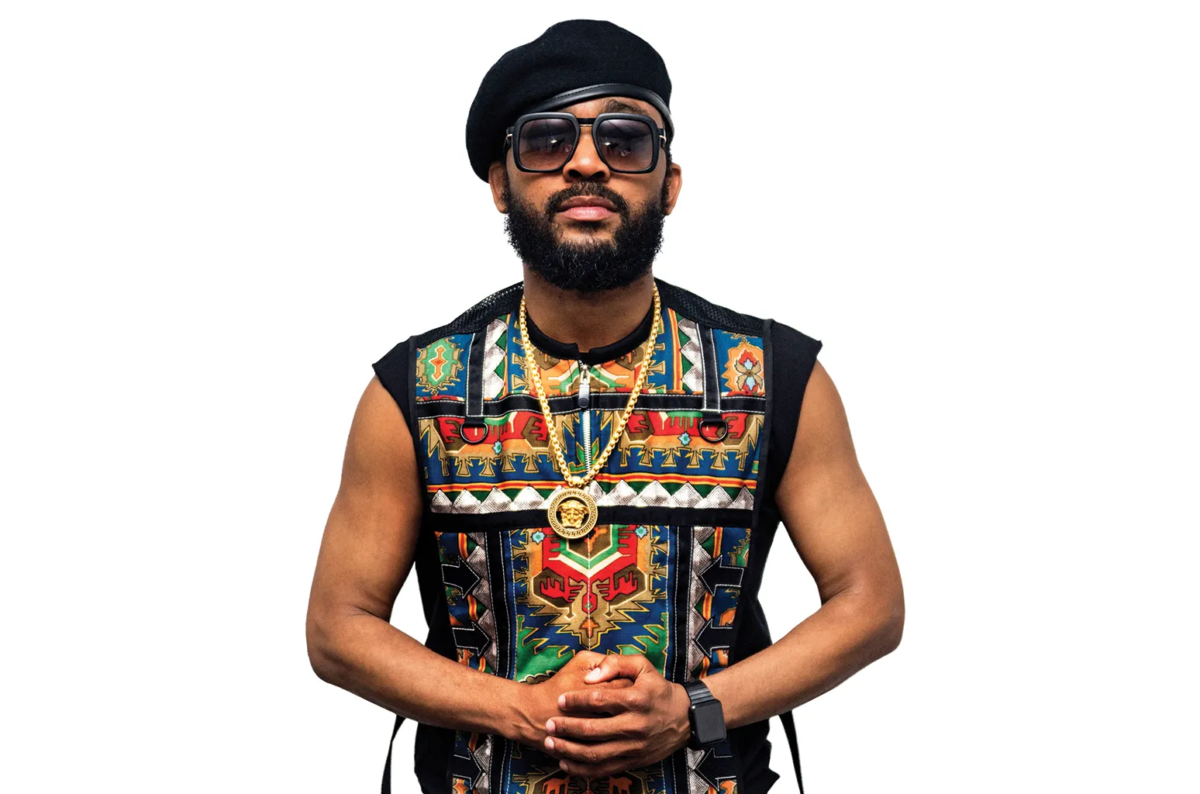
Machel Montano was seven years old when he first stepped on stage in 1982, and now, more than four decades later, Brooklyn Public Library is dedicating an entire exhibition to the life he has built since.
“Journey of a Soca King: The Exhibition” opens August 22 at Central Library, created by the Machel Montano Foundation for Greatness and spread across programming at branches all over the borough.

The exhibition brings together costumes, trophies, and vinyl records pulled from Montano’s career, giving visitors something physical and tangible to connect with rather than just a timeline on a wall.
Central Library’s vinyl listening station will let people actually hear his music in the space, which makes the whole thing feel less like a museum piece and more like an active celebration.
Montano’s story is genuinely hard to compress into one room. He released his debut album “Too Young To Soca” in 1985 when he was still a kid, and it landed to widespread acclaim, setting the pace for everything that followed over the next five decades in soca music.
Soca itself originated in Trinidad and Tobago, Montano’s home country, and his role in pushing the genre to global audiences is a thread that runs through everything the exhibition is built around.
Caribbean culture has a deep footprint in Brooklyn, which makes the choice of venue feel deliberate and fitting rather than coincidental.
The exhibition also connects directly to the 2026 documentary “Like Ah Boss: Journey of a Soca King,” which centers on Montano’s life and career in a longer-form format. Having both the film and the physical exhibition in close proximity gives fans and newcomers two completely different entry points into his world.
For the Brooklyn Caribbean community specifically, this kind of institutional recognition carries real weight. BPL choosing to platform soca at this scale, with branch programming extending beyond just Central Library, signals that the library is treating this as a borough-wide cultural moment rather than a niche event tucked into one corner of the building.
There is also something worth sitting with in the fact that a public library is the venue here, not a concert hall or a private gallery.
Libraries carry a different kind of authority and accessibility, and placing Montano’s legacy inside one puts his contribution to Caribbean music on the same shelf, literally and figuratively, as history that gets preserved and passed down.

Montano has spent his entire life performing, recording, and representing a genre that does not always get the mainstream recognition it deserves outside of carnival season.
An exhibition like this, built by his own foundation and hosted by one of New York’s most visited public institutions, pushes back against that in a quiet but direct way.
The opening date of August 22 lands well within the summer, when Caribbean cultural energy in New York tends to run high ahead of the West Indian American Day Carnival in September.
The timing feels less like a coincidence and more like the whole thing is part of a much bigger conversation still being written.