
The Bob Marley estate net worth is one of the most debated figures in music industry finance, and with good reason: no two credible sources land on the exact same number.
What is beyond dispute is that more than four decades after his death, Bob Marley remains one of the highest-earning deceased artists on the planet, commanding tens of millions of dollars every year from music royalties, global licensing, branded consumer products, cannabis ventures, and now live theatrical productions.
This article cuts through the noise, using documented sources to build the clearest picture available of what the Marley estate is worth, where the money comes from, and how the family has managed to grow a $11.5 million estate at death into a global enterprise.
What Was Bob Marley Worth When He Died?
Bob Marley was a Jamaican reggae singer, songwriter, and musician who had a net worth of $11.5 million at the time of his death in 1981. That is the same as around $40 million in today’s inflation-adjusted dollars.
The size of that number has itself been contested. Forbes placed his estate at $11.5 million at the time of his death in 1981, which in today’s inflation-adjusted dollars represents somewhere in the vicinity of $30 million. Regardless of the precise starting point, the trajectory since then has been extraordinary.
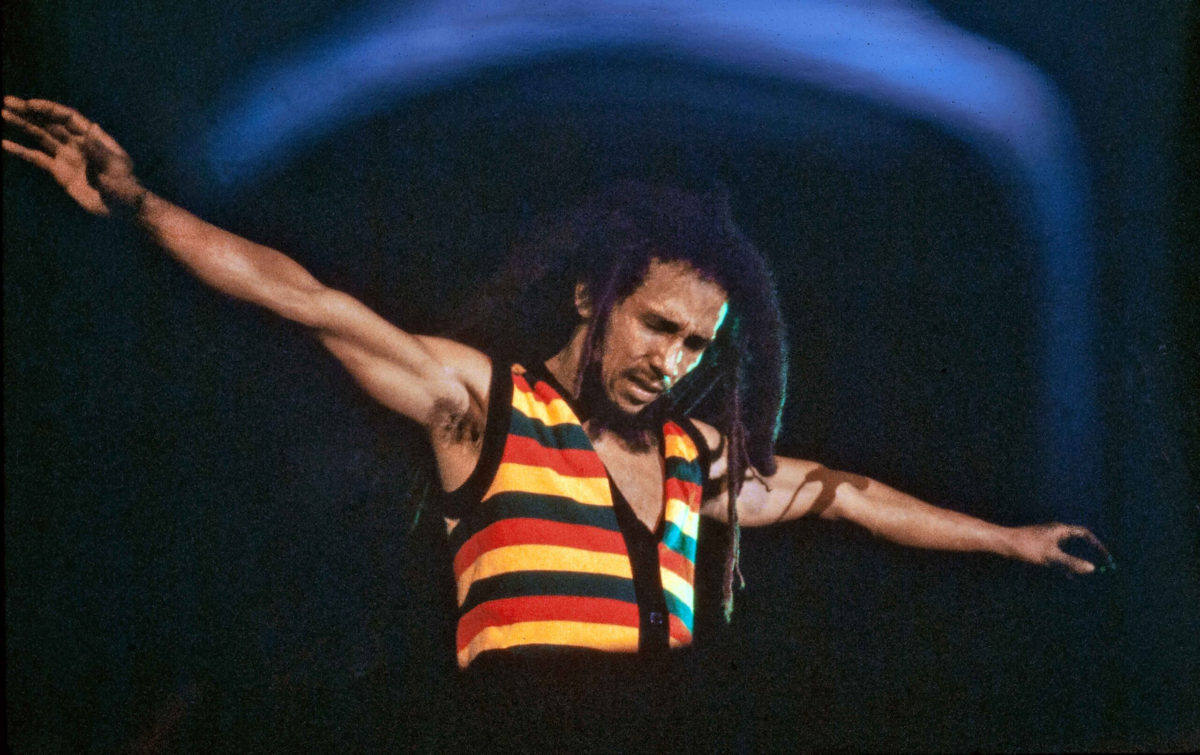
One complicating factor from the outset was legal. Bob died without a will, reportedly because his Rastafarian faith prohibited him from acknowledging his own mortality through the creation of something like a will.
That fact led to legal and family challenges over his estate, including who would control the rights to his music, image, and brand. With time, his widow Rita Marley and his offspring gained access to a large portion of the legacy.
Bob Marley Estate Net Worth: What the Sources Say
Estimates of the overall Bob Marley estate net worth vary widely depending on methodology, and readers should treat any single figure with caution.
Today, the estate generates $25 to $30 million per year in royalties for the family. If Bob Marley were alive today, he would personally be worth well over $200 million, according to Celebrity Net Worth.
The estate is estimated to be worth at least $30 million, but some believe it could be as much as $500 million due to his posthumous success. That upper figure, however, conflates authorized and unauthorized revenue.
Forbes estimates that unauthorized sales of Marley music and merchandise generate more than half a billion dollars annually, though the estate disputes this.
The estate only benefits from the authorized, legal deals. On those alone, it generates $25 to $30 million per year in royalties for the family.
In summary, the most defensible range, drawing on multiple sources, places the total estimated value of the Bob Marley estate between $130 million and $500 million, with annual authorized earnings of $13 million to $34 million depending on the year and what business events occurred in that cycle.
The Forbes Dead Celebrities List: A Year-by-Year Benchmark
Forbes provides the most rigorous annual snapshot of estate earnings because its methodology is defined: pretax earnings from sales, streams, licensing deals, and other sources within a twelve-month window.
Forbes reported that the Marley brand made $16 million in 2023. The singer comes in at No. 9 on the list of Highest Paid Dead Celebrities for 2023, marking his return to the list after a hiatus the previous year.
In 2021, Marley landed at No. 11 on the Forbes list with the same earnings, and in 2020 he made $14 million to land at No. 8.
Then came 2024, and a significant step change. Bob Marley’s earnings doubled since the prior year, propelling him up two spots on Forbes’ 2024 Highest-Paid Dead Celebrities list, with his estate generating $34 million between October 31, 2023 and September 30, 2024. The reggae legend’s earnings spiked in 2024 thanks to the release of his biopic, Bob Marley: One Love.
The biopic effect was temporary by design. In 2025, Marley ranked No. 9, down from No. 7 the prior year when his estate generated $30 million, largely due to the release of the One Love box office hit film. Bob Marley earned $13 million in 2025 on the Forbes list.
Revenue Stream 1: The Music Catalog
Marley’s records have sold more than 75 million copies worldwide, making him one of the best-selling artists of all time. That catalog is the bedrock of everything.
The posthumous compilation Legend, released in May 1984, remains the central commercial pillar. The iconic 1984 album Legend, a compilation released posthumously, remains one of the best-selling reggae albums of all time, solidifying the Bob Marley estate’s enduring legacy.
Legend is the best-selling reggae album of all time, certified ten times platinum. Out of the top ten reggae albums, only Bob Marley’s Legend held a pop presence on the Billboard 200, indicating that the sales of other records are marginal by comparison.
On the streaming side, the numbers are substantial. Streaming platforms like Spotify and Apple Music generate $10 to $12 million annually in royalties, with his 1977 album Exodus consistently ranking among the most-streamed reggae albums.
Ownership of the catalog is layered. Universal Music Group and the Marley family jointly manage Marley’s music catalog, with royalties supporting the Marley estate and his family.
The Marley estate owns the intellectual property rights to his songs, which are licensed through Universal Music Group. A third party also holds a significant stake.
In 2018, Island Records founder Chris Blackwell signed a $50 million deal that gave Primary Wave a controlling interest in his stake in Marley’s song catalog, investing the company in the projection of Marley’s music to a newer generation.
Specifically, Blackwell signed a $50 million deal that gives Primary Wave an 80 percent share of Island Records founder Chris Blackwell’s share of two publishing catalogs, Marley’s songs and Blue Mountain Music.
Marley’s music catalog is valued at around $100 million, with consistent revenue from sales, streaming, and licensing.
Revenue Stream 2: The Biopic Catalyst
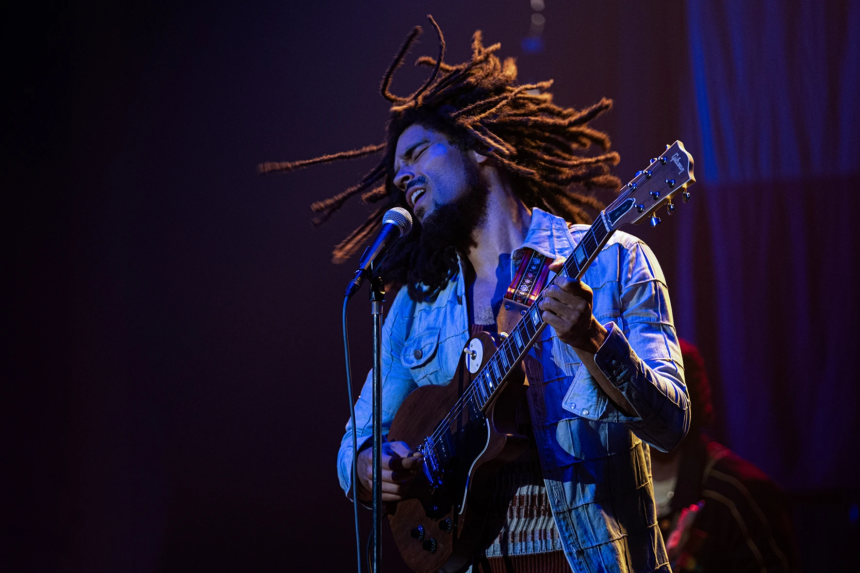
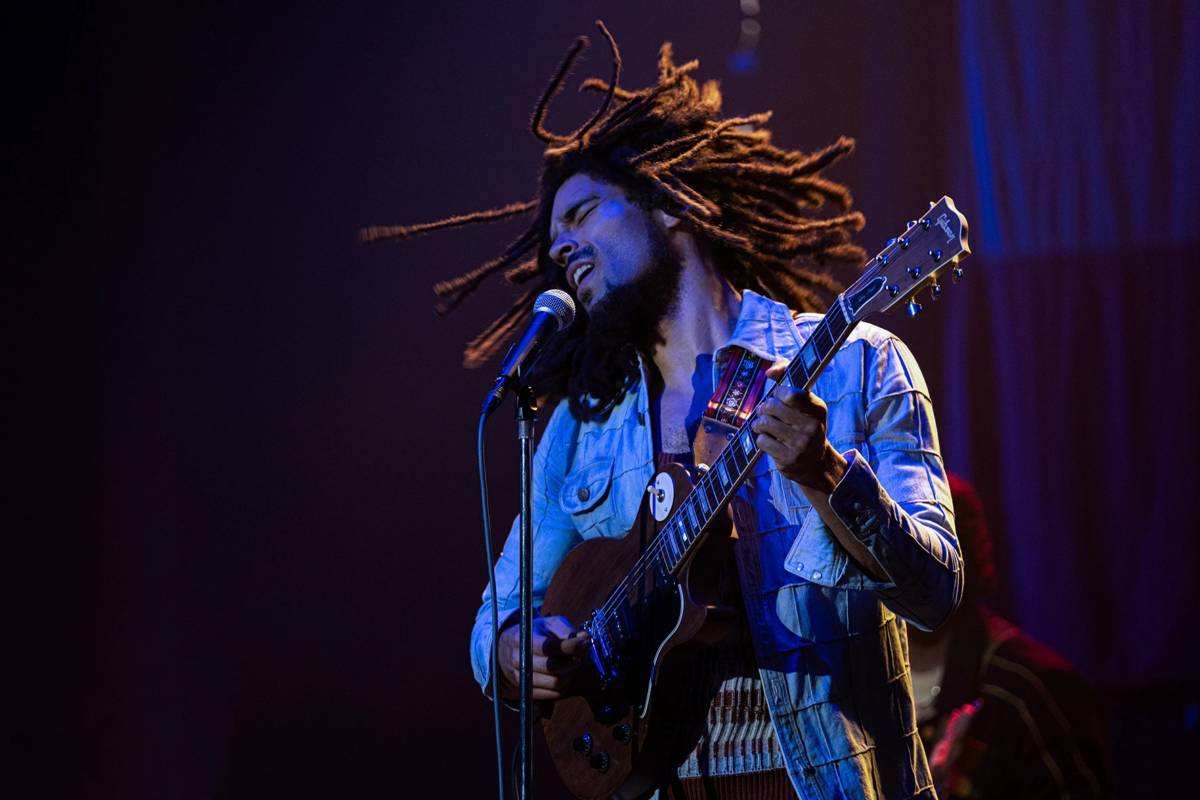
Few events move the needle on a legacy estate like a major theatrical film. The 2024 biopic Bob Marley: One Love, directed by Reinaldo Marcus Green and starring Kingsley Ben-Adir, demonstrated this effect dramatically.
The musical biopic generated $101.1 million worldwide after only ten days in theaters, including $61.4 million in North America and $39.7 million from 59 international territories.
The film, produced with involvement from Ziggy Marley, Rita Marley, and Cedella Marley through Tuff Gong Pictures, carried a budget of $70 million and ultimately grossed $181 million at the box office.
Bob Marley: One Love made nearly $83 million at the domestic box office alone, making it one of the highest-grossing biopics about a musician of all time. The movie surpassed the worldwide total of Ray to become the sixth highest-grossing music biopic of all time.
Starring Kingsley Ben-Adir and produced with the involvement of the Marley estate, One Love performed roughly on par with previous hit musical biopics like Rocketman and Elvis.
The estate’s fingerprints were all over the project, ensuring that any financial upside fed directly back into the family’s revenue picture.
Revenue Stream 3: Brands, Merchandise, and Cannabis
Through royalties, licensing deals, and brand endorsements, the Bob Marley name has become a global business empire. His estate, controlled by the Marley family, continues to generate revenue through music sales, merchandise, cannabis products, and other ventures.
House of Marley is managed by four of his children: Rohan Marley, the brand officer of the estate; Cedella; Stephen; and Ziggy, while the rest sit on a board and share the proceeds evenly.
The Marley brand spans an impressive range of products including audio equipment, coffee, fragrances, pillows, tote bags, posters, and cannabis.
On the cannabis side specifically, in 2023 the Marley Natural Dispensary opened at the Bob Marley Museum in Kingston, Jamaica, selling medicinal cannabis products. This venture further increases the Marley family’s wealth and taps into the booming legal cannabis market, led by Stephen Marley.
The family deepened its cannabis play in 2024. The Marley family entered into a joint venture with the cannabis brand Jeeter on a one-of-a-kind cannabis brand that year.
On the merchandise and licensing side, his likeness is used for various pieces of merchandise such as lighters and T-shirts, and House of Marley sells its own line of turntables, headphones, and speakers, which reportedly accounted for $3 million worth of the estate’s profits in a given year according to Forbes.
The estate has not been passive about protecting its commercial territory. As Rolling Stone reported in 2015, the Marleys successfully sued a merchandising company that used the Rasta Man’s likeness without permission.
This move by the estate set a precedent for other musicians’ estates, who often suffer a financial loss when companies sell unauthorized likenesses of the artist.
Revenue Stream 4: Live Experiences and New Ventures
The most significant new chapter in the estate’s commercial evolution may be live entertainment. In June 2025, Mandalay Bay in Las Vegas launched Bob Marley Hope Road, a stage production featuring 29 live shows per week, which is projected to generate millions for Marley’s estate over the coming years.
The project is a collaboration with Primary Wave, which acquired a portion of Marley’s publishing catalog in 2018.
Among Primary Wave’s marquee investments, the Bob Marley catalog is seeing renewed activity through the ongoing Bob Marley: Hope Road Las Vegas live theatrical event at Mandalay Bay Resort and Casino.
Although specific earnings figures were unavailable, Music Business Worldwide estimates an annual gross turnover potential exceeding $30 million.
The Bob Marley estate also planned to release a collection of six fragrances for both men and women in early 2025, further extending Marley’s influence into lifestyle products.
Who Controls the Estate, and Who Inherits?
Control of the Marley estate has been shaped as much by courtrooms as by business decisions. In a contentious legal battle that ended in 1991, the Jamaican Supreme Court ruled that Rita Marley and Marley’s children had the exclusive right to use Marley’s name, likeness, and image for commercial purposes.
House of Marley, which is the estate’s brand name, is managed by Rohan Marley, the brand officer of the estate; Cedella, CEO of the Bob Marley Group of Companies; Stephen; and Ziggy Marley, while the other children sit on a board and share the proceeds evenly.
The richest Marley today is the family matriarch Rita Marley, with Celebrity Net Worth estimating her net worth to be $50 million in 2024. His sons Rohan, Stephen, and Damian are among his richest children, with an estimated net worth of $20 million each, according to Celebrity Net Worth profiles.
While the majority of Marley’s masters remain under Universal Music Group, his estate has built a global business empire from licensing his name, image, and likeness.
The Bottom Line: What Is the Bob Marley Estate Worth in 2026?
The honest answer is that the Bob Marley estate net worth in 2026 is a range, not a single figure, and it depends heavily on what one chooses to count.
For annual authorized earnings, the Forbes methodology is the most reliable baseline: the estate earned $13 million in 2025 on the Forbes ranking, down from $34 million in the Forbes 2024 measurement period, which was boosted by the One Love biopic.
A normalized run rate, absent exceptional events, appears to fall in the $25 to $30 million per year in royalties range cited by Celebrity Net Worth, though the Hope Road Las Vegas production could push that figure meaningfully higher.
For total estate valuation, estimates range from $130 million on the conservative end, as cited by several industry trackers, up to the $500 million figure that circulates widely online, the latter largely rooted in the combined authorized and unauthorized revenue ecosystem around the brand.
The Marley family controls the authorized side of that equation, and during the decades after his death, streaming, licensing, merchandise, and brand deals revenue grew exponentially.
His music catalog, image rights, and entrepreneurial ventures have cemented him as one of the highest-earning deceased musicians in history.
Whether the estate is valued at $130 million or $500 million, what is clear is that the Marley family has converted a reggae legend’s name into a professionally managed, multi-industry brand that shows no signs of slowing.
With a permanent live residency in Las Vegas now generating revenue, new cannabis partnerships in place, and a catalog that continues to stream hundreds of millions of times per year, the Bob Marley estate is positioned to keep earning long past 2026.