

Few romances in Jamaican music history still spark as much debate as Cindy Breakspeare and Bob Marley. She was a light-skinned uptown girl with pageant ambitions.
He was the dreadlocked prophet of Trench Town, a married man whose music was beginning to shake the world. They met at 56 Hope Road and fell into a relationship that lasted until his death in 1981.
Along the way came a Miss World crown, a son who would grow into Damian “Jr. Gong” Marley, and decades of public scrutiny that has never quite faded.
Here is how the story unfolded, year by year, and why it still stirs feelings in Jamaica and beyond nearly half a century later.
Before Bob: A Toronto Girl in Kingston
Cynthia Jean Cameron Breakspeare was born in Toronto on 24 October 1954 to a Jamaican father, Louis Cameron Breakspeare, and a Canadian mother of British origin.
The family brought her to Jamaica when she was four, and she grew up on the island, graduating from Immaculate Conception High School in 1973. That background matters to the story.
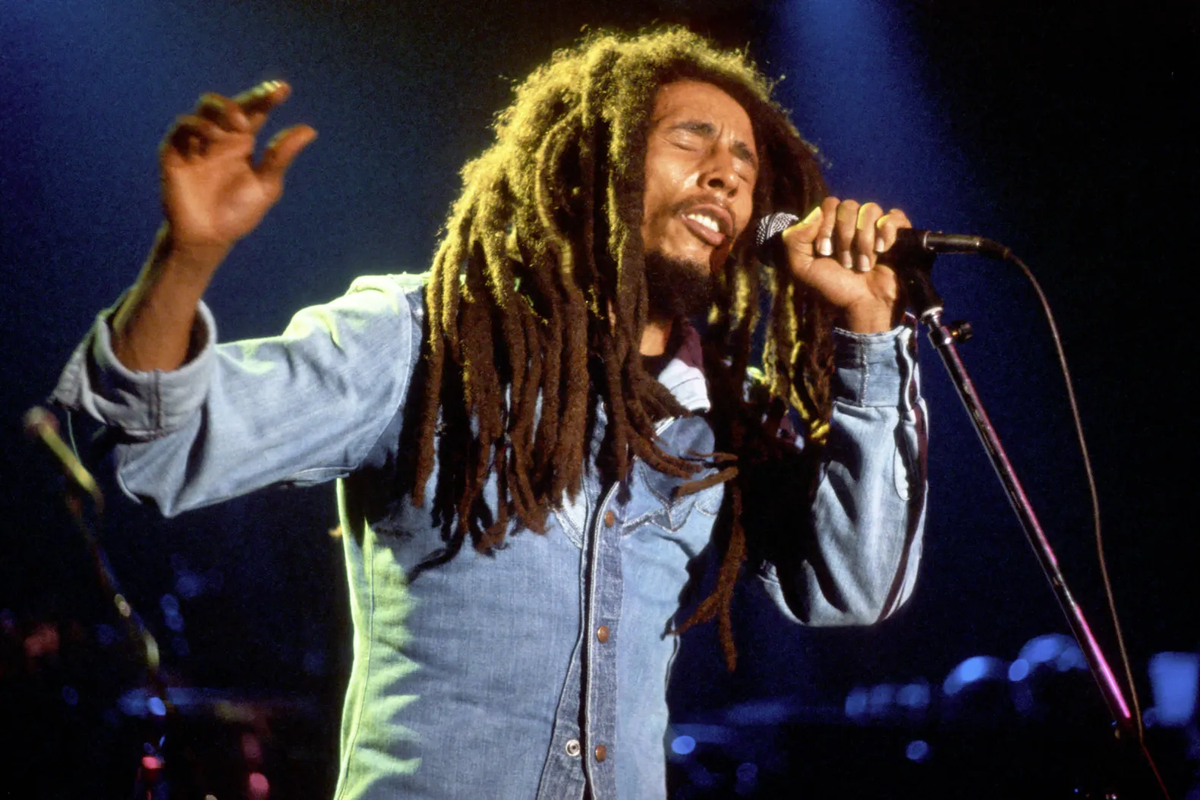
In the Kingston of the 1970s, class and colour drew hard lines across the city, and a girl from her side of town was not expected to cross paths, let alone fall in love, with a Rastaman from the ghetto.
1975: The Flat at 56 Hope Road
The meeting place was 56 Hope Road, the uptown compound that Marley had turned into a headquarters for The Wailers.
Breakspeare and her older brother rented a flat in the building, and the band rehearsed out back. As she has told it, Bob simply started spending more and more time around her.
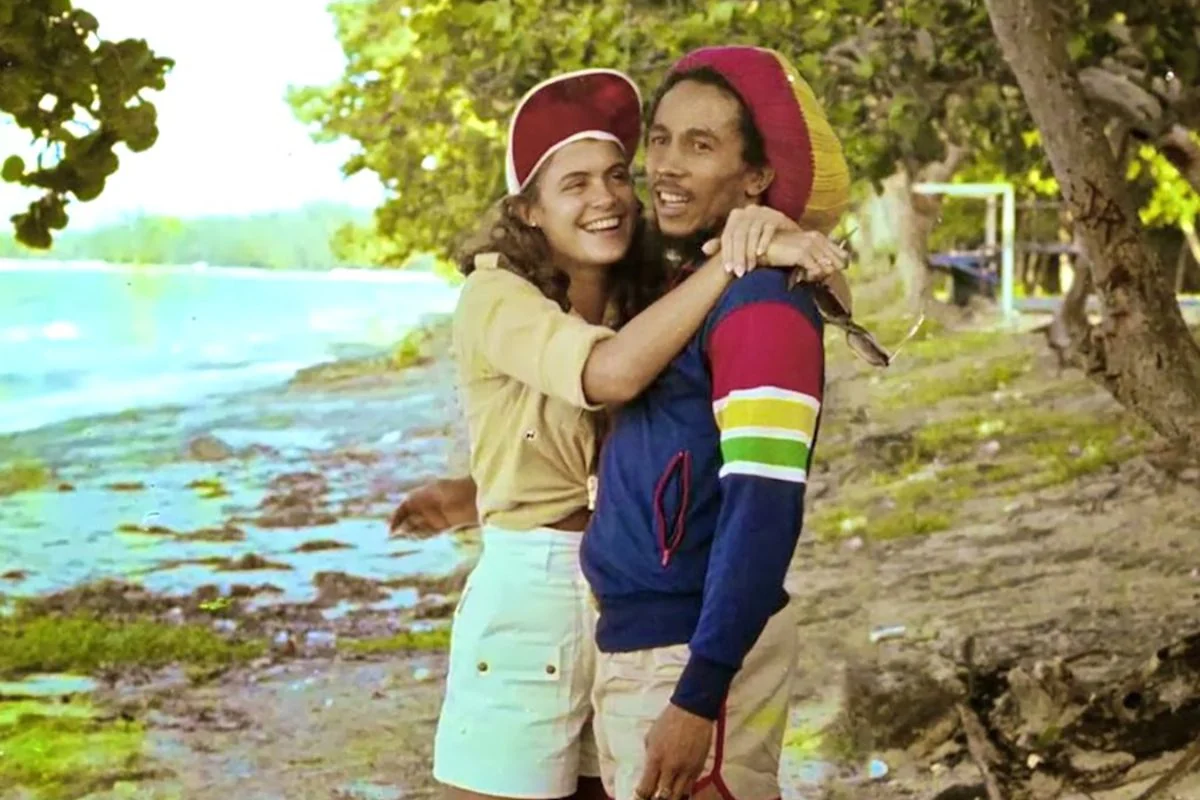
By 1975 the pair were together, roughly a year before her date with Miss World. She has spoken of how unusual it was at the time for uptown girls of her complexion to get involved with Rastas, which made the whole thing feel a little frightening.
She knew the stakes too. “I knew that if I became involved with Bob, it would change my life forever,” she said in 2019.
Part of the pull was physical discipline. Both were devoted to fitness, and she has said that shared passion helped bond them. Bob, she recalled, “was into” her plans to compete for Miss World.
1976: Miss World at the Royal Albert Hall
Her road to the crown began in the gym world. Bodybuilding figure Oscar Heidenstam urged Mickey Haughton-James, owner of Spartan, to enter her, and she became Haughton-James’ protégé.
Politics nearly derailed everything. Prime Minister Michael Manley’s government pulled Jamaica out of the 1976 pageant in protest over South Africa’s apartheid system, and Sandra Kong withdrew. Breakspeare went to London anyway, backed by private donors.
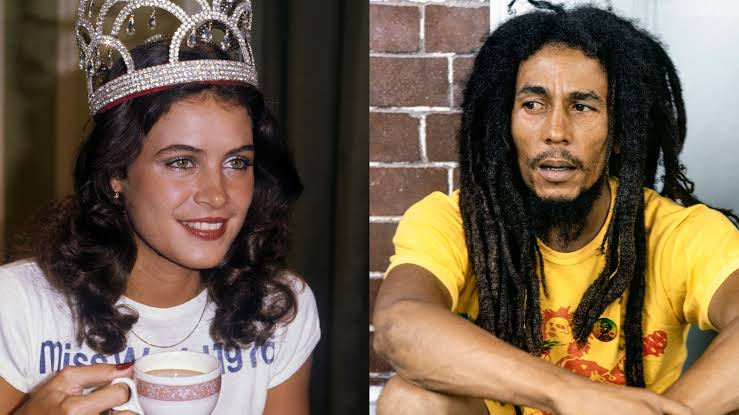
In November 1976, at the Royal Albert Hall, the 21-year-old beat 59 other contestants to become Miss World, Jamaica’s second winner.
The victory had an unexpected side effect. According to Breakspeare, Marley was not yet a household name in England, and it was only when the British press discovered that the new Miss World was dating a Rasta reggae singer that his profile there exploded. The beauty queen and the dread made irresistible headlines.
1978: Damian Is Born
On 21 July 1978, Breakspeare gave birth to Damian Robert Nesta Marley, her eldest child and her only child with Bob.
He arrived while Marley was still married to Rita, and he joined a crowded, complicated family tree.
Marley had fathered children with several women, including Rohan with Janet Hunt and Ky-Mani with Anita Belnavis, and other relationships from those years, including with Pascaline Bongo and Yvette Crichton, are part of the record.
Damian would later turn his mixed heritage into art. His album Halfway Tree takes its name from the Kingston crossroads that sits between uptown and downtown, a fitting image for a son whose mother came from the comfortable side of the city and whose father came up in its poorest yards
1981: Loss and a New Chapter
Marley died in 1981 of acral lentiginous melanoma, at just 36. Damian was about 34 months old.
Years later, speaking with Marley historian Roger Steffens in 1993, Breakspeare broke down remembering his decline. “It was just dreadful to watch him deteriorate like that,” she said. Life moved quickly afterward.
On 19 July 1981, two months after Bob’s death, she married senator Tom Tavares-Finson. They had a son, Christian, and divorced in 1994. In 1999 she married musician Rupert Bent II.
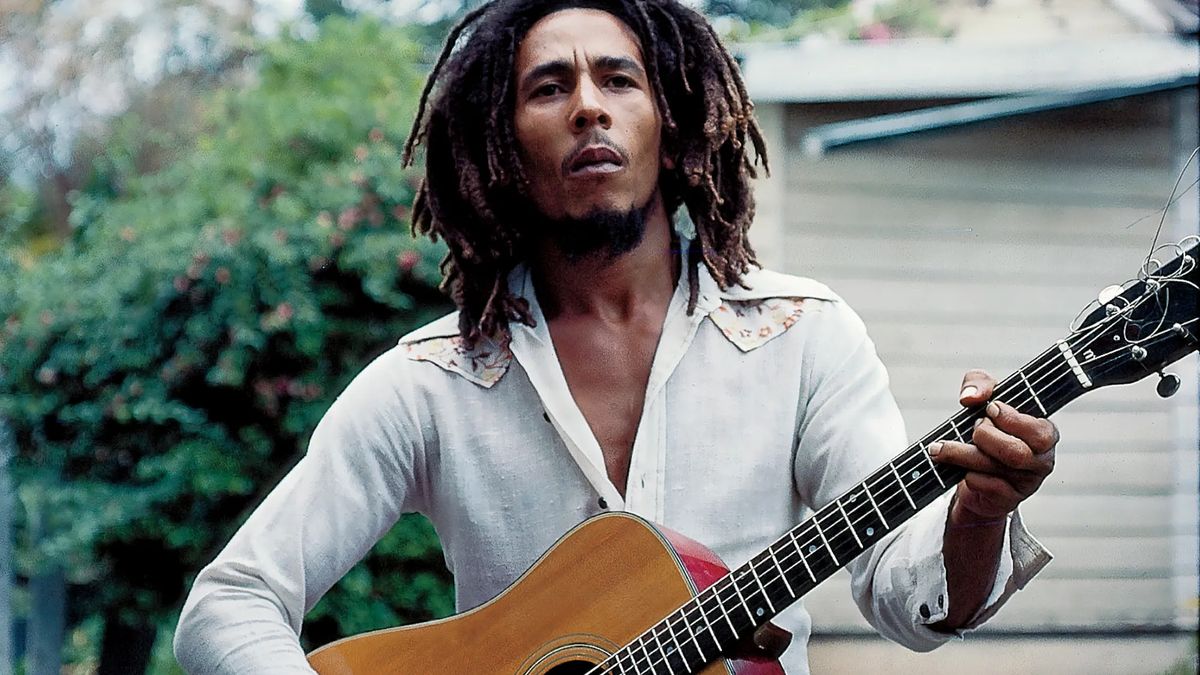
Through it all she kept Bob present for Damian, sharing photos and videos with a boy full of questions about the father he barely knew.
She also built her own working life, founding the Rastafarian craft store Ital Craft and spending around two decades as an interior decor designer. She returned, too, to her own voice as a jazz singer.
Telling Her Side
As the Marley story moved onto screens, Breakspeare became one of its key witnesses. She appeared as an interviewee in Kevin Macdonald’s documentary Marley in 2012 and in the Netflix film ReMastered: Who Shot the Sheriff? in 2018, offering an intimate view of the man behind the legend.
Her openness about the relationship has kept her a controversial figure. To admirers she is a candid keeper of history. To critics, she is a reminder of the pain Marley’s infidelities caused his wife and family.
2021 to 2025: Backlash and the Biopic
That tension flared on her 67th birthday in October 2021, when businessman Wayne Chen posted a photo of her with Bob and Jamaican Twitter erupted, with some users dismissing the romance as a “glorified affair.
In February 2024, on what would have been Bob’s 79th birthday, Breakspeare posted a tribute recalling the places they had shared: 56 Hope Road, his mother’s home in Delaware, Miami, New York, Oakley Street in London, the Bahamas and Trinidad. Again the reaction was fierce.
Then came Bob Marley: One Love, the 2024 biopic. Actress Umi Myers reportedly filmed several scenes as Breakspeare, but they did not make the final cut.
In a September 2025 television interview, Breakspeare spoke plainly about being written out. “I ended up being a nameless, voiceless ghost,” she said, adding that the film did not fully capture Bob’s single-mindedness and edge.
She also pushed back on the old narrative of who chased whom. “I did not pursue Bob Marley, he pursued,” she said, noting that Marley had described himself in interviews as unmarried.
Why the Story Still Matters
The Cindy Breakspeare and Bob Marley story endures because it holds so much of Jamaica inside it. Uptown met downtown at a rehearsal yard on Hope Road.
A beauty queen defied a government boycott and carried a Rastaman’s name into the British papers. A son was born who would grow up to bridge both worlds in his music.
It is also a story without a tidy ending. For some fans, Breakspeare is a muse and a truth-teller; for others, she stands for hurt that the Marley family never asked to have replayed. Both views can be true at once.
What is certain is that her chapter belongs in the full account of Bob Marley’s life, and she has made it clear she will not stay a ghost in it.