


In March 1978, with Jamaica still bruised from political violence and Bob Marley still living in London, the Wailers released a record that sounded like a long exhale.
Kaya, the Bob Marley album named for the Jamaican slang word for marijuana, swapped the fire of the militant years for sunshine, herb and romance.
It arrived on Tuff Gong and Island on 23 March 1978, ten songs and just under 37 minutes of the gentlest music Marley ever put his name to.
The story behind Kaya is really the story of Exodus, of exile, and of a man finding his way home. Critics at the time called it soft.
Nearly half a century later it is a UK Platinum record, and its biggest song is closing in on a billion streams.
Born in the Exodus sessions
Kaya was not cut as a standalone project. Its songs come from the same sessions that produced Exodus, recorded between January and April 1977 at Island Studios in London.
Those sessions took place in the first months of Marley’s London exile, which followed the assassination attempt at his Kingston home in December 1976.
The band was in a creative surge, and there was simply more music than one album could hold.
Exodus came first, in June 1977, and turned Marley into a global star. About nine months later the Wailers followed with Kaya, built from the warmer, more easygoing half of that body of work.
Some listeners have dismissed it as a collection of leftovers. A better way to see it is as the other side of the same coin. Exodus was the movement of Jah people. Kaya was the rest day.
The timing of the release carried its own weight. It landed just a month before Marley returned to Jamaica to headline the One Love Peace Concert in April 1978, the night he brought Michael Manley and Edward Seaga together on stage. The record of herb and love songs became the soundtrack to his homecoming.
The sound of going soft
From the opening bars of “Easy Skanking,” with Marley singing about taking it slow, Kaya sets out its mood. The grooves are relaxed and roomy.
The lyrics drift toward love and ganja and away from the righteous anger of “Burnin’ and Lootin'” or “Get Up, Stand Up.” Some critics accused Marley of going soft, as if a revolutionary had no right to a love song.
That misses what Marley was doing. “Misty Morning,” “She’s Gone” and “Is This Love” are songs of longing and devotion.
Both singles, “Is This Love” and “Satisfy My Soul,” are said to have been inspired by his romance with Cindy Breakspeare, the former Miss World.
Even the album’s quietest corner holds tension. “Crisis” acknowledges a troubled world while insisting that Jah’s people make music anyway.
“Running Away” sounds like a man arguing with himself about leaving Jamaica behind. Under the calm surface there is plenty of reckoning.
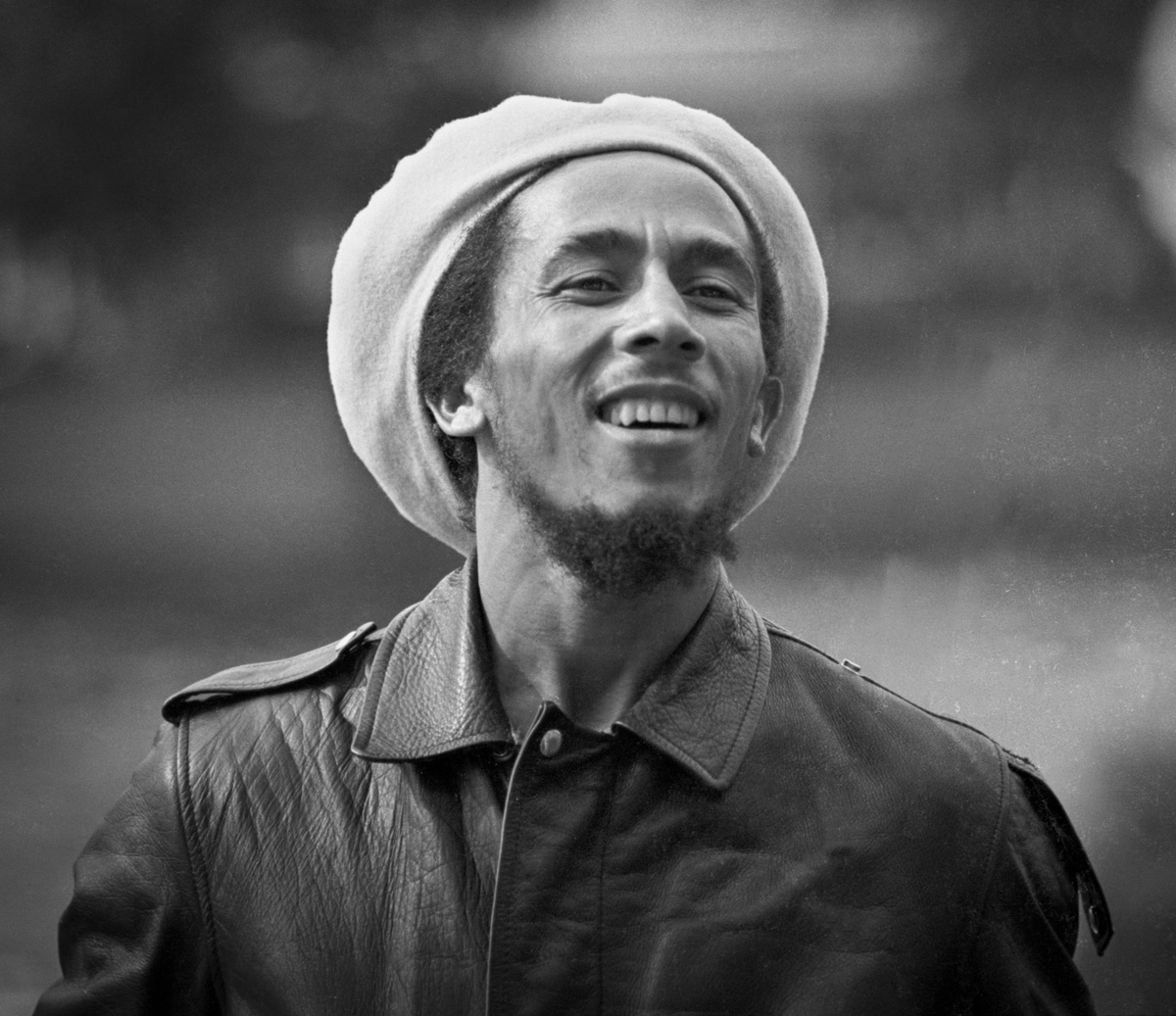
The packaging leaned straight into the theme. Kate Simon shot the cover photograph, and a ganja plant sits proudly on the back sleeve.
Old songs, new light
Part of Kaya‘s charm is that it looks backward as well as forward. Three of its songs are new versions of tracks from Soul Revolution Part II, the 1971 album the Wailers made with Lee “Scratch” Perry.
“Sun Is Shining” first appeared there and again on African Herbsman in 1973 before Marley recut it in London. Perry’s version is dry and spooky. The 1977 take is spacious and glowing, carried by the I-Threes.
“Satisfy My Soul” has a similar history. Marley first recorded it in 1970 as “Don’t Rock My Boat” and reworked it in 1977 into the bright, bouncing single that arrived on 26 May 1978, backed with “Smile Jamaica.”
Hearing the old and new versions side by side shows how far the Wailers had come, from Kingston studio grit to a polished international sound that never lost its roots.
The band behind the calm
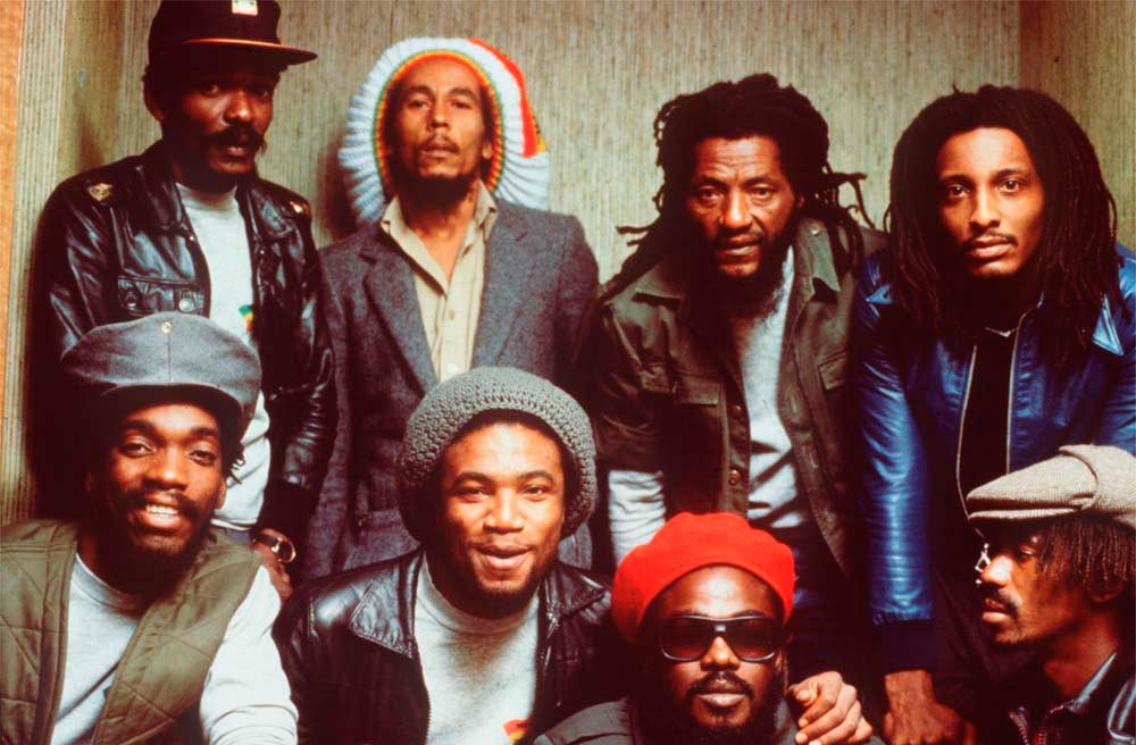
That polish came from one of the great reggae units at full strength. Marley handled lead vocals, acoustic and rhythm guitar and percussion.
Aston “Family Man” Barrett and his brother Carlton Barrett anchored everything on bass and drums, the heartbeat of the Wailers sound.
Tyrone Downie played keyboards, Junior Marvin added lead guitar, and Alvin “Seeco” Patterson brought the percussion that tied it all to Rastafarian tradition.
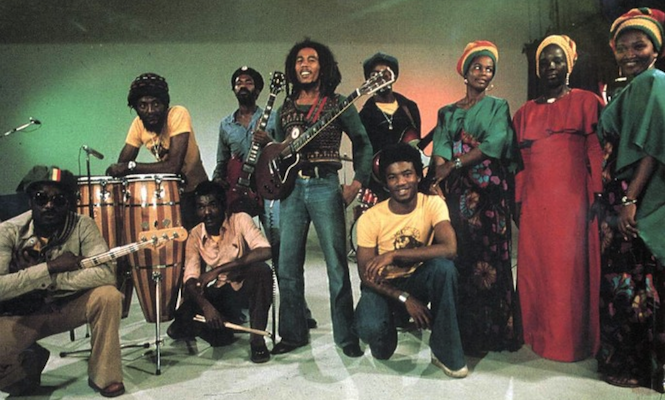
Horns came from Vin Gordon on sax and trombone, with Glen Da Costa and David Madden on trumpet.
Rita Marley, Marcia Griffiths and Judy Mowatt, the I-Threes, sang the harmonies that give songs like “Is This Love” their warmth.
The Wailers produced the album themselves, and Chris Blackwell and Robert Ash handled the mix.
Charts, platinum and a very long tail
Whatever the critics said, the public embraced it. Kaya reached No. 4 in the UK, Marley’s highest-charting studio album there. It also hit No. 6 in Norway and New Zealand and No. 14 in Sweden across 1978 and 1979.
In the United States it peaked at No. 50 on the Billboard 200, and it was later certified Gold for 500,000 units.
“Is This Love,” released as a single on 3 February 1978, climbed to No. 9 on the UK Singles Chart. As of August 2025 it had roughly 958 million Spotify plays, with “Satisfy My Soul” at around 213 million.
The album’s best late chapter came on 1 August 2025, when the BPI certified Kaya Platinum for more than 300,000 UK sales.
That made it only the second Marley studio album to go Platinum in Britain, after Exodus, 47 years after release.
“Sun Is Shining” found its own second life. In 1999 a Funkstar De Luxe remix went to No. 1 on the US Billboard Dance Club Play chart and No. 3 on the UK Singles Chart, bringing Marley’s 1970s groove to a club generation.
Writer Harvey Kubernik admitted in 2018 that Kaya “isn’t one of my most played” Marley records, yet he still named “Is This Love,” “Easy Skanking” and “Sun Is Shining” among the most enduring songs in the whole catalogue.
Kaya 40 and the reissues
The album has been reissued and repressed many times, with close to 300 versions catalogued.
A 35th anniversary deluxe edition added a live disc recorded at Ahoy Hallen in Rotterdam on 7 July 1978, catching the band on the tour that followed Kaya.
That same tour is also documented on Easy Skanking in Boston ’78 and fed into Babylon by Bus, released on 10 November 1978.

On 24 August 2018 came Kaya 40, a remix by Stephen Marley that drew on his father’s demo vocals and alternate takes, issued on 2CD, 180g double vinyl and digital.
“Easy Skanking” stayed in its original 1978 mix because of technical issues. Responses were mixed. Some fans missed the echo of the originals.
Paul Scott-Bates of Louder Than War called the result “quite brilliant,” praising how Stephen had “carefully and tenderly updated” the record.
Why Kaya still matters
Kaya has always lived in the shadow of Exodus and, later, Legend, and some reviewers still call it underrated. That is part of its appeal.
It shows Bob Marley without the armour: a man in exile, in love, smoking herb with his bredren and remembering the songs he wrote when the Wailers were young.
The “going soft” charge has aged badly. Love songs and sunshine music were never a retreat from the message. They were a reminder of what the struggle was for.
Released on the eve of the One Love Peace Concert and still selling in 2025, Kaya proves that Marley’s gentlest record carries as much staying power as his angriest. Put it on, let “Easy Skanking” roll, and take it easy.