
Some records are made in comfort. Exodus was made in the long shadow of gunfire.
When fans talk about the Exodus Bob album, they usually start with the hits: “Jamming,” “Waiting in Vain,” “Three Little Birds,” “One Love.”
Behind those warm, sunlit grooves sits one of the most dramatic stories in Jamaican music, a tale of a near assassination, a hurried departure and a winter of work in West London.
Released on 3 June 1977 through Island Records, the ninth studio album by Bob Marley & The Wailers turned exile into art.
It was half battle cry, half love letter. It took reggae deeper into the global mainstream than ever before, and decades later it still sounds like a man reaching for home.
Shots in Kingston, Sanctuary Abroad
On 3 December 1976, gunmen invaded Marley’s world. A bullet grazed his chest and another struck his arm.
He survived, and in an act of defiance that still gives fans chills, he took the stage at the Smile Jamaica concert just two days later. Then he was gone.
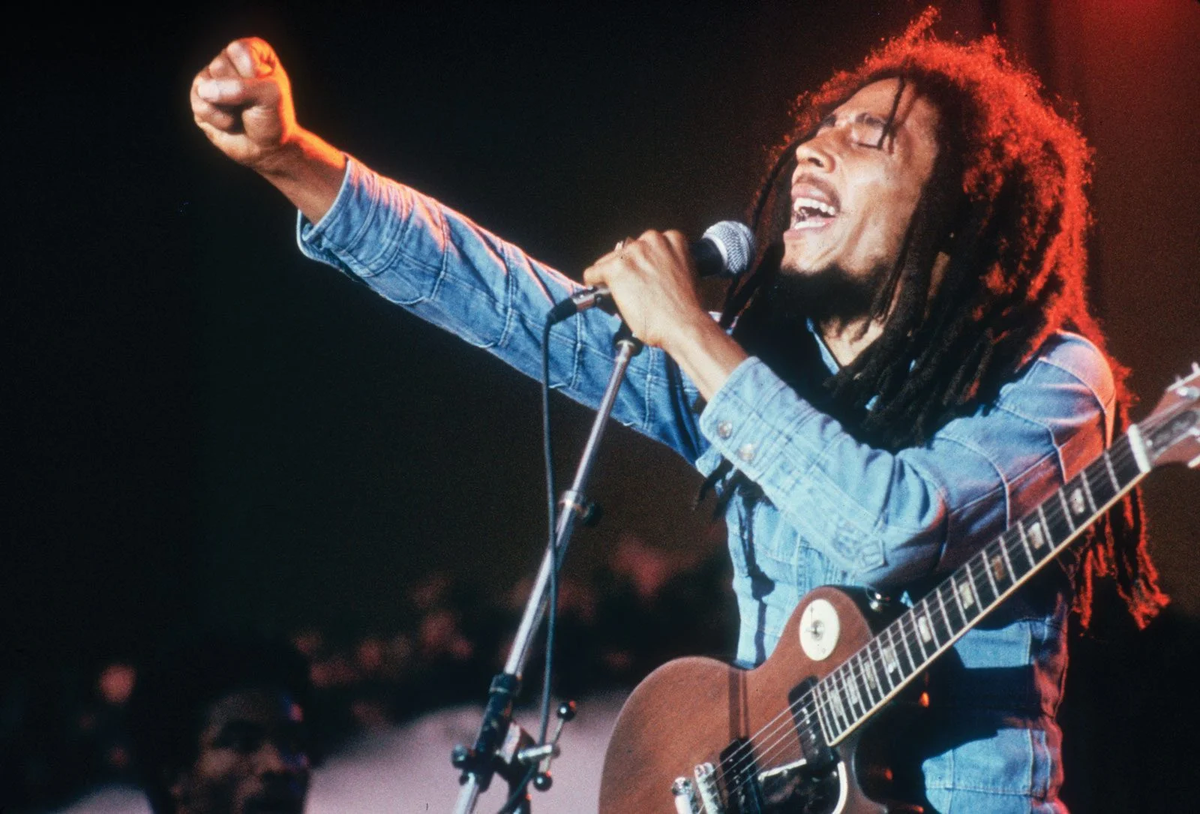
According to Goldmine, he left the morning after the show for Chris Blackwell’s home in Nassau, in the Bahamas.
Jamaica in those days was fractured by political violence, and Marley’s attempts to stand above the divide had made him a target rather than a peacemaker. Leaving was not a retreat from his message.
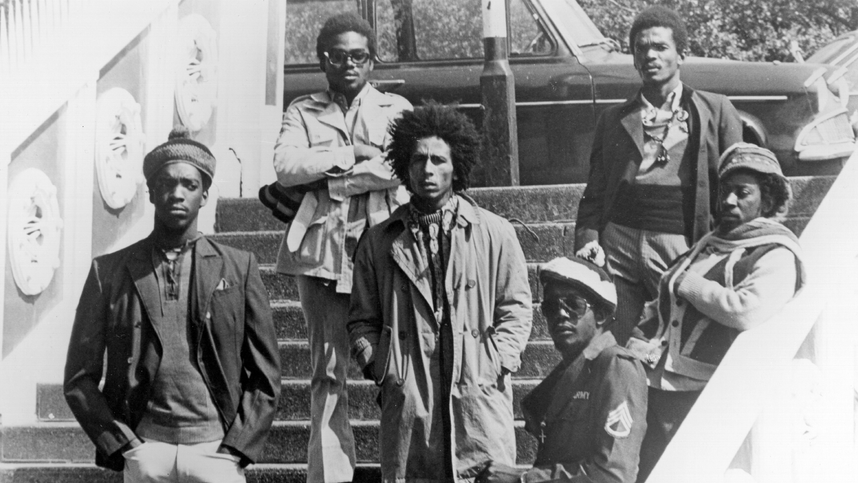
It was the only way to keep delivering it. By February 1977, the band had regrouped in London to begin work on what would become Exodus.
London Calling: The Basing Street Sessions
The setting mattered. Island’s studios on Basing Street sat in West London, one of the hearts of the city’s Jamaican community.
The streets around them still carried unease from the 1976 Notting Hill Carnival riots. Marley had escaped one kind of tension and landed in another, surrounded by a diaspora that knew struggle intimately.
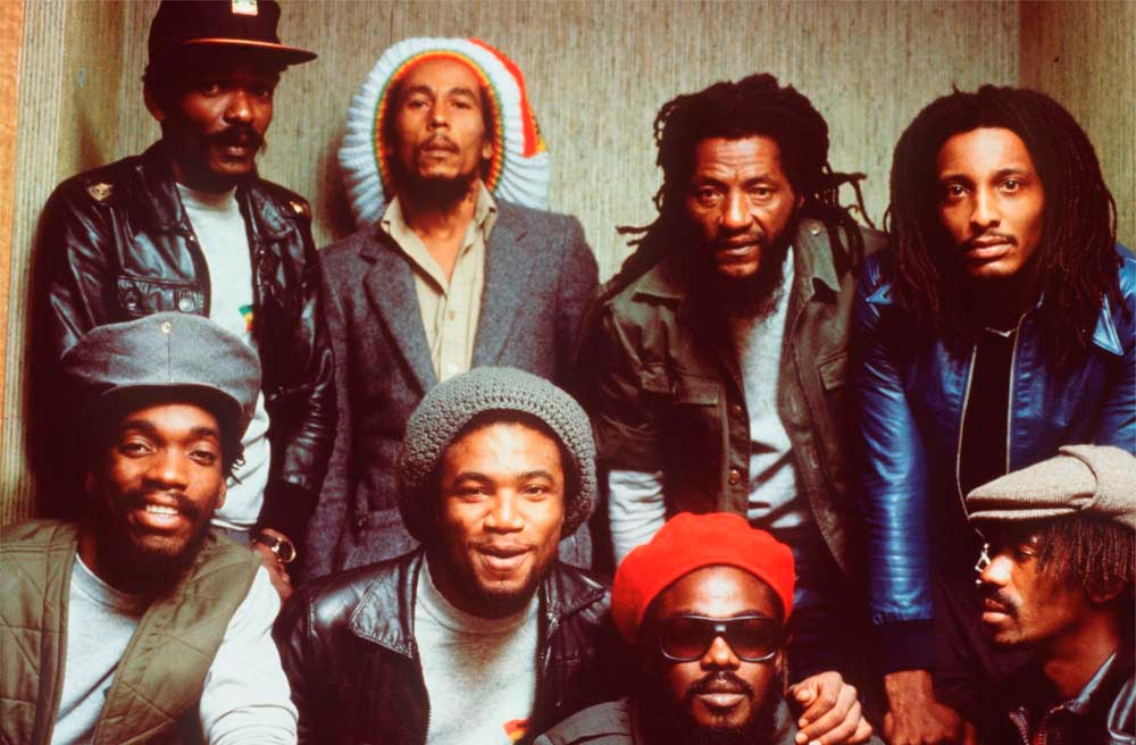
The sessions were remarkably fertile. So much material came out of that period that Kaya, released in 1978, was cut from the same pool of recordings. Work also took place at Harry J’s in Kingston.
The production credit went to Bob Marley and the Wailers themselves, with Aston “Family Man” Barrett, Chris Blackwell and Karl Pitterson handling the mix. Family Man’s bass, as ever, was the spine of everything.
Marley had the word “Exodus” in mind as the album title before he had even written the song. The idea came first, and the music grew to meet it.
Neville Garrick handled the cover and graphics, giving the record its stark, golden identity, with photography by Adrian Boot.
Two Sides of a Prophet
Listen to Exodus from top to bottom and you hear two records in conversation. Grammy.com describes the album as split in two: revolutionary calls to action up front, peace and love on the back half.
The first side runs through “Natural Mystic,” “So Much Things to Say,” “Guiltiness,” “The Heathen” and the title track.
These songs are brooding, spiritual and confrontational, with Marley calling out downpressors and summoning ancient forces.
At the centre stands “Exodus” itself, a hypnotic, nearly eight minute march that Goldmine describes as a call for Jah’s people to re-inherit their African homeland.
The horns stab, the one drop rolls forward relentlessly, and the chant of “movement of Jah people” becomes something close to a mass meditation.
Then the clouds part. “Jamming,” “Waiting in Vain,” “Turn Your Lights Down Low,” “Three Little Birds” and “One Love/People Get Ready” are some of the tenderest, most universal songs Marley ever recorded.
Classic Album Sundays traces “Three Little Birds” to the back step of his Kingston home, a detail that makes its reassurance feel even more poignant given how far from that step he was when it was finally cut.
Musically, this is reggae dressed in the textures of the city around it, embellished with British rock, blues, soul and funk.
Junior Marvin’s guitar lines and the polished London sound gave Island a record that could cross over without losing its roots.
The Singles and the Sound System
Island pushed hard. “Exodus,” “Waiting in Vain” and “Jamming” all arrived as singles in 1977, and “Exodus” and “Jammin'” were issued in the then-new 12-inch format, aimed squarely at disco and club audiences. For a music born on Jamaican sound systems, the long format made perfect sense.
In Jamaica and the UK, the title track’s single releases came backed with a dub version, a nod to the culture that fed the music. That dub has since found a home on the deluxe edition.
The album kept giving long after its release. “Three Little Birds” became a single in August 1980, and “One Love/People Get Ready” followed on 16 April 1984, the run-up to the posthumous compilation Legend.
Charts, Gold and a Century’s Verdict
In Britain, Exodus peaked at No. 8 and stayed on the chart for 56 consecutive weeks, a remarkable run for any album, let alone a reggae record.
In the US it climbed to No. 20 on the Billboard 200 and went gold, and it earned gold certifications in the UK and Canada too. It stands as Marley’s biggest-selling studio album.
Its songs also became the backbone of Legend, released on 7 May 1984. No other Marley album contributes more tracks to that collection, which became his highest-charting US album.
For millions of listeners who first met Bob through Legend, Exodus was the record they were really hearing.
Then came the big verdicts. In 1999, Time named Exodus the best album of the 20th century, declaring: “Every song is a classic, from the messages of love to the anthems of revolution.”
The BBC went further still and chose “One Love” as its song of the century. In 2006, the album was inducted into the Grammy Hall of Fame.
The Movement Continues
Exodus has been reissued and revisited many times. A deluxe edition arrived in 2001 and later returned as a 2CD set. A 30th anniversary remaster followed in 2007.
For the 40th anniversary in 2017, Exodus 40 presented alternate vocal and musical arrangements assembled by Ziggy Marley, including an R&B remix of “Turn Your Lights Down Low” and newly discovered Bob ad-libs on “One Love.”
Audiophiles can now chase an Analogue Productions UHQR edition, a numbered 45rpm double LP box pressed on 200 gram vinyl and mastered at Sterling Sound.
Why Exodus Still Matters
Almost five decades on, Exodus remains the clearest portrait of Bob Marley as both warrior and healer. It was born from violence and displacement, yet it refuses bitterness.
The first half demands justice and the return to Africa. The second half insists that love is the only road worth walking.
That balance is why the album speaks to the dancehall massive, the roots purist and the casual listener alike.
It is also a diaspora record in the truest sense, made by a Jamaican in exile among Jamaicans abroad, and carried by Island into clubs and living rooms worldwide.
Every time a crowd sings “One Love” or a sound system drops “Exodus,” the movement Marley sang about keeps moving.