
Drop the needle and you know it inside two bars: a bass line that rumbles like a truck idling outside the dance, drums locked tight, a trombone lifting the melody, and that three-note organ stab answering back.
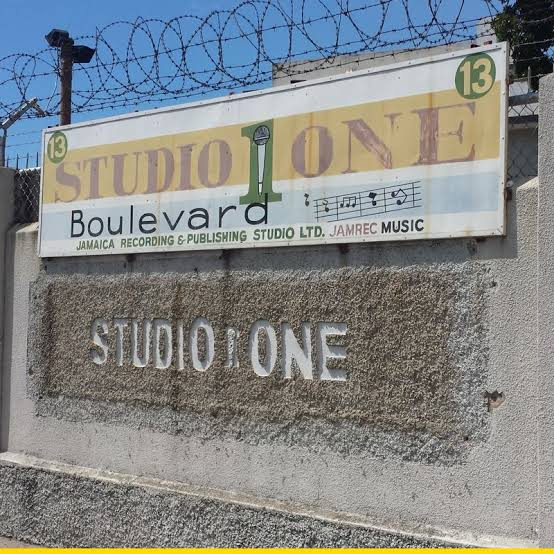
The Real Rock riddim is the Sound Dimension instrumental that Clement “Coxsone” Dodd produced at Studio One, recorded in 1967 and released as a single in 1968. Few rhythms have travelled as far.
From roots singers and rockers dub to the first wave of digital dancehall, from Shabba Ranks to The Clash, generations have voiced it.
The New York Times once called it “the genre’s most often licked riddim,” and the numbers back that up. This is the story of where Real Rock came from, who made it, and the songs that kept it alive.
Inside Studio One: Where Real Rock Was Born
Studio One is often called the “Motown of Reggae,” and Real Rock is a perfect example of why. Dodd ran his operation like a hit factory, with a house band on call to cut instrumentals that singers and deejays could version for years.
That band was Sound Dimension, named after a piece of studio equipment and active from 1967 to 1979.
The players on Real Rock read like a roll call of Jamaican greatness: Eric Frater on guitar, Boris Gardiner on bass, Phil Callender on drums, Denzel Laing on percussion, Vin Gordon on trombone and Jackie Mittoo on keyboards. Dodd holds the producer and songwriter credit.
According to the 2004 New York Times feature “‘Real Rock’ Through the Ages,” he regarded it as his crowning achievement.
The Sound: Bass, Drums, Trombone and That Organ
Strip Real Rock down and it is almost nothing, which is exactly its power. The bass rolls low and heavy, the drums sit tight and dry, and Gordon’s trombone carries the tune with a loping, unhurried swagger.
Over the top, Mittoo’s Hammond organ punches out the signature three-note figure that every later version would chase.
Mittoo also arranged the piece, which the Jamaica Observer described as “a horn-hooked instrumental.” His ear was the stuff of studio folklore. Guitarist Brian Atkinson once said of him, “A penny could drop on the floor an’ him sey, ‘A minor’.”
In 1968 Mittoo left Studio One for Canada, but the riddims he shaped stayed in Jamaica and kept multiplying. He died in Toronto in December 1990.
In a 2017 tribute, Howard Campbell wrote that Mittoo’s impact on contemporary reggae “is immense,” and Real Rock is a big part of that legacy.
The Roots Era: Pablo, Dillinger and the Seventies Cuts
The seventies turned Real Rock into a rite of passage. Augustus Pablo reworked it as “Rockers Rock,” spreading his melodica and piano across the groove until it felt like mist rolling off the Blue Mountains.
Pablo also used the riddim to carry Hugh Mundell’s “One Jah, One Aim, One Destiny,” a youthful Rasta statement that fit the rhythm’s gravity perfectly.
Dillinger rode it in 1975 for “Fountain On The Mountain,” while The Morwells cut “I Nah Want Dey Yah” and Dennis Brown delivered “Together Brothers.” Junior Murvin’s “Cool Out Son” belongs to this family too.
Each one proved the same point: the riddim could hold a sermon, a toast or a love song without breaking a sweat.
Armagideon Time: When Real Rock Went Global
No single version did more to carry Real Rock beyond Jamaica than Willie Williams’ “Armagideon Time.”
Recorded in 1977 and issued as a single in 1979, it was written by Dodd and Williams and produced by Dodd.
Williams sang of hunger and judgment over the rhythm’s slow menace, and the result sounded like prophecy.
London was listening. In 1979 The Clash covered “Armagideon Time” and put it on the B-side of their “London Calling” single, sending the Studio One rhythm straight into punk’s bloodstream.
Real Rock would later surface in the work of KRS-One and 311 as well, a reminder that the riddim crossed scenes as easily as it crossed the Atlantic.
Nice Up the Dance: The Deejay Takeover
Also in 1979, Michigan & Smiley voiced “Nice Up the Dance,” perhaps the duo’s biggest hit and a sound system anthem down to its title.
Their call and response energy gave the riddim a party face, pointing toward the deejay era that was about to arrive. The tune has never gone out of rotation: Soul Jazz reissued it on 12″ in October 2022.
The Digital Era: Shabba, Steely & Clevie and the Dancehall Wave
When dancehall went digital, Real Rock went with it. Steely & Clevie rebuilt the riddim for Digital B in 1988, releasing “Real Version” and “Rock Version,” and the fresh cut gave a new generation something to ride.
Shabba Ranks did just that in 1988 with “Hard and Stiff” and the anti-drug message “No to Coke,” his gravel voice turning the old Studio One bounce into raw dancehall muscle.
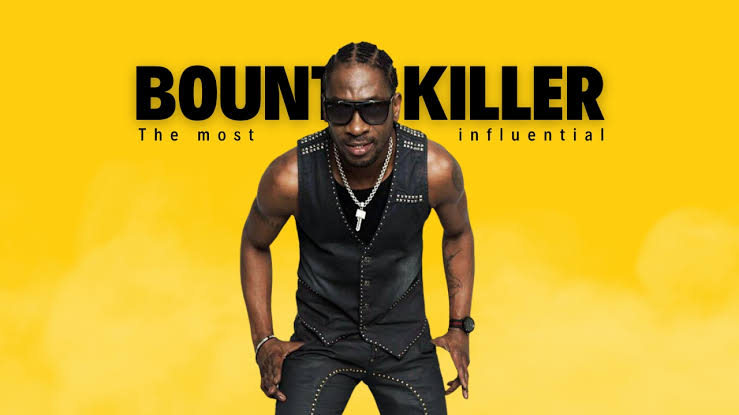
The parade kept coming. Supercat’s “Too Greedy,” Ninjaman’s “Run the Country,” Bounty Killer’s “Roots, Reality and Culture” and Carlton Livingston’s “Tell Me How You Want It” all rode Real Rock, as did Shinehead’s fittingly titled “The Real Rock.”
Johnny Osbourne pulled the bass for “No Ice Cream Sound” in 1992, and Mafia & Fluxy offered their own “Real Rock Version” in 1996.
Admiral Tibet, Al Campbell, Beres Hammond, Sanchez, Barrington Levy, Anthony B, Admiral Bailey and Buju Banton round out a guest list that spans every corner of the music.
Crossing Over: Boom Shak-A-Tack
In 1993 Born Jamericans built “Boom Shak-A-Tack” around a hook lifted from Real Rock, carrying the riddim into nineties dancehall crossover.
It is one of the clearest examples of how the original’s riff works as a hook even outside the full rhythm track, instantly recognisable to anyone raised on sound system culture.
Dub Versions: Stripped to the Bone
A riddim this strong was always going to be a dub favourite. The Soul Vendors’ “Real Dub” keeps it in the Studio One family, Bunny Lee’s “Real Dub Stylee” arrived in 1983, and King Jammy’s “Luxury Version” followed in 1992.
In each, the bass and drums take centre stage and the echo chamber does the talking, a reminder that Real Rock’s skeleton is as compelling as anything sung over it.
How Many Songs Are on Real Rock?
Nobody can give an exact count, which says everything. Wikipedia describes it as versioned hundreds of times.
The Riddimsworld database logs 397 tracks by 291 different artists, and WhoSampled lists 113 songs that sample the original.
Different methods, same conclusion: this is one of the most used rhythms in Jamaican music, and the tally keeps climbing.
Real Rock Today
Nearly six decades on, Real Rock is still being rebuilt and celebrated. Macka B’s “Di Real Rock” is a loving history lesson set to the riddim, riding a newer version produced by George Miller of Firehouse Crew at Guerilla Lion studio. Hearing a veteran chatter about the rhythm while riding it is the version system in its purest form.
That is why Real Rock still matters. It captures Studio One at its peak, the house band sound that defined Jamaican music, and Mittoo’s genius in three notes.
It also proves the riddim culture’s central idea: a great rhythm never belongs to one song. It belongs to every singer, deejay and selector who picks it up and adds a chapter.
From Willie Williams to Shabba Ranks to The Clash, Real Rock keeps rocking because the dance keeps asking for it.