
In 2001, if you were near a sound system, a car stereo or a radio in Kingston, you heard riddims.
The best dancehall songs of 2001 came off a production line moving faster than ever before. By one fan count, more than 150 dancehall riddims hit the streets that year.
VP Records launched its Riddim Driven series in January just to keep pace. Producers in Kingston and Miami voiced a dozen artists on a single beat and let the dancefloor pick the winner.
The music also moved in two directions at once. Shaggy owned American pop radio, and Sean Paul was about to.
At home, the songs became the soundtrack to a political season and started arguments that have never fully settled. Here are the twelve tracks that defined the year, strongest first.
1. Sean Paul, “Gimme the Light” (2001)
Before the Grammys and the arena tours, Sean Paul was a Kingston deejay with a slick, rapid-fire flow and one tune that changed everything. “Give Me the Light,” as it was titled for its Jamaican release, rode the Buzz riddim.
That riddim was the debut hit production from Troyton Rami and Roger Mackenzie of Miami’s Black Shadow Records. It drew roughly a dozen voicings and four hits, but this was the one that travelled.
Issued internationally in 2002 as “Gimme the Light,” it climbed to number seven on the Billboard Hot 100 and went top 20 in the UK, Canada and the Netherlands.
It spawned the Busta Rhymes remix “Pass the Dro-Voisier” and helped secure his deal with Atlantic and VP. Everything Sean Paul became starts here.
2. Shaggy featuring Rayvon, “Angel” (2001)
Outside Jamaica, the sound of 2001 was Shaggy’s unhurried baritone. “Angel” was built with producer Shaun “Sting” Pizzonia and carried by Rayvon’s honeyed hook.
It arrived as a single on 9 January and became Shaggy’s second US number one of the year, after “It Wasn’t Me.”
It topped the Hot 100 for the week of 31 March by the slimmest of margins. Billboard’s Silvio Pietroluongo said it beat Crazy Town’s “Butterfly” by two points, the smallest gap since the magazine began storing charts digitally in 1985.
It was also only the second song to reach the summit without a retail single, after Aaliyah’s “Try Again.” It went on to number one in Germany.
Its parent album, Hot Shot, debuted at number one on the Billboard 200 for MCA and finished as the second most successful album of 2001.
3. Tanto Metro & Devonte, “Give It to Her” (2001)
Tanto Metro & Devonte had been dancehall’s favourite pairing since “Everyone Falls in Love” in 1997. In 2001 they came back with something saucier.
“Give It to Her” sat on Jeremy Harding’s Liquid riddim. It came out first in Jamaica on his 2 Hard label before VP Records picked it up for America.
VP’s 7-inch paired it with Lady Saw’s “Tell Me What You Like” on the same beat. That pressing shows how the riddim era worked: one instrumental carrying two very different conversations about romance. The tune anchored the duo’s VP album The Beat Goes On.
Tanto’s rugged deejaying set against Devonte’s smooth singing still sounds like the warmest moment on any 2001 playlist. Put it on at a backyard party today and watch the room soften.
4. Capleton, “Forward Inna Dem Clothes” (2000)
Capleton was burning at full heat when Harvel “Gadaffi” Hart handed him the Heat Wave riddim for Annex.
The tune first surfaced on Greensleeves’ Heatwave rhythm album in December 2000, so strictly speaking it is a late arrival.
But 2001 was the year it ruled. It turned up on the Biggest Ragga Dancehall Anthems 2001 compilation and earned a hip-hop remix on 7-inch that same year.
Capleton’s urgent, chanting delivery made it a fixture at sessions long after the riddim cooled. Its afterlife is remarkable. Soulproof built “Inna Dem Clothes” around it in 2005.
In 2013, Kanye West sampled Capleton’s vocals for “I Am a God,” carrying the Fireman’s voice onto one of the most talked-about rap albums of the decade.
5. T.O.K., “Chi Chi Man” (2001)
No song captured Jamaica’s mood in 2001 more completely, and none has aged worse. Tony “CD” Kelly produced it on the Sashi riddim, and it had been cut well before it caught fire.
Craigy T later called it an “iron balloon” that selectors refused to play for three years. Then it exploded.
It landed on the album My Crew, My Dawgs and became the Jamaica Labour Party’s theme in 2001. Party leader Edward Seaga reportedly liked its Revivalist, Pocomania feel.
The lyrics advocated killing gay men, and the Stop Murder Music campaign targeted the group over them.
In May 2023, T.O.K. said they would drop the song from their catalogue and live shows, with Bay-C calling it a “gift and a curse.” Days later, Craigy T said he stood behind it.
6. Elephant Man, “Log On” (2001)
Elephant Man was everywhere in 2001, and “Log On” was his loudest calling card. The tune rode the Log On riddim and opened the Biggest Ragga Dancehall Anthems 2001 compilation as track one.
Its video, directed by Big Daddy, dates to that year, although the single is often filed under 2002.
The phrase jumped from the dancefloor into politics. The following year, the People’s National Party built its “Log On to Progress” slogan on the track, answering the JLP’s use of “Chi Chi Man.” Like that song, though, “Log On” carried violent and homophobic lines.
It is a reminder that the raw energy of this era came wrapped in lyrics many fans now hear very differently. As a showcase for the Energy God’s hyperactive charisma, nothing he released that year hit harder.
7. Elephant Man, “Haters Wanna War” (2001)
The Buzz riddim did not belong to Sean Paul alone. Of its four breakout hits, “Haters Wanna War” was Elephant Man’s.
It meant that the same Black Shadow instrumental kept two of 2001’s biggest personalities in direct competition across the island’s sound systems.
That was the riddim game at its sharpest. Every voicing was a contest, and selectors decided who won each night.
Elephant Man’s second appearance on this list also shows how dominant he was that year: a deejay who could land a hit on any beat placed in front of him.
The Buzz itself refused to die. Elephant Man returned to it nearly two decades later with “Sunday Service” in 2020, proof that the riddim still had plenty of life in it.
8. Sizzla, “Pump Up” (2001)
Sizzla’s take on the Buzz riddim stood out from the start. It was one of the four voicings to break through, holding its own beside Sean Paul and Elephant Man on a beat crowded with talent.
It also made the Biggest Ragga Dancehall Anthems 2001 compilation, where it sat alongside his “Cop Killa” and “Woman Dem a Fi Me.” That is three entries from one artist on a single year-defining collection.
That volume was typical of Sizzla in this period. He moved freely between conscious Rastafarian fire and hardcore dancehall swagger, voicing at a pace few could match.
“Pump Up” catches him on the hardcore side, riding Rami and Mackenzie’s production with the authority of an artist who had nothing left to prove.
9. Bounty Killer, “Which One General” (2001)
Bounty Killer spent his career treating dancehall as a battlefield, so a tune called “Which One General” was practically a mission statement.
He voiced it on the Showdown riddim for Bombrush Records in 2001, a fitting title for a beat carrying the Warlord.
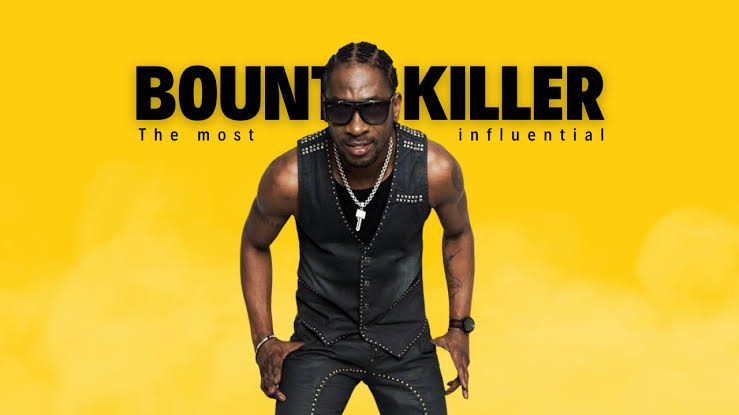
His presence on that year’s anthem compilations, with “All Out” and “I Am Who I Am” also in rotation, shows how firmly he still held his rank. By then a younger wave of deejays was lining up behind him, many of them his own protégés.
Bounty answered by reminding everyone who set the standard. The tune belongs to the long tradition of dancehall self-assertion, where the clash is always on, even when no rival is named.
10. Assassin, “Shine” (2001)
Years before the world knew him as Agent Sasco, Assassin was sharpening his reputation as one of the most articulate deejays of his generation.
“Shine” came on the Badman riddim, released on the Master Mind label and produced by Steven “Lenky” Marsden. Zumjay’s “Hyperactive” rode the same beat.
The credit matters. Within a year, Lenky built the Diwali riddim, the most popular riddim of 2002 and the springboard for Wayne Wonder and Sean Paul’s global breakthroughs.
“Shine” catches producer and deejay just before that wave broke. It is a reminder that 2001 was the workshop where the sound of the next few years was being assembled, one carefully voiced tune at a time.
11. Cobra, “Press Trigger” (2001)
Mad Cobra was already a seasoned name from dancehall’s early-nineties boom when he stepped onto the Buzz riddim. “Press Trigger” became one of its four hits.
That made the Buzz an unusual meeting point: a veteran, a firebrand, a rising star and the hottest entertainer in Jamaica, all on one Miami-made beat.
The title tells you which lane Cobra chose. This was hardcore, gun-talk dancehall, the gritty side of the riddim that radio-friendly Sean Paul never touched.
Hearing the two back to back shows how much range a single instrumental could carry in 2001. It also shows why the riddim system thrived: a beat lived or died by how many different moods it could hold.
12. Anthony B, “Jiggalo” (2001)
Anthony B’s Bobo Ashanti fire usually aimed at Babylon. On “Jiggalo” he brought that charged delivery to the Renegade riddim for Fat Eyes Records.
It is one of the 2001 tunes that shows how freely the era’s Rastafarian chanters moved between roots messages and the dancehall’s lighter, cheekier side.
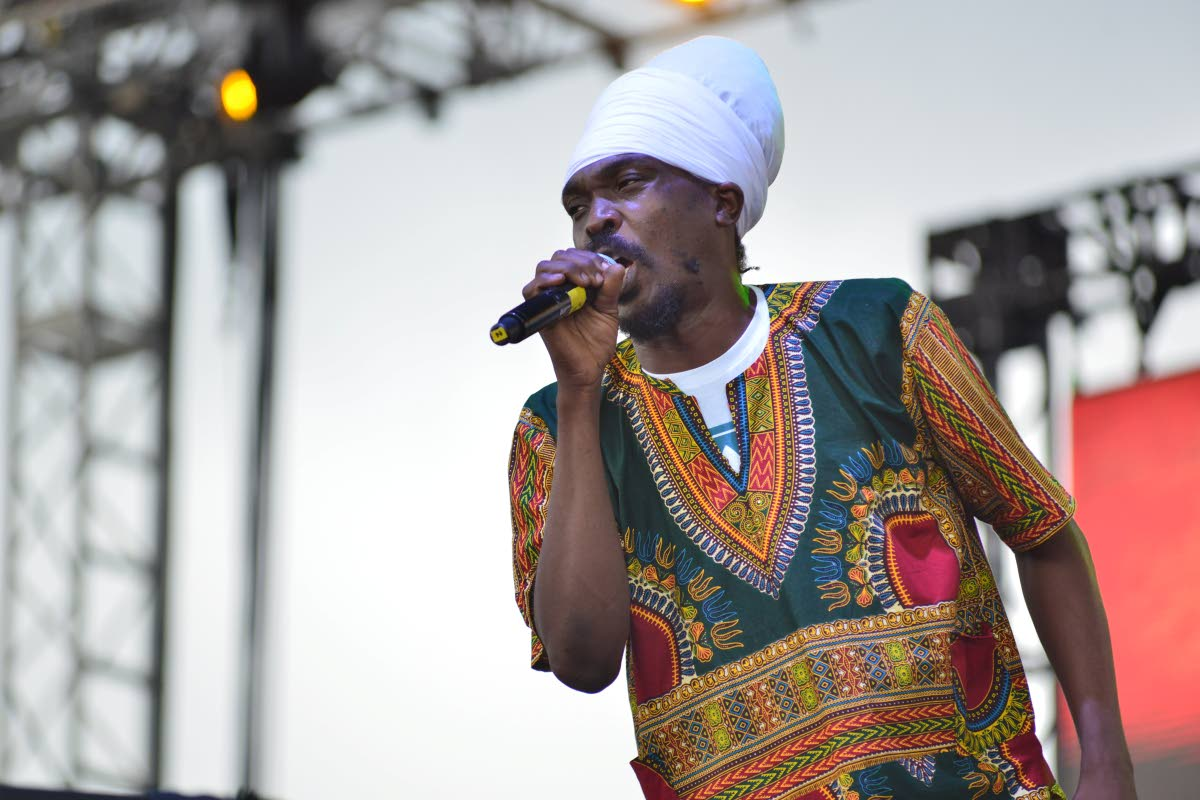
The Renegade was one of more than a hundred dancehall riddims competing for attention that year.
Rising above that crowd took personality, and Anthony B always had plenty: the bounding stage energy, the gravel in his voice, the sense that every line was delivered on his feet.
“Jiggalo” closes this list as a snapshot of a crowded, fiercely competitive year, when even a veteran chanter had to fight for his place on the riddim.
Why 2001 Still Matters
Look back at these twelve songs and you can hear dancehall at a hinge point. On one side was the Kingston and Miami riddim machine at its most prolific, with producers like Troyton Rami, Jeremy Harding, Gadaffi and Lenky feeding a culture that ran on 7-inch singles and sound system verdicts.
On the other side was a global audience starting to listen closely. Shaggy had already conquered the charts, and Sean Paul’s “Get Busy” would spend three weeks at number one in the US in 2003.
The year also forced a reckoning that the genre is still working through, as T.O.K.’s own reversal shows. Twenty-five years on, 2001 remains the year dancehall proved it could rule the street and the world at the same time.