

Jamaica has always treated other people’s songs as raw material. In the sound system days, selectors hunted American R&B records and Kingston producers cut local versions to meet the demand, so the cover became part of the island’s musical DNA.
The best reggae covers do more than borrow a melody. They slow the pulse, shift the weight onto the bass and the offbeat, and find a feeling the songwriter may never have known was there.
Some of these versions outsold the records they came from. Others outlived them in the dance, or sit beside them as equals, a second reading of a familiar text.
Here are 12 reggae remakes, ranked, that rival and in several cases beat their originals. They run from Trojan-era soul to the crossover hits that ruled the 1990s.
1. UB40, “Red Red Wine” (1983)
UB40 always insisted they were covering a reggae record, not a Neil Diamond one. Diamond’s original, from his 1967 album Just For You, was a brooding ballad that stalled at No. 62 on the Hot 100 in 1968.
The Birmingham band had fallen for Tony Tribe’s reggae reading instead. It reached No. 46 in the UK and gave Trojan its first chart entry. “To me, it was always a Tony Tribe song. He sang it,” Ali Campbell told Billboard.
UB40’s own take on Labour of Love is warm and unhurried, with a different arrangement from Tribe’s. It topped the UK chart in 1983 and the Hot 100 in October 1988.
The 12-inch carries Astro’s toasted verse, a part so loved that Diamond himself later borrowed it on stage.
2. Ken Boothe, “Everything I Own” (1974)
Of all the cases for reggae beating the source, this is the cleanest. David Gates wrote “Everything I Own” for Bread as a soft-rock elegy, and it reached only No. 32 in the UK in 1972.
Boothe first heard Andy Williams’ version in Canada and added it because he needed more album material.
Producer Lloyd Charmers didn’t even want him to record it. They cut it at Federal in Kingston with Lloyd Parks on bass, Paul Douglas on drums, Willie Lindo on guitar and Charmers on keys.
The single went to No. 1 in Jamaica, then topped the UK chart on October 26, 1974, for three weeks.
Boothe sings “Anything I Own” throughout, and his aching tenor makes the loss feel bottomless. The bitter footnote is that Trojan went bankrupt in 1975, and he never saw royalties.
3. Chaka Demus & Pliers feat. Jack Radics & Taxi Gang, “Twist and Shout” (1993)
By late 1993, Chaka Demus & Pliers were on a run few Jamaican acts have matched. Every one of the six singles from Tease Me landed in the UK top 30.
Their “Twist and Shout” was built with Sly & Robbie and Lloyd “Gitsy” Willis for Mango/Island. It takes a song first cut by the Top Notes in 1961 and made famous by the Isley Brothers a year later, and turns it into a ragga party record. The rhythm even nods to the Isleys’ “This Old Heart of Mine.”
Released December 6, 1993, it spent two weeks at No. 1 in the UK in January 1994. It also reached No. 2 in New Zealand and No. 4 in Denmark. Critics argued over it, but wedding dancefloors settled the matter long ago.
4. Toots and the Maytals, “Take Me Home, Country Roads” (1974)
Only Toots Hibbert could take John Denver’s 1971 ode to the Appalachians and make it sound like it grew up in rural Jamaica.
On In the Dark, later issued in the US as Funky Kingston, the Maytals move the song to “West Jamaica.” Rolling Stone describes the groove as a reggae backbeat dressed with country flourishes.
The joke works because Toots means every word, and his gospel-soaked voice turns homesickness into a church-hall singalong. Denver’s version is pretty, but this one testifies.
Chris Blackwell, Dave Bloxham and Warwick Lyn produced it. Toots returned to the song in later live and session recordings, yet the 1974 cut remains the definitive one.
5. Grace Jones, “Nightclubbing” (1981)
Iggy Pop’s “Nightclubbing,” co-written with David Bowie, is a zombie shuffle through the after-hours. Grace Jones turned it into something colder and far more seductive.
She recorded it at Compass Point Studios in Nassau with Sly & Robbie and the Compass Point All Stars, with Chris Blackwell and Alex Sadkin producing.
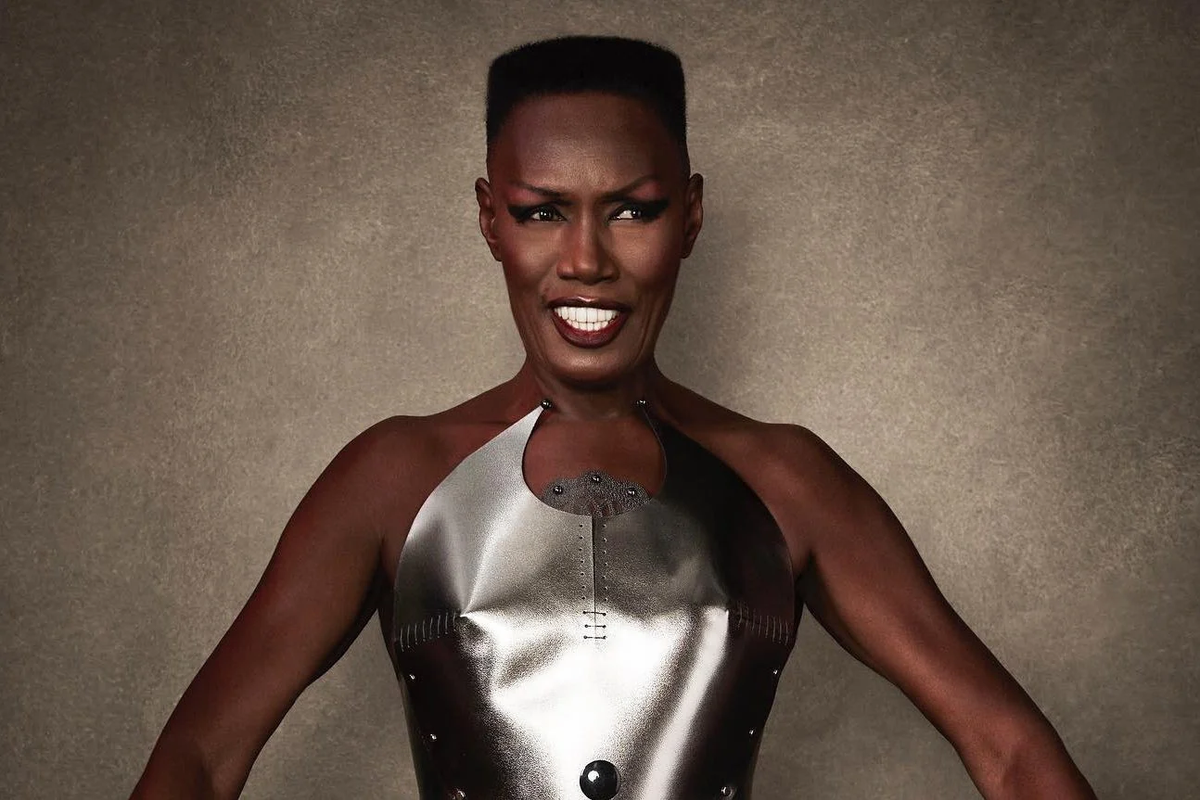
The title track of her May 1981 Island album glides on a wide, spacious rhythm while Jones delivers the lyric with icy poise.
The Line of Best Fit put it neatly, saying she handles the rock number as if it were a smooth Nina Simone ballad.
Whether it beats Iggy is a matter of taste. Either way, it became one of her signature songs, and the album climbed to No. 9 on the black albums chart.
6. The Heptones, “Suspicious Minds” (1971)
Elvis Presley turned Mark James’s “Suspicious Minds” into a stadium-sized drama. The Heptones made it a quiet argument between lovers who already know how it ends.
In place of the Memphis horns and strings, the trio offers the close, sweet harmonies that defined Jamaica’s great vocal groups, floating over a rolling bassline.
The tension of the original remains, but it simmers instead of exploding, and the chorus lands like a sigh.
One Rate Your Music list goes further than most would dare: “The Heptones along with Coxsone Dodd may very well eclipse the Elvis original here.”
That is a bold call against the King of Rock and Roll. Once those harmonies lock in, though, it is hard to argue.
7. Johnny Clarke, “None Shall Escape the Judgement” (1974)
Not every great reggae cover reaches outside Jamaica. Earl Zero wrote and first recorded “None Shall Escape the Judgement” in 1973, a roots warning wrapped in a melody too strong to leave alone.
Johnny Clarke’s version arrived the following year with a youthful urgency in his voice. It became a hit and the title track of his debut album, introducing a singer who would become one of the defining voices of 1970s roots.
The tune travelled far beyond Kingston. Jonathan Richman and the Modern Lovers adapted it into the instrumental “Egyptian Reggae,” which reached No. 5 in the UK in 1977. Clarke’s cut is still the one most fans reach for first.
8. Jennifer Lara, “I’m in Love” (1981)
Evelyn “Champagne” King’s “I’m in Love” is a sleek piece of disco-funk, built for mirrorballs and long nights.
Jennifer Lara’s version, from Studio One Presents Jennifer Lara, brings it home to a lovers’ groove. The tempo eases and the bass deepens, which leaves Lara’s voice room to breathe.
Where King sounds dazzled, Lara sounds certain, like a woman stating a fact rather than confessing a crush.
The result is one of the warmest records in the Studio One catalogue and a reminder of how many strong female voices passed through those Brentford Road sessions.
A Rate Your Music list suggests the cover “may eclipse the original.” Play the two back to back on a summer evening and that claim starts to sound reasonable.
9. Errol Dunkley, “Betcha By Golly Wow” (1980)
The Stylistics’ “Betcha By Golly Wow” is Philadelphia soul at its most ornate, all strings and soaring falsetto. Errol Dunkley strips away the orchestra and lets the song’s simple, wide-eyed devotion carry it.
His plaintive, slightly nasal tone has always suited songs of yearning, and here it gives the lyric a street-level sincerity the original’s polish sometimes hides.
The rhythm sways rather than swoons, which makes this a lovers record for the dance rather than the bedroom.
One Rate Your Music list calls it “easily as good as the original,” and that is no small praise for a cover of a Thom Bell masterpiece. It remains a staple for selectors who like their soul with a bassline underneath.
10. Diana King, “I Say a Little Prayer” (1997)
Some covers earn their place by bringing reggae to people who never knew they needed it.
Dionne Warwick introduced Bacharach and David’s “I Say a Little Prayer” in 1967, and Aretha Franklin’s 1968 version, a No. 10 Hot 100 hit, became the benchmark.
Diana King’s take, produced by Andy Marvel, arrived on Work Group as the first single from Think Like a Girl. It also featured prominently in My Best Friend’s Wedding.
The Love to Infinity dance remix pushed it onto radio, and the single reached No. 38 on the Hot 100 and No. 8 on the dance club chart.
Nobody beats Aretha, but King made the song a Caribbean summer anthem for a whole generation.
11. Jimmy Cliff, “I Can See Clearly Now” (1993)
This is a reggae cover of a song that already leaned toward reggae. Johnny Nash’s original carried a gentle Jamaican lilt and spent four weeks at No. 1 on the Hot 100 from November 4, 1972.
Jimmy Cliff had form with covers, having taken on Cat Stevens’s “Wild World” years earlier. Two decades after Nash’s hit, Cliff recorded the song for the Cool Runnings soundtrack.
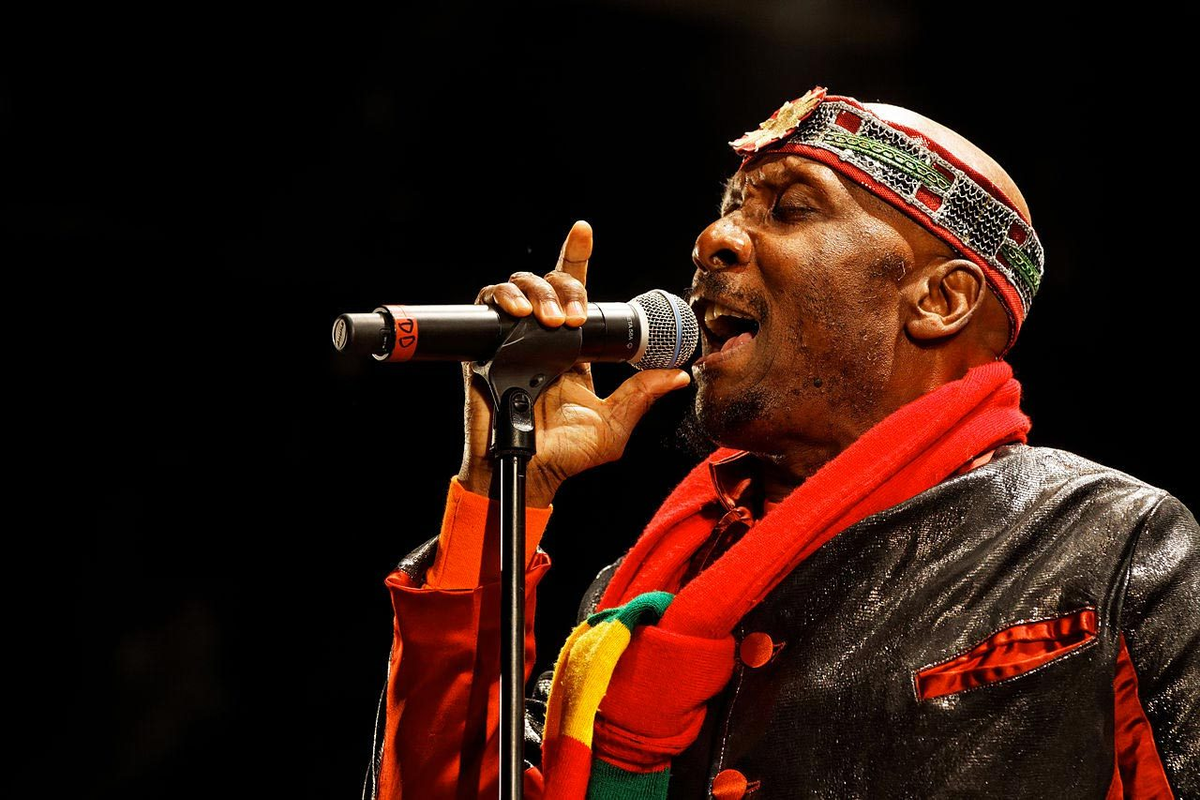
He gave it a brighter, horn-kissed bounce that matched the film’s underdog joy, and his voice brought a hard-won optimism the original only hinted at.
The single returned him to mainstream pop charts in the US and elsewhere and went all the way to No. 1 in France. For many listeners, Cliff’s is the version they hear first.
12. Grace Jones, “Use Me” (1981)
Bill Withers’ 1972 “Use Me” is a sly, strutting confession, a man cheerfully admitting he’s being played. Grace Jones takes it over on Nightclubbing with the same Compass Point team and flips the power completely.
The Student Playlist describes it as a louche, reggae-fied version that swaps the gender perspectives. Sly & Robbie lay down a rhythm that crawls rather than struts.
Jones sounds amused and in full control, never a victim. It is less a cover than a takeover, and the extended mix on the Private Life compilation lets the groove stretch out even further. Withers wrote a great song, and Jones found a whole other one hiding inside it.
Why the Reggae Cover Still Matters
Hold these 12 records together and a pattern appears. Jamaican artists never treated foreign hits as sacred.
They treated them as riddims waiting to happen and as melodies to be reborn on the offbeat.
Ken Boothe outsold Bread, UB40 outsold Neil Diamond, and Chaka Demus & Pliers turned a 1960s rock standard into a 1990s ragga anthem. Toots and Grace Jones went further and rewrote the meaning of the songs they touched.
That tradition never stopped. It lives on in every dancehall artist who flips a pop hook and every sound system selector who drops a familiar melody over a heavy bassline.
A great reggae cover doesn’t erase the original. It shows you what the song was always capable of becoming.