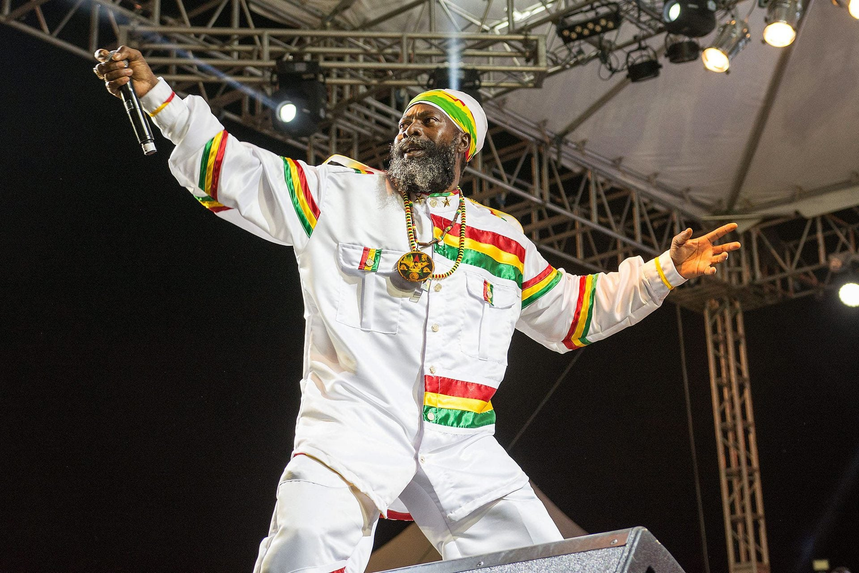

Few artists have carried a nickname as honestly as The Fireman. Clifton George Bailey III, born in Islington, St. Mary, arrived in the late 1980s when slackness and gun talk ruled the dancehall.
He had his share of early hits like “Bumbo Red” and “No Lotion Man” before he found his covenant, wrapped himself in Rastafari, and began chanting down Babylon with a ferocity few deejays have matched.
Any list of the best Capleton songs has to hold both men: the hungry young toaster and the Prophet who set the 1990s and 2000s ablaze.
Alongside Buju Banton and Sizzla, he led dancehall’s return to reggae tradition. His 1999 headline set on Reggae Sumfest’s dancehall night revived his career, and the run of hits that followed filled More Fire, which climbed to No. 3 on the Billboard Reggae Albums chart. Here are the twelve that burn brightest.
1. Capleton, “Tour” (1994)
Some songs report the news. “Tour” felt like the news itself, delivered at full volume. According to Capleton’s official bio, he wrote it in the weeks after the killings of fellow artists Panhead and Dirtsman, and the lyric names them directly, turning grief into a blazing state of the dancehall address.
Stuart Brown produced it for African Star, with Sly and Robbie supplying the music on the original Yard Mix, and the Tour riddim became one of the defining rhythms of his career.
The song grew into an anthem of the roots revival. A hip hop flavoured remix, co-produced by Lil Jon, then hit the Billboard charts.
Together with “Wings of the Morning,” it earned him the Def Jam deal behind Prophecy, which opens with this record.
2. Capleton, “Wings of the Morning” (1994)
If “Tour” opened the American door, “Wings of the Morning” walked straight through it. The original was another Stuart Brown production. The remix, however, is where the song’s legend lives.
The Dynamik Duo built what Boomshots called a “sureshot” beat with an Otis Redding flavour, and Wu-Tang Clan’s Method Man jumped on it, putting a Jamaican fire chanter and a Staten Island rhymer on equal footing.
The hip hop versions of “Tour” and “Wings” made Capleton a crossover success on the rap and dance singles charts at a time when few dancehall voices were landing in those spaces. Prophecy, the album that housed both, later appeared in The Rough Guide: Reggae: 100 Essential CDs.
3. Capleton, “Who Dem?” (1999)
Shout the first two words of the hook in any dance and the whole crowd answers. “Who Dem?”, also known by its “Slew Dem” refrain, rides Ward 21’s Bellyas riddim, which was released on the Mentally Disturbed label, and it sounds like a man who has rediscovered every ounce of his power.
Rootsy in feel but built for the sound system, it became one of the two hit singles that carried More Fire. That chorus took on a life of its own as a dubplate staple, cut for sounds such as Little Lion Sound.
On streaming platforms today it still sits at or near the top of his catalogue, proof that the Prophet’s comeback was no flash.
4. Capleton, “Jah Jah City” (1999)
Here the fire turns into a sermon. “Jah Jah City” is the antiviolence anthem at the centre of his late 1990s resurgence, a plea for a righteous place delivered over the Liberation riddim from the Morgan Heritage camp.
Production is credited to Denroy Morgan and Morgan Heritage, and the single appeared on HMG Records before VP placed it on More Fire in 2000.
Morgan Heritage’s own “Liberation” and Jah Cure’s “Love Is The Solution” ride the same rhythm, but Capleton’s cut became a sound system favourite and dancehall chart topper.
A quarter century later, the Jamaica Observer still introduced him as “the Jah Jah City singer,” which says everything about how deeply the song stuck.
5. Capleton, “Good In Her Clothes” (1999)
For all the brimstone, Capleton always had a tender streak, and this is its finest showcase. Produced by Michael “Mickey John” Johnson on the Hotta Fire riddim, “Good In Her Clothes” came out on a Hi-Grade Music 7″ in 1999 before VP paired it with “More Prophet” on a 12″ in May 2000.
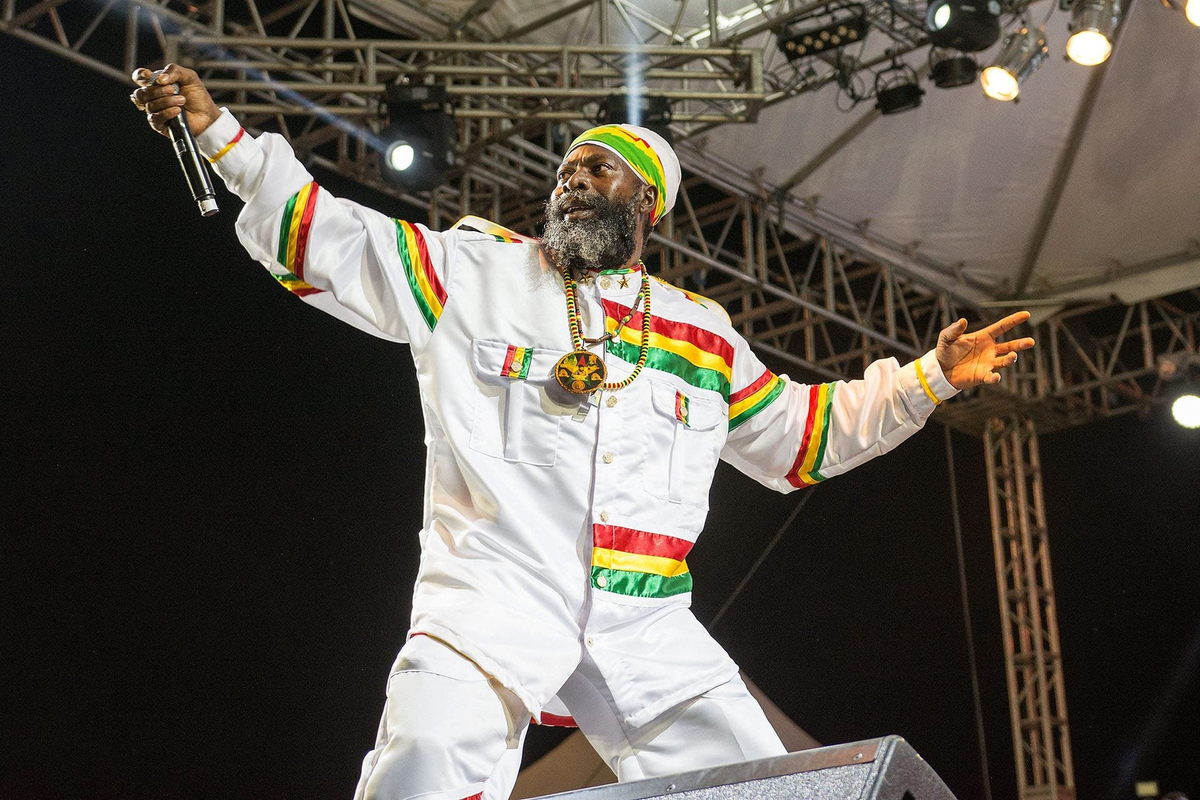
The message is respect: praise for women who carry themselves like Empresses. It became the female positive hit of More Fire and gave the album a warmth that balanced the burning. Jah Thunder’s “A Who” sits on the same rhythm.
The tune remains a reminder that conscious dancehall could still be sweet, and sometimes even flirtatious, without losing its spine.
6. Capleton, “Don’t Dis the Trinity” (1994)
This is the conversion record, the moment the transformation became audible. “I was once lost but now I’m found,” he declares, and the line lands like testimony.
Produced by Richard Bell and later placed as track six on Prophecy, “Don’t Dis the Trinity” was a mega-hit that announced the Rasta Capleton to a dancehall audience still used to hearing him in a different mood.
Fans of the era tend to name it in the same breath as “Tour” and “Obstacle,” the trio that defined his mid-1990s turn. Its fervour set the tone for everything that followed, from the Selassie I chants to the fire that would become his trademark.
7. Capleton, “Alms House” (1992)
Before the turban and the torch, there was this. Alms House” is the song that began to establish his place in dancehall, a Philip “Fatis” Burrell production for Xterminator on the Muslim riddim.
It is early fire Capleton, raw and urgent, sharing a rhythm with Bounty Killer, Sanchez and Dirtsman. That last name adds a heavy echo, since Dirtsman’s death would help inspire “Tour” two years later.
The song gave its title to a 1993 album issued in the US on RAS, and a later VP reissue added a Ragga Hip-Hop Mix. “Music Is a Mission” and “Tour” followed in its wake, but this is where the climb began.
8. Capleton, “That Day Will Come” (2004)
By the mid-2000s, critics grumbled that Capleton was spreading himself across too many riddims. “That Day Will Come” was the answer.
Released on Gibbo Records in Jamaica and on VP with “Ton Load” on the flip, it rode Hard Times, one of the most popular rhythms of 2004, and became one of the hits that defined that year for him.
The one drop gives the song patience, and Capleton matches it with a prophetic, unhurried delivery that shows another side of his voice.
Luciano’s “Silver and Gold” shares the rhythm, which tells you the company it kept. It remains among his most streamed tunes.
9. Capleton, “Chalice” (1995)
The Tour riddim had more to give, and “Chalice” proved it. Built by Stuart Brown for African Star, the same rhythm also carried cuts by Horace Andy and Anthony Red Rose, but Capleton’s sacramental tribute sits right beside “Tour” as one of the blistering selections that made his “Selassie I” chant a signature.
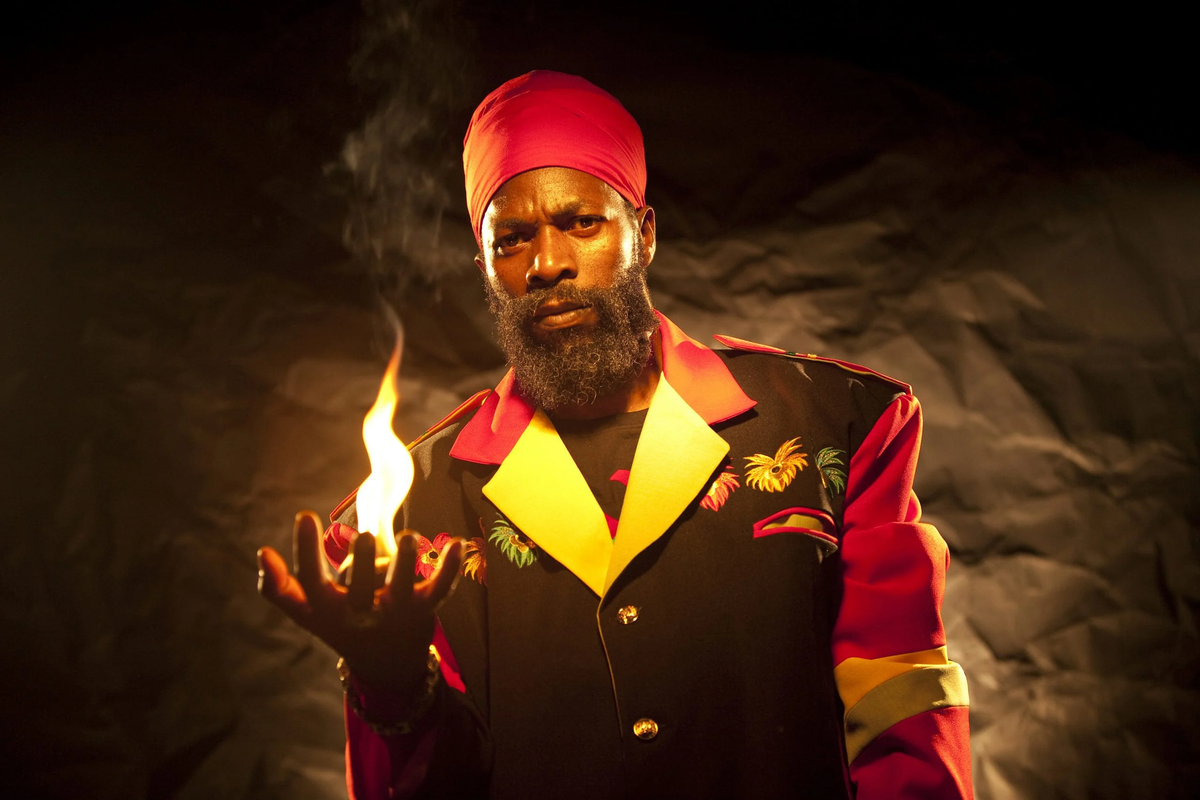
The chalice, of course, is the communal pipe of Rasta reasoning, and the song treats it with reverence and swagger in equal measure.
It travelled further than many dancehall sides did then, with a Lil Jon and Paul remix landing as a bonus track on Prophecy. Few songs capture the 1995 Capleton so completely.
10. Capleton, “More Prophet” (1999)
The title doubles as a mission statement. By 1999 the Prophet name was the banner of his return, and “More Prophet” waved it proudly.
Released on Q 45 over the Dirty Money riddim, credited to Steely & Clevie on the single, it carries the crisp digital punch of late 1990s dancehall, all tight drums and space for the deejay to roar.
VP later paired it with “Good In Her Clothes” on a 12″, a neat snapshot of his range: one side burning, the other side loving.
It remains one of his most played songs, a staple of the More Fire era that still sounds made for a dance at full tilt.
11. Capleton, “Cold Blooded Murderer” (1993)
The year 1993 was a turning point, and “Cold Blooded Murderer” sits right at the hinge. It was one of his signature hits that year, alongside “Everybody Needs Somebody” and “Buggering,” all gathered on the 1994 album Good So.
More tellingly, it was among the increasingly conscious tunes he was voicing as the slackness of his early career gave way to something weightier.
The title alone signals a deejay ready to confront the violence around him rather than celebrate it, a theme that would run through “Tour” and “Jah Jah City.” He clearly felt it still had something to say, revisiting it on Praises to the King in 2003.
12. Capleton, “Prophet” (1992)
Rounding out the list is the song that shares its name with the identity he would grow into. “Prophet” was produced by Dave Kelly and released on Penthouse, riding the Batty Rider and Body Workshop rhythm at the height of the early 1990s digital dancehall boom.
It belongs to the same wave of increasingly conscious tunes as “Cold Blooded Murderer,” a young deejay testing a new voice over one of the era’s hardest beats.
Hearing it now, you can catch the first sparks of the fire: the moral urgency, the preacher’s cadence, the sense that he wanted more from the microphone than a hit.
Why the Fire Still Burns
Capleton once explained that his fire was never physical. He meant it as something spiritual and lyrical, carried in words and music.
Listen to these twelve songs in order and you can trace that flame from the Penthouse era through the Def Jam crossover, the Sumfest revival and the one drop meditations of the 2000s.
He earned a Best Reggae Album Grammy nomination for Still Blazing, and he has never stopped working.
In 2024 he joined Buju Banton on BL Tha Hook Slaya’s “This Is How We Roll,” a reunion he described as “a style from the 90s on a modern dancehall beat.”
This year brought “Pray” with Ikeed and “Si Mi Yah” with Jazzwad. The Fireman is still blazing, and dancehall is better for it.