

If you have ever heard “Revolution” float out of a sound system and wondered what the song is truly about, the answer is more nuanced than its title suggests.
The revolution meaning Dennis Brown builds across the track is not a call to arms in the political-violence sense but a spiritual and social summons: a plea for collective consciousness, Rastafarian faith, and human solidarity. Understanding that distinction unlocks one of the most enduring records in roots reggae history.
Who Was Dennis Brown?
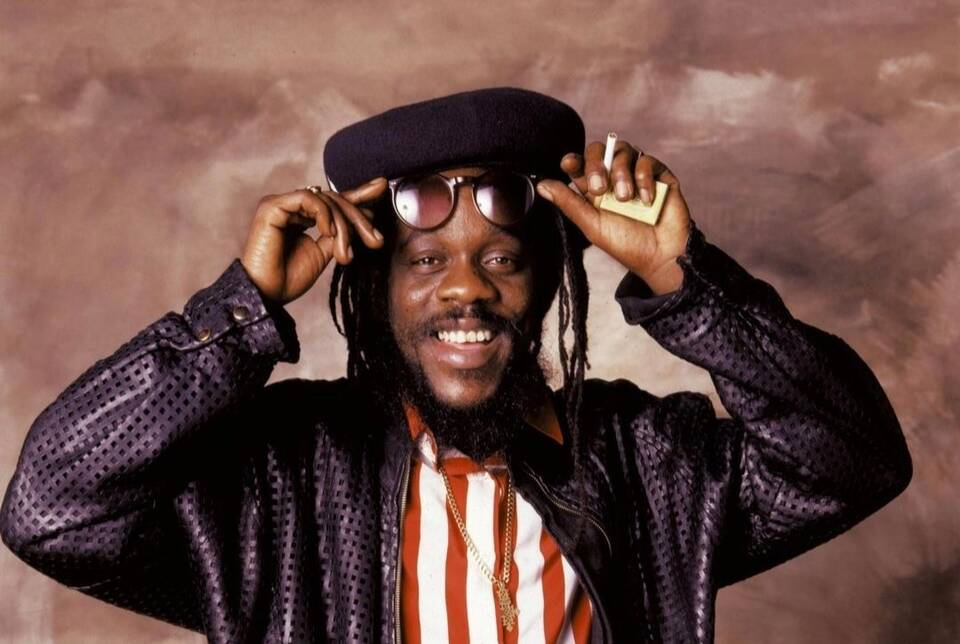
Before unpacking the song itself, it helps to understand the man who wrote it. Dennis Emmanuel Brown was born on February 1, 1957, in Kingston, Jamaica.
During his prolific career, which began in the late 1960s when he was aged eleven, he recorded more than 75 albums and was one of the major stars of lovers rock, a subgenre of reggae.
The scale of that achievement earned him a singular honour: Bob Marley cited Brown as his favourite singer, dubbing him “The Crown Prince of Reggae,” and Brown would prove influential on future generations of reggae singers.
Recorded when Brown was aged between twelve and thirteen, during 1969 and 1970, his debut album included his debut single, a cover of The Van Dykes’ hit “No Man is an Island,” and eleven other tracks, all recorded during his time working for Clement “Coxsone” Dodd’s Studio One label.
From that extraordinary start, Brown built a body of work that moved fluidly between roots consciousness and lovers rock.
His first big hit was “Money In My Pocket” on the Joe Gibbs label, and by the late 1970s Brown had recorded and performed chart-toppers such as “Sitting and Watching,” “Wolves and Leopards,” “Here I Come,” and “Revolution,” many featuring Sly and Robbie as the rhythm section.
That international breakthrough was real and measurable. Money In My Pocket” peaked at number 14 on the UK singles chart, entering in March 1979 and spending nine weeks on the chart.
The Recording: “Brown Sugar” and the Taxi Gang
“Revolution” arrived within one of the most celebrated creative partnerships in reggae. Produced by Sly and Robbie, Brown Sugar was first released on the TAXI label in 1986.
Backed by the Taxi Gang, with Robbie Lyn on synth and Lloyd “Gitsy” Willis on guitar, the album contains “Revolution,” described as a huge Dennis Brown track.
The credits on the song are confirmed: the producer and arranger is listed as Sly and Robbie, with the song written by Dennis Brown.
The Discogs master release for “Revolution” also confirms the existence of a dub counterpart, with Sly and Robbie and the Taxi Gang providing a “Revolution Dubwise” and “Raw Dub” on the B-side.
That dub version gave selectors an additional tool for sound-system play, reinforcing the track’s longevity on the dancehall circuit.
The song had already been part of Brown’s live and recorded arsenal before the Brown Sugar version crystallised it.
A Soul Jazz Records listing for the “Revolution” extended mix describes it as a “big tune, big rhythm from 1980, Dennis Brown and the Taxi Crew on the extended mix.”
The Brown Sugar album thus gathered and formalised material that had been circulating and evolving for several years.
The Lyrics: What Does “Revolution” Actually Mean?
The song begins with a direct challenge to the listener. The opening lines ask whether the listener knows what it means to have a revolution, and what it takes to make a solution, before cataloguing the forces to be overcome: fighting against oppression, battering down depression.
The song opens by asking “Do you know what it means to have a revolution / And what it takes to make a solution / Fighting against oppression / Battering down depression.”
This framing is significant. Brown is not declaring that a revolution has begun or celebrating one already won.
He is posing the question, testing whether the audience is ready to understand the revolution’s true nature. It is a teacher’s opening gambit, not a general’s battle cry.
The chorus poses the central challenge: “Are you ready to stand up and fight the right revolution?” The qualifier “right” is the ideological core of the entire track. Brown is distinguishing between revolution as chaos and revolution as righteous purpose.
The Rastafarian worldview, to which Brown subscribed as a member of the Twelve Tribes of Israel community, held that the true revolution was a moral and spiritual awakening, not simply a political event.
The “soldiers” being addressed are soldiers of Jah, people who have chosen consciousness over complacency.
One of the most striking lyrical moves in “Revolution” is the explicit citation of scripture. The song invokes Matthew 22:14 with the repeated phrase “Many are called, few are chosen.”
This verse, drawn from the Parable of the Wedding Banquet in the New Testament, warns that proximity to an invitation is not the same as readiness to accept its demands.
In the context of the song, Brown is saying that the revolution calls everyone, but only those who are genuinely prepared, in spirit, in love, and in solidarity, will be among the chosen.
This biblical grounding transforms the revolution meaning from a sociopolitical concept into a covenant. You are not called to pick up a weapon; you are called to examine your own readiness.
The bridge of the song drives home the practical ethics of Brown’s revolution. The lyrics insist that “if you wanna live forever, you gotta love each other,” and speak of “living and loving and sharing and caring for your peers,” adding that “a man is paid according to his work.”
Each of these lines carries a specific weight:
- “Living and loving and sharing and caring” is a direct articulation of the Rastafarian principle of Inity, the unity of all people of African descent and, by extension, all oppressed peoples.
- “A man is paid according to his work” echoes a biblical principle of just reward while also serving as a rebuttal to a system Brown and his contemporaries saw as structurally unjust: the colonial economic order that had left Jamaica’s poor without fair compensation for their labour.
- The repeated insistence on living “forever” is a Rastafarian spiritual claim, the belief that righteousness grants eternal life in Jah.
Together, these elements define Brown’s revolution as communal rather than individualistic, spiritual rather than merely political, and enduring rather than momentary.
Context: The Late 1970s and the Roots Moment
“Revolution” emerged from a specific historical moment in Jamaican music.
The late 1970s albums Brown recorded with producer Joe Gibbs played a major part in establishing the dominant position of both Brown and Gibbs in late 1970s reggae, mixing roots reggae themes such as economic hardship, African oppression, religion, and politics.
Jamaica in this era was politically volatile, with inter-party violence claiming lives in Kingston’s garrison communities.
Roots reggae, in the hands of artists like Brown, Peter Tosh, and Burning Spear, served as a form of public theology, translating the sufferings of the poor into a language of spiritual resistance.
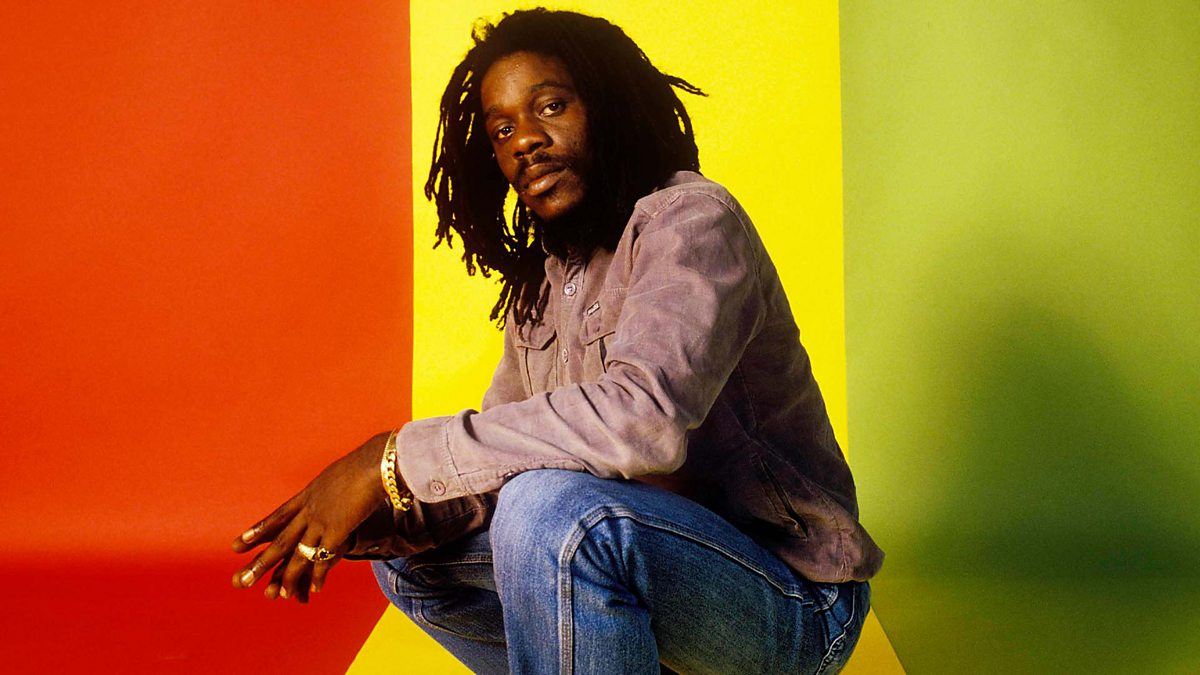
Brown’s albums of this period concentrated on cultural themes and marked his transformation from child star to full-fledged Rastaman.
“Revolution” sits comfortably within that arc: it is the mature Brown, no longer a boy wonder, speaking directly to his community about the nature of the struggle ahead.
Legacy and Cultural Footprint
The reach of “Revolution” extends well beyond the reggae specialist. Brown’s song “Revolution” is featured on the reggae radio station K-JAH Radio West in the 2004 video game Grand Theft Auto: San Andreas.
That placement introduced the track to millions of players globally who might never have encountered a Dennis Brown album, and it remains one of the most-discussed reggae songs associated with the game.
Reggae critics have noted that “Revolution” represents the kind of material that, gathered alongside tracks such as “Get Myself Together,” “Armageddon,” and “Breaking Down the Barriers,” constitutes some of Brown’s most significant work.
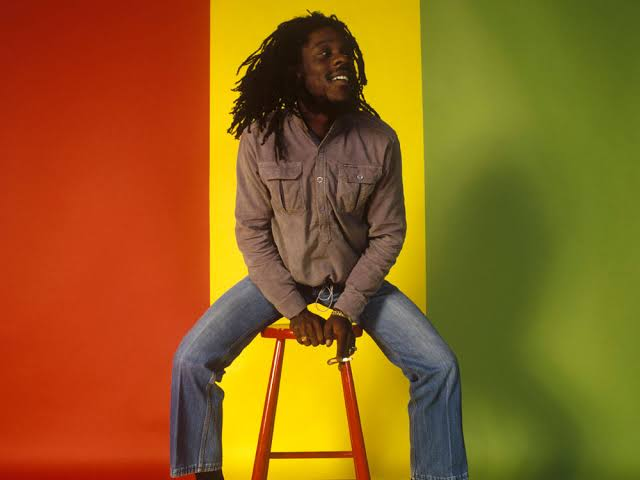
Brown’s discography is so extensive, spanning dozens of albums and hundreds of singles on numerous labels as well as countless compilations and reissues, that it can be difficult to know where to start; yet “Revolution” consistently appears as a primer for the man Bob Marley dubbed the Crown Prince of Reggae.
According to some sources, Brown became addicted to crack cocaine, which affected his career and may have contributed to his premature death. He died on July 1, 1999, aged 42.
The contrast between the life-affirming gospel of “Revolution” and the personal difficulties Brown faced in his final years gives the song an additional, bittersweet dimension.
His call for living and loving and caring stands as both a social manifesto and, in retrospect, a personal aspiration.
The Revolution Meaning: A Summary
The revolution meaning in Dennis Brown’s song operates on three simultaneous levels:
1. Social: A call to resist oppression, depression, and the structural injustices inherited from colonialism.
2. Spiritual: A Rastafarian summons grounded in scripture, specifically Matthew 22:14, demanding that the listener assess their own readiness to live righteously.
3. Communal: An ethic of solidarity, love, and mutual care that defines what a successful revolution actually looks like in daily practice.
Brown was never interested in the revolution as spectacle or as political theatre. His revolution was interior before it was exterior, a transformation of consciousness that would, in his worldview, inevitably produce a transformation of society.
Nearly four decades after the song was recorded, that message retains its clarity and its challenge.