
If you have ever felt a riddim pull your body toward the dance floor before your brain had time to catch up, you already understand the power of the dancehall drum pattern.
The dancehall drum pattern is a syncopated, dotted-rhythm percussion structure built around a displaced backbeat, a sharp clap or rimshot in place of a conventional snare, and a kick that refuses to sit where you expect it.
It is one of the most influential groove templates in the history of recorded music, and understanding it from the inside out will change the way you hear pop, hip-hop, reggaeton, and Afrobeats as much as it changes the way you produce dancehall itself.
What Is a Dancehall Drum Pattern?
The word “riddim” is the Jamaican patois spelling of “rhythm,” characterized by a movement or procedure with uniform or patterned recurrence of a beat, accent, or the like. In dancehall, the riddim is not merely an accompaniment: it is an instrumental track created by a producer or label that is given to vocalists to create their own versions. The drum pattern is the irreducible core of that instrumental.
The dancehall drum pattern is based on a dotted-note shape that sounds and feels very different to the 2-and-4 backbeat of most other dance music flavours, and makes less distinction between the positional roles of the kick and snare, often giving the snare the focal emphasis generally reserved for the kick.
It is these two factors, in the drum department at least, that give dancehall its instantly recognisable character and attitude.
The bass culture of Jamaican sonic sensibilities is characterized with less emphasis on melody and large emphasis on the drum beats and low-frequency bass vibrations to draw attention to the social grounding of the culture. That priority is not accidental. This is not a stylistic accident. It is a deliberate, centuries-deep aesthetic choice.
A Brief History: From One Drop to Digital
To understand where the dancehall drum pattern came from, you need to start with its parent groove: the one drop.
If one ventures into reggae, one must know the groove that stands tall as its totemic symbol: the one drop.
Compositionally simple and heard in countless variations on many iconic reggae tracks, it accents the backbeat of a steady 4-beat bar by dropping one kick and one snare sidestick hit on the third beat of the count.
In the simplest terms, the one drop is defined by the lack of the always-expected kick drum on beat 1, with the emphasis in the bar moving to beat 3, with simultaneous kick and sidestick or snare hits.
Alongside it developed the rockers and steppers variations. With these three riddims, the common Jamaican patois word for rhythms, you have a foundation to create three styles: reggae, rockers (a compromise for those who grew up before reggae with rocksteady), and steppers (the more modern, dancefloor-friendly offbeat creation perfect for dub or dancehall music). Rockers usually run slower in tempo, around 60 to 90 BPM.
Drummer Lowell “Sly” Dunbar was central to this evolution. Alongside bassist Robbie Shakespeare, whom he met in 1972, Dunbar helped refine the “rockers” rhythm, adding syncopation and forward momentum to the traditional one drop feel.
Dunbar was also a pioneer in translating these patterns to machines: during the 1980s, Dunbar started incorporating electronic drums and samplers into his work.
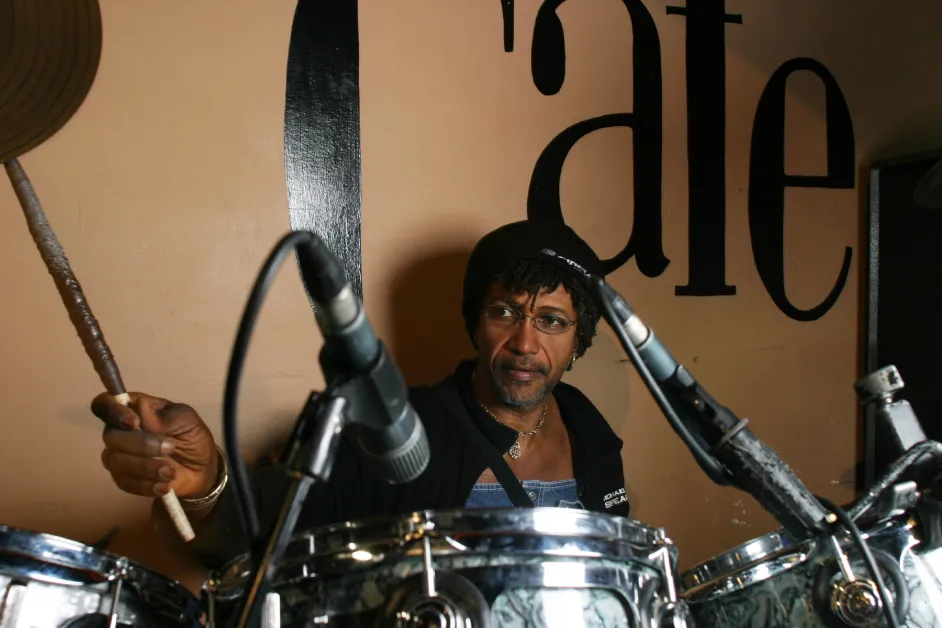
Speaking at a Red Bull Music Academy lecture in 2008, Dunbar said most Jamaican drummers were “scared” of drum machines, while he found them fascinating.
During the early 1980s, Sly began introducing drum machines and electronic sequencing into reggae. He did not abandon live drums.
He used machines to reinforce timing, especially for dancehall tracks that required absolute consistency for sound-system playback.
The single moment most cited as the birth of the modern dancehall drum pattern arrived in 1985.
The legend of Sleng Teng begins with a humble Casio MT-40 keyboard, a consumer-grade instrument that contained a pre-programmed rock and roll rhythm.
It was Noel Davey, a friend of Wayne Smith, who stumbled across a preset on the keyboard that sounded oddly infectious and unlike anything heard in reggae before.
This “Rock” pattern was slowed down, modified, and looped, creating a hypnotic bassline and digital rhythm.
Davey and Smith brought the riddim and toast to noted producer King Jammy in December of 1984. Jammy slowed the riddim down, matched it to Smith’s singing key, and placed piano and clap tracks over it.
The song’s success was instantaneous, sparking a new era in reggae music known as the digital revolution. “Sleng Teng” is widely regarded as the first fully computerised riddim in reggae history.
The riddim was entirely digital: no live instruments were used. When it was played at a sound clash between Jammy’s sound system and Black Scorpio on February 23, 1985, it caused a musical earthquake.
Following the massive success of Sleng Teng, dozens of digital riddims flooded the market. Riddims like Tempo, Punanny, Stalag, and Heavenless were reinvented using drum machines and synthesizers.
Artists like Tenor Saw, Nitty Gritty, Johnny Osbourne, Super Cat, and Little John jumped on board, giving rise to a digital dancehall revolution.
Anatomy of the Dancehall Drum Pattern
Tempo is one of the most important aspects of creating a dancehall beat. Classic dancehall is usually in the 80 to 100 BPM range, which gives it that laid-back yet dynamic bounce feel.
Some sources place standard Jamaican dancehall slightly lower: standard Jamaican dancehall typically runs between 75 and 90 BPM, slower than most people expect, with a specific “one drop” or “steppers” rhythmic feel.
Contemporary productions that borrow dancehall DNA can push further: the drum programming is more detailed, the tempo is faster, with some newer riddims clocking in at 120 beats per minute, and there is a heavy emphasis on melodies in the rhythm construction.
A working target for a producer building their first dancehall drum pattern: set your DAW to 90 to 95 BPM and adjust from there.
The kick drum plays a syncopated pattern with hits on beat 1 and the “and” of 1, then beat 3 and the “and” of 3.
This is the engine of the groove: the kick doubles up in a way that propels the bar forward rather than anchoring it on the downbeat in the manner of a four-to-the-floor house pattern. Dancehall kicks are often sharp and punchy with a mid-range attack that cuts through a mix.
Claps hit on the “and” of 2 and the “and” of 4, creating the characteristic delayed backbeat. This displacement is the defining fingerprint of the pattern.
No snare or open hat is used; dancehall replaces the snare with a clap and rim for a sharper sound. Rim clicks accent the offbeats around the clap, adding the distinctive dancehall percussive texture.
Hi-hats play steady eighth notes, providing the pulse underneath the syncopated elements. This metronomic hi-hat is the one element of the dancehall drum pattern that behaves predictably, giving listeners a clock to lock onto while the kick and clap pull in unexpected directions.
The note-value logic that ties all of these elements together is the dotted-eighth. Key to the groove of dancehall is its characteristic underpinning dotted rhythm.
Essentially, this comprises a repeating pattern of two dotted eighth-notes followed by a regular eighth-note, and you have a lot of freedom in terms of how those notes are distributed between the kick and snare.
That gravitational dotted rhythm can be shared between the kick and snare in any way you like, and it is common to find the whole pattern punched out by the snare over a four-to-the-floor kick.
Step-by-Step: How to Program a Dancehall Drum Pattern (16-Step Grid Notation)
The following notation uses a standard 16-step sequencer grid where each step represents one sixteenth note.
Step 1 falls on beat 1, step 5 on beat 2, step 9 on beat 3, and step 13 on beat 4. The letter X denotes an active step; a dot (.) denotes a rest.
Suggested tempo: 90 to 95 BPM
“`
Step: 1 2 3 4 | 5 6 7 8 | 9 10 11 12 | 13 14 15 16
(Beat 1) | (Beat 2) | (Beat 3) | (Beat 4)
KICK: X . . X | . . . . | X . . X | . . . .
CLAP: . . . . | . X . . | . . . . | . X . .
RIM: . . X . | . . X . | . . X . | . . X .
HI-HAT: X . X . | X . X . | X . X . | X . X .
- Kick (steps 1, 4, 9, 12): Mirrors the syncopated “one drop plus anticipation” feel. With a metronomic eighth-note hi-hat line in place, kick drum hits go on the first and fourth 16th-notes of beats 1 and 3 of a one-bar loop.
- Clap (steps 6, 14): These fall on the “and” of beats 2 and 4. When you write a drum pattern, it can be divided into 8 parts (eighth notes) or 16 parts (sixteenth notes). Dividing the measure into sixteenth notes and placing a snare or clap on steps 4, 7, 12, and 15 is one common approach that keeps the rhythm steady and representative of dancehall. Experiment with both placements to find the backbeat placement that fits your riddim.
- Rim (every third sixteenth note): Rim clicks accent offbeats around the clap, adding the distinctive dancehall percussive texture.
- Hi-hat (every other step, i.e., eighth notes): Hi-hats can follow an eighth or sixteenth note pattern. An interesting variation is to use a shaker or open hat at certain times to keep the beat moving more smoothly.
Add an open hi-hat on the “and” of beat 4 for a more dramatic transition.
Layer a snare underneath the clap for additional weight.
Add a rim click on every sixteenth note for a busier, more energetic riddim.
Slow down to 85 BPM for a roots reggae one-drop feel.
The Dembow: Dancehall’s Most Exported Pattern
No article on the dancehall drum pattern is complete without addressing the dembow, the specific variant that spread the Jamaican groove to every corner of the globe.
The dembow beat is a musical rhythm best known for its use as the core percussion element in reggaeton music, having taken its name from the 1990 dancehall song “Dem Bow” by Shabba Ranks.
It is the story of a single percussion loop, a two-bar drum pattern born in a Kingston studio in 1989, that crossed three countries, changed its name, and quietly became the rhythmic foundation of the most globally dominant Latin music genre of the twenty-first century.
The pattern originated in a riddim created by Jamaican production duo Steely and Clevie in the late 1980s, first used on Gregory Peck’s “Poco Man Jam.”
Shabba Ranks voiced over this riddim on his 1990 track “Dem Bow,” produced by Bobby Digital. That recording became the version that traveled to Panama and Puerto Rico.
In notation terms, the dembow follows a closely related but distinct logic to the standard dancehall pattern. The dembow pattern is a two-bar drum loop. The kick hits on the downbeat of beat one and the “and” of beat two.
The snare or rimshot hits on the “and” of beat one and the downbeat of beat three in a two-bar phrase. It creates a lopsided, bouncing groove that is immediately danceable and remarkably versatile.
The Pattern in Practice: Legendary Riddims
Knowing the theory is one thing. Hearing the dancehall drum pattern in its natural habitat is another. Several landmark riddims illustrate how producers have applied, extended, and reinvented the core groove.
Bam Bam Riddim (early 1990s): In the early 1990s, Sly and Robbie created the wildly influential Bam Bam riddem with just a guitar loop and Bhangra-influenced programmed drums, with no bass on the track. The riddim served as the foundation for several early dancehall hits, including Chaka Demus and Pliers‘ “Bam Bam” and “Murder She Wrote,” as well as Nardo Ranks’ “Them a Bleach.
Sleng Teng (1985): As detailed above, this was the first fully digital and computerized instrumental backing track in the genre, which debuted in 1985 on Wayne Smith’s hit song “Under Mi Sleng Teng.” Created using a preset rhythm from the Casio MT-40 keyboard, it marked a pivotal shift from live band recordings to electronic production, and spawned over 450 versions by various artists.
Diwali Riddim (2002): The Diwali riddim’s first defining characteristic is its sharp, handclap-driven pattern, rubbery low end, and bright, almost festive bounce, giving the whole thing a lifted, contagious feel that immediately separates it from the darker 2002 pull-up style. Artists like Rihanna, Drake, and Ed Sheeran have all used dancehall-influenced beats, spreading Jamaican rhythm worldwide.
Global Reach and What Comes Next
The proof of the dancehall drum pattern’s potency is in its diaspora. Dancehall rhythms have been absorbed into pop, hip-hop, reggaeton, and Afrobeats.
The riddim became a blueprint for countless other tracks, birthing a digital era in reggae and dancehall music.
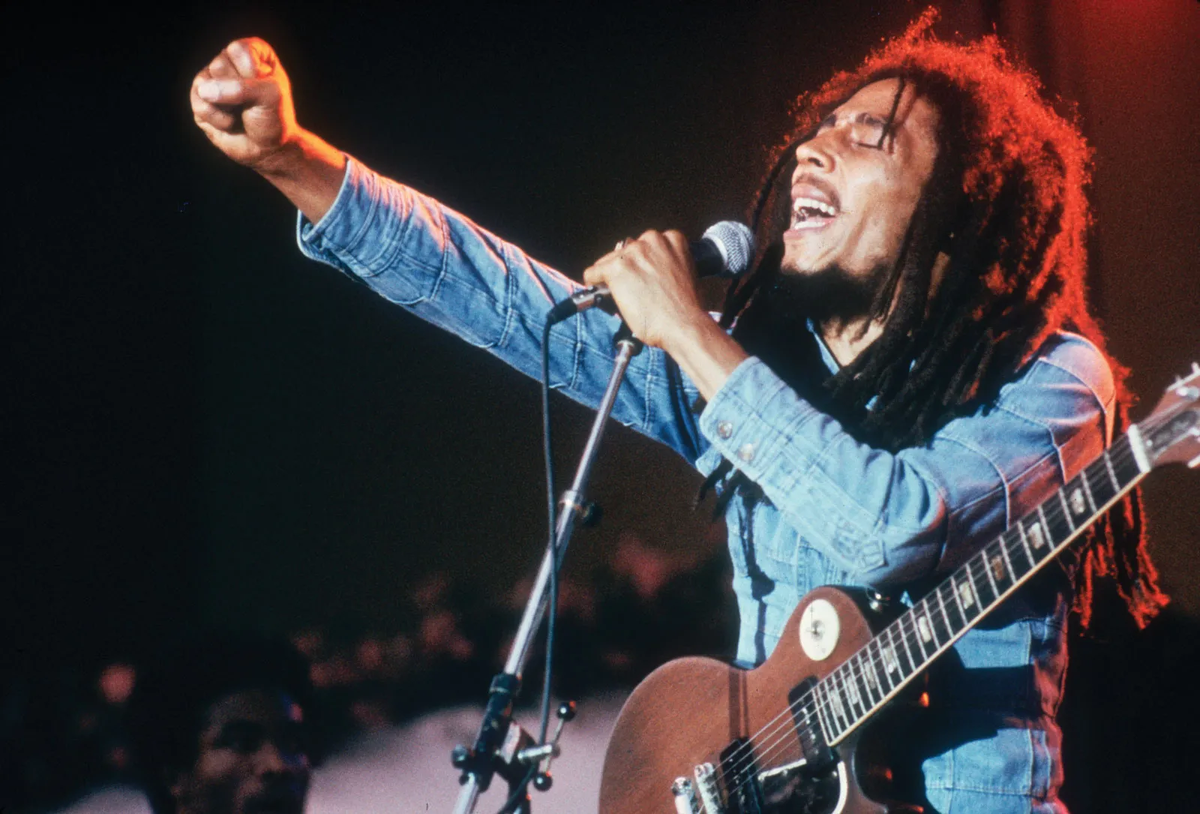
Its minimalist, electronic sound laid the groundwork for genres such as reggaeton and influenced many others from dance to hip-hop, demonstrating the versatility and enduring appeal of reggae’s rhythmic foundation.
For producers today, the takeaway is structural rather than stylistic. Producing a riddim is a mix of precision and simplicity.
Often they are minimal structures, with an emphasis on rhythmic repetition, leaving enough space for the vocals and lyrics to take centre stage.
The key is to create something that is memorable but flexible enough to support multiple interpretations, giving each track a unique identity within the same mold.
The dancehall drum pattern has never needed complexity to travel. It needed only the right displacement of a kick, a clap landed a sixteenth note later than you expected, and a hi-hat steady enough to hold the whole thing together.
That three-part formula has powered Jamaican sound systems since the late 1970s, built the scaffolding beneath reggaeton, and quietly shaped the pulse of twenty-first century popular music. Learn it in a sequencer. Feel it in a dance. Then make it yours.