

Few songs in the reggae canon carry the weight of Bob Marley’s “Natural Mystic.” Opening with nothing more than a slow, atmospheric fade-in before its trembling bass line arrives, the track announces itself as something apart from ordinary pop craft.
The natural mystic meaning that listeners have debated for nearly five decades touches on Rastafarian prophecy, political violence in Jamaica, apocalyptic scripture, and the universal human imperative to face reality.
What follows is a careful, source-supported examination of where the song came from, what its lyrics say, and why it still resonates in 2026.
The Song at a Glance
Natural Mystic” is a song by the Jamaican reggae band Bob Marley and the Wailers, running 3 minutes and 28 seconds, with Bob Marley credited as songwriter and the band collectively as producer.
It was released on 3 June 1977 on Island Records as the opening track of Exodus, the group’s ninth studio album.
The album’s first half features songs of religious politics and opens with “Natural Mystic,” described as a slow-tempo “fade up” song.
The Birth of Exodus: Violence, Exile, and London
To understand the natural mystic meaning, you have to understand the circumstances that produced the album it sits atop.
On December 3, 1976, an assassination attempt was made on Bob Marley’s life in which his chest was grazed and his arm was struck; he survived.
Following the attempt, Marley left Jamaica and was exiled to London where Exodus was recorded.
In late 1976, during a period of political turmoil in Jamaica, local hero Marley headlined the Smile Jamaica concert in Kingston, with the thought that some music would help pacify the growing discord.
After the announcement of the concert, then-Prime Minister Michael Manley called for elections to be held shortly thereafter, which resulted in the event being branded as having political motivations.
Island Records founder Chris Blackwell later told journalists that “Exodus was a very important album for Bob because he was very depressed after the assassination attempt and really shocked that people in Jamaica would want to kill him.
Recorded during a period of exile in London in the aftermath of a gun attack on Marley’s home in Jamaica, it was a musical statement of towering authority that combined visions of Biblical drama with profound expressions of solidarity and tender personal feelings.
In 1999, Time magazine declared Exodus the best album of the 20th century. The album peaked at number 20 on the Billboard 200 and at number 15 on the Black Albums chart, as well as remaining in the UK charts for 56 consecutive weeks, where it peaked at number 8.
Production Origins: Lee “Scratch” Perry and the Drum Machine
“Natural Mystic” did not begin life on the Exodus sessions. An earlier version of the song, composed by Bob Marley (and credited in some releases to Lee “Scratch” Perry), was recorded at Black Ark Studio in Kingston, Jamaica, and has a running time of 5 minutes and 40 seconds, considerably longer than the album cut.
According to Lee “Scratch” Perry: “We made the first track for ‘Natural Mystic’ on a drum machine. I added the machine pop drum, which give it that popping sound.
Then he did it over again with Carly and it sounded good. On my version we had a horn section which sounded good to me.”
Where the original version is a strictly roots tune with male backing vocals and prominent horns, the Exodus version is more polished, without harmonies, and features the guitar playing of Junior Marvin.
The original version credits Lee Perry with composition, while on all Island Records releases the credits are given to Bob Marley.
The album track starts with a slow fade-in that functions almost like a natural force gradually making itself known, a production choice perfectly aligned with the song’s thematic core.
The Lyrics: What Does “Natural Mystic” Actually Mean?
During his short lifetime, Marley never explained what exactly the deep lyrics of this song mean. That silence has invited generations of interpretation. What the text itself offers, however, is layered and deliberate.
The song’s recurring phrase, “There’s a natural mystic blowing through the air,” serves as a metaphor for the intangible but palpable forces that shape our world.
This natural mystic represents an unseen force, a powerful presence that cannot be ignored. The recurring phrase suggests that there are deeper, universal truths and energies at play, and if we pay close enough attention, we can sense their presence.
Within Rastafarian theology, this idea carries specific weight. Rastafari beliefs are based on an interpretation of the Christian Bible, and central to the religion is a monotheistic belief in a single God, referred to as Jah, who partially resides within each individual.
The Rastafari concept of livity holds that an energy or life force conferred by Jah exists within and flows through all people and all living things.
In this framework, the “natural mystic blowing through the air” is not merely poetic image; it is the animating spiritual force of creation itself, audible to those willing to listen carefully.
The first verse pivots from atmospheric observation to explicit warning. The lyric “this could be the first trumpet, might as well be the last” is among the most debated lines in Marley’s entire catalog.
Marley’s use of the word “mystic” can be a reference to the last book of the Bible and its seven trumpets. In the Book of Revelation, seven trumpets signal successive stages of judgment and tribulation.
Within a Rastafari reading, the seven seals and trumpets can represent stages of spiritual awakening or the unveiling of spiritual understanding rather than purely literal catastrophe.
Album opener “Natural Mystic” builds slowly but dramatically, with its airy and seemingly innocuous soundscape belying its grim subject matter, which explores the dire straits of the human condition, with apocalyptic allusions to the end of times.
The second verse picks up along these lines, with Marley stating that “things are not the way they used to be.” This line once again alludes to an unfavorable state of the world.
This time, instead of speaking of world events, he addresses the listener on a more personal level, advising the audience “to face reality now.”
Throughout the song, there is a sense of urgency and a call to face reality. The line “one and all got to face reality now” suggests that we must confront the world as it is, with all its complexities and uncertainties. This is not pessimism for its own sake.
The message in “Natural Mystic” is one of acknowledgment that there is a greater power than us that is dictating the world’s events, and we must listen to it to avoid suffering.
The Political Subtext: Jamaica’s Violence
Several scholars and analysts have argued that the song’s urgency is not only cosmic but rooted in concrete Jamaican history.
Marley could be referring to the political violence that gripped Jamaica because of the 1976 elections, in which the Jamaican Labour Party (JLP), under Edward Seaga, and the People’s National Party (PNP), under Michael Manley, fought for dominion.
This was the same political violence that led to the attempt on Bob Marley’s life in the confines of his home at 56 Hope Road.
“Natural Mystic” was recorded in London, England, where Bob Marley relocated after an assassination attempt on his life which occurred in his native Jamaica in 1976.
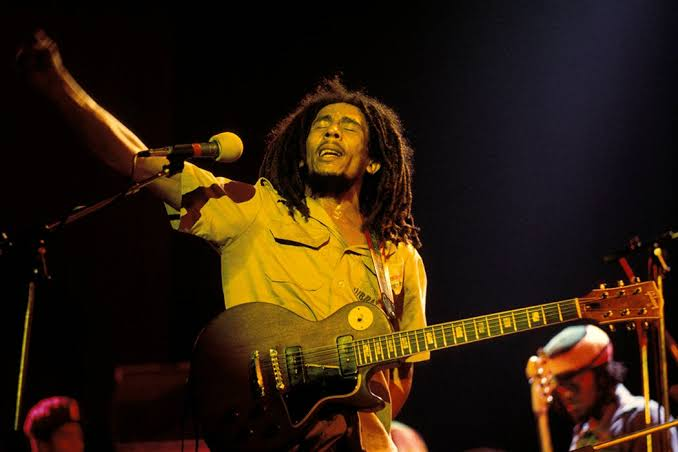
It has been theorized that some lyrics of the song actually reference this life-threatening event.
Bob Marley’s previous message of peace and love seemed a threat to those who wanted to control Jamaican politics. And “Natural Mystic” was, in part, a warning of the nature of that violence.
On Side One of Exodus, the fire and brimstone was brought from simmering to boiling point as Marley offered a fiercely religious and politicized prescription for solving the ills of the world through a series of songs, each more messianic than the last. “Natural Mystic” is the threshold through which the listener must pass before entering that world.
Critical and Musical Legacy
In a review of the song on AllMusic, Thomas Ward stated that it “has an almost hymnal quality to it” and that “everything about the song is ethereal and inspired,” going on to compare the vagueness of its lyrics favorably with Bob Dylan’s “Blowin’ in the Wind” and calling “Natural Mystic” one of Bob Marley’s greatest artistic achievements. Music critic Greil Marcus called it the best song on the Exodus album.
The song’s simplicity in both lyrics and melody underscores its message, emphasizing that universal truths are accessible to anyone who takes the time to listen and reflect.
The repetition of phrases and the gentle, almost hypnotic rhythm serve to draw the listener’s attention to the song’s core message.
The title itself traveled further than the album track. Natural Mystic: The Legend Lives On, a compilation album released on 23 May 1995 through Tuff Gong/Island, was conceived as an addendum to the 1984 compilation Legend.
Where Legend consists mainly of love songs with a few politicized works, Natural Mystic attempts to redress that balance by gathering Marley’s more spiritually and politically charged material under the song’s name.
Posthumously, Marley was bestowed a Recording Academy Lifetime Achievement Award in 2010, the same year Catch A Fire was inducted into the GRAMMY Hall of Fame; Exodus was inducted four years earlier.
Legend, released in 1984, a compilation of Marley’s apolitical songs, is the best-selling reggae album of all time, RIAA Certified 18x platinum.
Why the Natural Mystic Meaning Still Matters
Nearly five decades after its release, “Natural Mystic” remains one of the most searched and debated songs in the reggae canon for a simple reason: Marley refused to pin it down.
It has that iconic easy-skanking vibe that Marley is known for, but there is something more somber, something heavier hidden in the groove.
If you listen closely, you can hear a haunting sense of grief laced throughout the melody, something so subtle it might go unnoticed to the untrained ear.
In summary, “Natural Mystic” by Bob Marley and the Wailers is a spiritual and philosophical song that invites listeners to tune in to the unseen forces that shape our lives.
Whether those forces are the wrath of the Babylonian system, the Holy Spirit in Rastafari theology, the political violence of Kingston in 1976, or simply the inescapable current of human suffering and resilience, the song absorbs them all.
It was, and remains, a perfect opening statement: before any exodus can begin, there is something blowing through the air that you must first learn to hear.