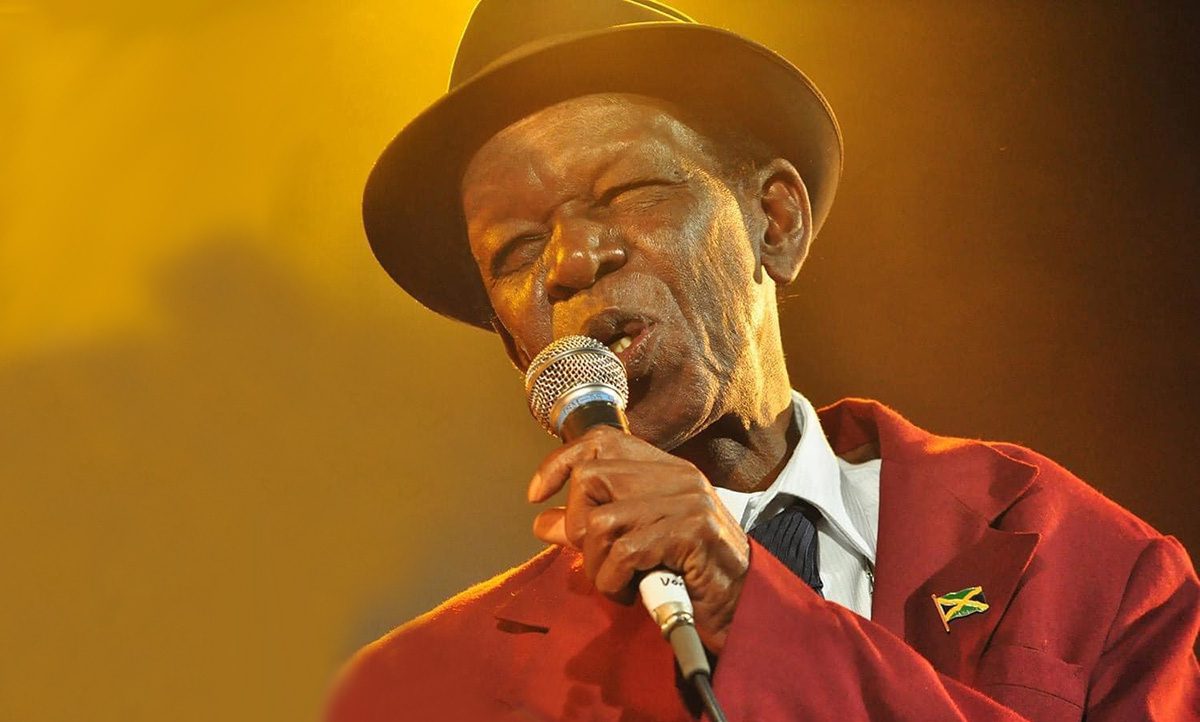

Reggae pioneer Stranger Cole has passed away on Thursday, June 11. He was 83.
Cole’s death marks the end of one of the longest and most influential careers in Jamaican popular music, a journey that stretched from the birth of ska in the early 1960s to reggae’s global expansion and beyond.
Born Wilburn Theodore Cole, the singer, songwriter and entrepreneur is widely celebrated for recording Bangarang in 1968, a song many music historians regard as the first true reggae record. His passing closes a remarkable chapter in Jamaican music history, one that spanned more than six decades.
Cole’s nickname, “Stranger,” originated within his own family. Relatives jokingly remarked that he did not resemble any other member of the household, and the affectionate moniker remained with him for the rest of his life.
Before emerging as a recording star, Cole established himself as a gifted songwriter. One of his earliest successes came with In and Out the Window, which became a hit for ska singer Eric “Monty” Morris.
His own recording career began in 1962, during the formative years of Jamaica’s music industry. Working with legendary producer Arthur “Duke” Reid, Cole quickly found success with songs such as Rough and Tough and When You Call My Name, a popular duet with singer Patsy Todd.
The hits continued throughout the decade as Cole became one of the island’s most reliable recording artists. Along the way, he worked with several of Jamaica’s most important producers, including Clement “Coxsone” Dodd, with whom he recorded World’s Fair alongside Ken Boothe, and Prince Buster, another giant of Jamaica’s musical evolution.
His place in history was secured in 1968 when he recorded Bangarang at Duke Reid’s studio. Featuring saxophonist Lester Sterling and keyboardist Lloyd Charmers, the song captured a new rhythm and feel that many regard as the moment ska’s faster tempo evolved into what would become known worldwide as reggae.
Few artists can claim to have witnessed, and helped shape, the birth of an entire musical genre.
In 1971, Cole left Jamaica and settled in the United Kingdom, where he toured extensively before relocating to Canada two years later. Making Toronto his home, he balanced music with factory work, spending time as a machinist at the Tonka Toy factory.
Even while working outside the music industry, Cole remained committed to Caribbean culture. He later opened a record store in Toronto’s Kensington Market, becoming the first Caribbean entrepreneur to establish a music shop in the area. The store became an important cultural hub for members of the growing Caribbean diaspora.
Although he had already enjoyed years of recording success, Cole did not release his first full-length album until 1976. Forward in the Land of Sunshine showcased his versatility as a performer and songwriter and was followed by several independent releases on his own label.
After stepping away from recording in 1986, many assumed his musical journey had come to an end. Instead, Cole staged a remarkable comeback two decades later with Morning Train, a 2006 collaboration with renowned dub producer Jah Shaka that introduced his music to a new generation of listeners.
His legacy extended beyond his own recordings.
His sons, Squiddly and Marcus Cole, continued the family’s musical tradition in different ways. Squiddly became an accomplished drummer, performing with artists including Ziggy Marley and Mutabaruka, while Marcus, known professionally as KxritoXisen, contributed to his father’s later recordings as a producer.
For many fans, Stranger Cole will forever be remembered as the man who sang Bangarang. Yet his influence reaches far beyond a single song. He was a bridge between ska, rocksteady and reggae, a songwriter whose work helped define Jamaica’s golden age of music, and an artist whose career reflected the resilience and creativity of the generation that built one of the world’s most influential musical cultures.
His passing leaves a void in reggae history, but his recordings remain as a testament to a life spent helping shape the soundtrack of Jamaica.