

Somewhere right now, a protester is chanting “get up, stand up,” a tourist is buying a T-shirt that says “One Love,” and a parent is rocking a baby to sleep with “every little thing is gonna be alright.” No collection of one love quotes travels further than Bob Marley’s.
His words have outlived vinyl, cassette and CD. Today they live on captions, murals, protest signs and wedding speeches in languages he never sang in.
For the dancehall generation, these lines work like scripture. Deejays interpolate them, reggae singers answer them, and Afrobeats stars treat them as a shared inheritance.
Here are the 12 Marley lines the world reaches for most, ranked by how far they have travelled. We start with the two words that became Jamaica’s calling card.
1. Bob Marley & The Wailers, “One Love/People Get Ready” (1977)
“Let’s get together and feel all right.” Few invitations in music have been accepted by more people. The song began in 1965 as a Wailers ska tune from the Studio One years and was later recut as “All In One.”
By 1976 it had been rewritten to fold in pieces of Curtis Mayfield’s “People Get Ready.” The Exodus version moved into Mayfield’s key and settled into a warm, soulful sway, and Island credited Mayfield to avoid copyright trouble.
It arrived as Jamaica bled through the violence around the December 1976 election, and it became a plea across the PNP and JLP divide.
The BBC later named it Song of the Century. Glee pushed it back onto the charts in 2010, and the 2024 biopic that borrowed its title earned about US$181 million worldwide.
2. Bob Marley & The Wailers, “Three Little Birds” (1977)
The hook is so famous that half the world calls the song by it instead of its real title: “Don’t worry about a thing, ’cause every little thing is gonna be alright.”
It first appeared on Exodus in 1977 and was issued as a single in 1980. It rides the lightest, sunniest skank in the Marley catalogue.
The usual story is that the birds were real visitors to his Kingston doorstep. Marley told Sounds magazine, “That really happened,” although the true inspiration is still debated.
Today it works as a lullaby as much as a reggae record and is a staple calming song for children.
Cedella Marley turned it into the picture book Every Little Thing in 2012 and an off-Broadway musical, Bob Marley’s Three Little Birds, in 2014.
3. Bob Marley & The Wailers, “Redemption Song” (1980)
Emancipate yourselves from mental slavery, none but ourselves can free our minds.” Marley took the thought from a Marcus Garvey speech and made it the closing statement of his recorded life.
The Uprising track, produced by Marley with Chris Blackwell and released as a single on 7 October 1980, strips the band away entirely.
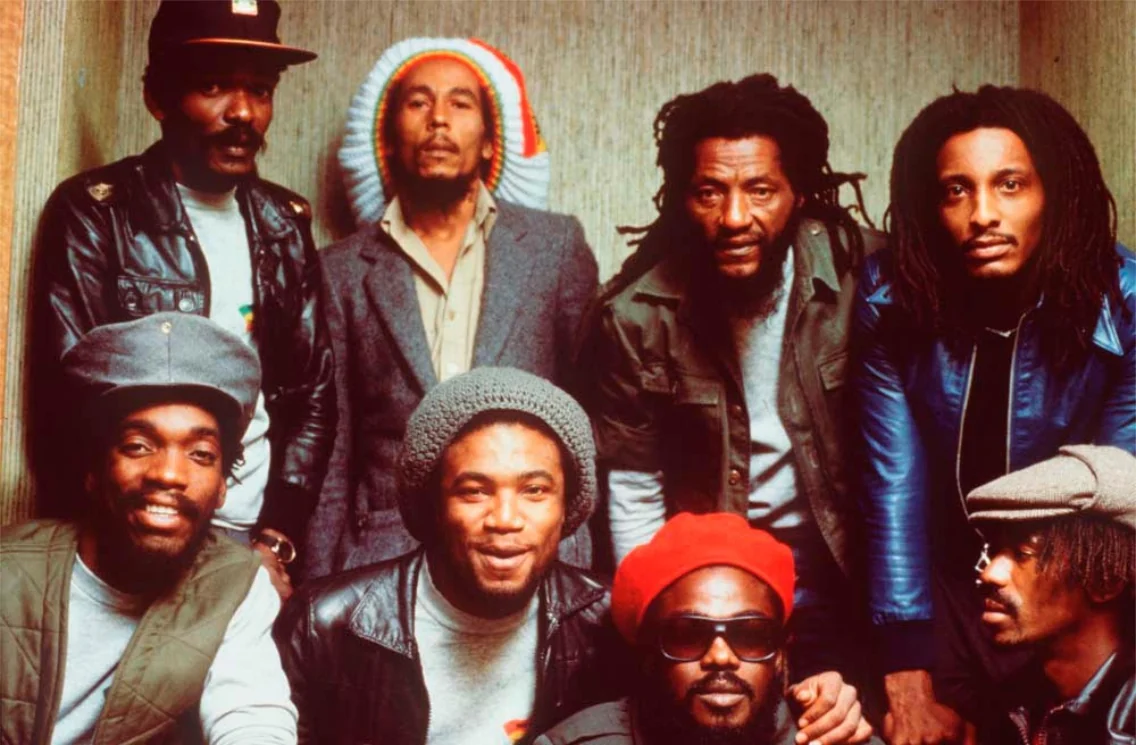
There is no reggae rhythm and no bubbling organ, only a man and an acoustic guitar.
He made it while battling cancer, which gives every strummed chord its weight. Mutabaruka chose it as the most influential recording in Jamaican music history, and few would argue.
The song has moved roughly 1.58 million digital sales, and its opening couplet has become shorthand for self-liberation far beyond reggae.
4. The Wailers, “Get Up, Stand Up” (1973)
“Stand up for your rights… don’t give up the fight.” Marley and Peter Tosh wrote it together, and Island issued it as a single from Burnin’ on 14 September 1973.
It captures the original Wailers at full militancy, three voices locked together before Tosh and Bunny Wailer left the group in 1974.
The song reportedly grew out of a Marley visit to Haiti, where the poverty shook him. UMusic calls it possibly “the most popular protest song of all time,” and that is hard to dispute.
Marley carried it onto the stage at the One Love Peace Concert at Kingston’s National Stadium on 22 April 1978.
Decades later it is still the chant of choice for marches, picket lines and anyone holding a placard.
5. Bob Marley & The Wailers, “No Woman, No Cry” (1974)
Start with the title, because outsiders often get it wrong. In Patois, “No woman, no cry” means “Woman, don’t cry.”
It does not mean that life without a woman leaves nothing to cry about. The lyric looks back with tenderness on the government yard in Trenchtown.
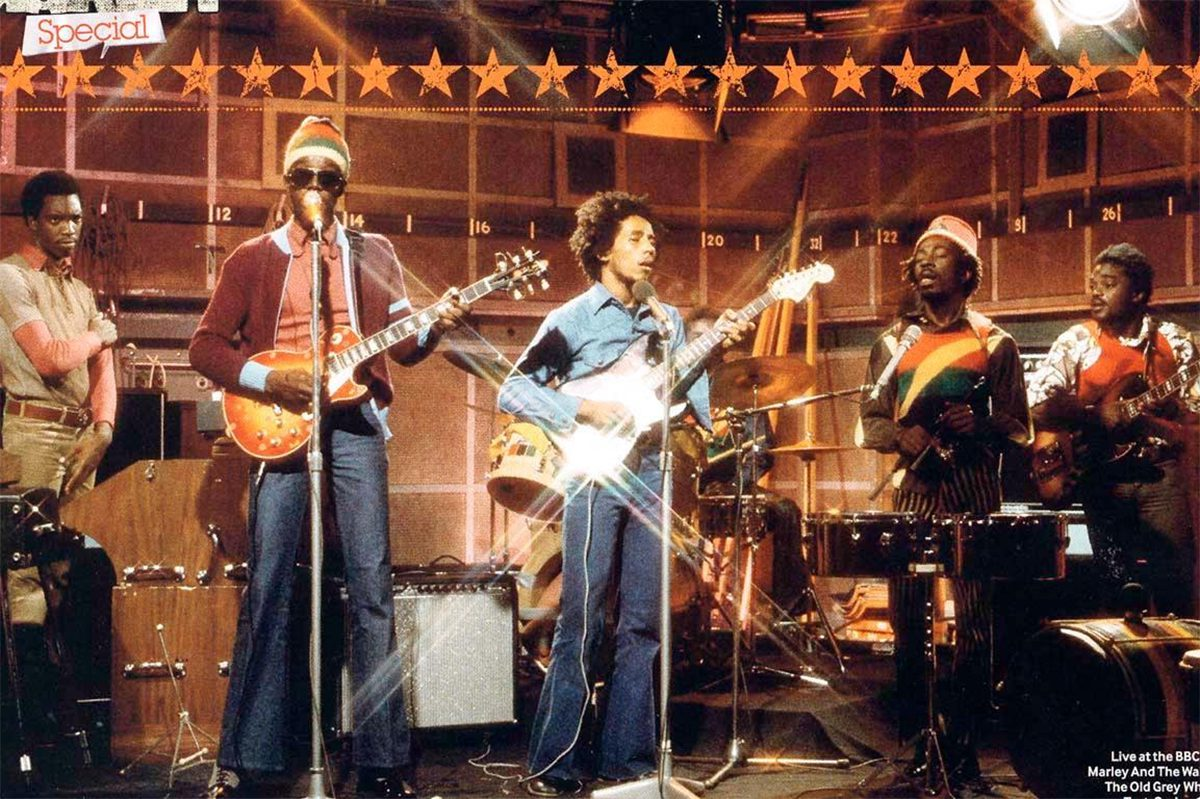
The studio cut appeared on Natty Dread in October 1974, coloured by Jean Roussel’s Hammond organ.
The definitive take, however, was captured live at London’s Lyceum on 17 July 1975 and climbed to UK #22.
The writing credit went to Vincent Ford, whose Trenchtown soup kitchen was reportedly kept alive by the royalties.
Roger Steffens later recalled Marley saying he wrote it while tuning a guitar in Ford’s yard. Joan Baez, Hugh Masekela, Boney M and the Fugees have all sung it since.
6. Bob Marley & The Wailers, “Is This Love” (1978)
Marley the militant gets the headlines, but Marley the lover owns the streaming era. “I wanna love you and treat you right” may be the simplest line on this list, and it may also be the most played.
By one count the Kaya single is his biggest track of all, at about 17.18 million combined units, and it had passed 696 million Spotify streams by early 2026.
Released in 1978 on Island, it peaked at UK #9 and went Platinum, floating on a relaxed, almost weightless groove.
Its video carries a footnote fans love: it marked the first public appearance of a young Naomi Campbell.
The line now turns up in anniversary captions and lovers rock playlists alike, proof that his romantic songs were never a sideline.
7. Bob Marley & The Wailers, “Could You Be Loved” (1980)
Written in 1979 on an aeroplane while the Wailers played around on guitar, this song became the most dancefloor-ready thing Marley ever cut.
Released from Uprising on 16 May 1980, its disco-tinged chop made it his only single to reach Billboard’s Dance chart, where it hit #6 on Club Play. It also reached #56 on US Black Singles.
Back in Britain it went to #5 and Platinum, his biggest UK hit in his lifetime, and it has since passed two million digital sales.
The warning at its heart, “Don’t let them fool ya,” gives the bounce its backbone. Selectors still drop it when a party needs lifting, and it works on any crowd.
8. Bob Marley & The Wailers, “Exodus” (1977)
“Movement of Jah people.” Four words, chanted over a rolling, hypnotic groove that refuses to let up.
Marley recorded the title track during the 1977 London sessions at Basing Street, far from Kingston, and his own camp describes it as a call for change.
When he took the song to Britain’s “Top of the Pops” that year, he performed it in front of a backdrop painting of Marcus Garvey and Haile Selassie.
It was a Rastafari statement beamed into living rooms across the country.
The parent album stayed on the UK charts for 56 consecutive weeks. Time named it Album of the Century in 1999, and it entered the GRAMMY Hall of Fame in 2006. The phrase still echoes wherever the diaspora gathers.
9. Bob Marley & The Wailers, “Jamming” (1977)
On paper, “We’re jammin'” is the most carefree line Marley ever wrote. It sits on Exodus as pure feel-good reggae and was backed on the single with “Punky Reggae Party.” Then came 1978.
At the One Love Peace Concert, while improvising through “Jammin’,” Marley called Michael Manley and Edward Seaga onto the stage and joined the rival leaders’ hands above his head.
A party word became a political image that Jamaica has never forgotten. That double life is why the line endures.
It can mean a Sunday session with friends, or it can mean a nation daring to imagine peace. Every time a crowd sings it back, both meanings are in the air.
10. Bob Marley & The Wailers, “War” (1976)
“Until the philosophy which holds one race superior and another inferior…” These are not, strictly speaking, Marley’s words.
The lyric is drawn almost entirely from Haile Selassie’s address to the UN General Assembly on 4 October 1963, which Marley set to a grim, marching rhythm on Rastaman Vibration.
The album reached #8 on the Billboard 200, which carried an emperor’s speech into American record collections. Reggae had rarely sounded so much like a sermon.
The song shows how naturally Rastafari theology flowed into Marley’s music, and it gave Selassie’s argument a melody that classrooms, rallies and anti-racism campaigns keep returning to.
Few protest songs have borrowed their text so directly, and few have hit harder.
11. Bob Marley & The Wailers, “Trenchtown Rock” (1971)
“One good thing about music, when it hits you, you feel no pain.” If any line on this list has become a universal motto, this is it.
It has turned into one of the most widely used quotes about music anywhere, printed on studio walls and tattooed on forearms.
The song itself is a 1971 single about life in Trenchtown, the yard community Marley called home, and its skanking groove is pure early-seventies Kingston. It found a second life on Live! in 1975.
For sound system people the line describes something they already know: bass that rattles your chest and makes the week’s troubles go quiet. Every dancehall session since has been a small proof of it.
12. Bob Marley & The Wailers, “Buffalo Soldier” (1983)
Marley never saw this one become a hit. It surfaced posthumously on Confrontation in 1983 and still climbed into the UK top 10.
“Fighting on arrival, fighting for survival” tells the story of the African American soldiers who fought in the Civil War and were then sent against Native Americans.
Marley tied their story to the wider African diaspora: people taken from home, made to fight, still standing.
Over a loping, almost cheerful groove, the history lesson slips in easily, which is exactly why it sticks.
Stadium crowds sing the “woy yoy yoy” refrain, and many of them later go looking for the history behind it. That is about as Marley as a song can get.
Why Marley’s Words Keep Travelling
Line them up and a pattern appears. Marley wrote about love, freedom, survival and joy in the plainest words possible, and plain words travel.
A child can sing “Three Little Birds,” a revolutionary can live by “Redemption Song,” and a selector can drop “Could You Be Loved” at three in the morning. All of them are drawing from the same well.
That is why dancehall, reggae and Afrobeats artists keep returning to him. Interpolating Marley is not nostalgia. It is a way of speaking a language the whole world already understands.
More than four decades after his passing, the most quoted voice in Jamaican music is still the one asking us to get together and feel all right.