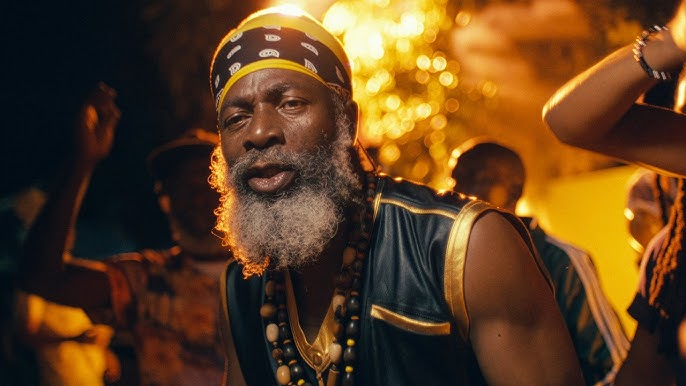


Picture a Kingston dancehall in 1966. The frantic ska rhythms that powered the island through independence have cooled into something slower and sweeter.
The bass is rolling up front and three voices are blending in harmony over the top. So what is rocksteady?
It is the Jamaican genre that ruled the country’s dance scene from roughly summer 1966 to spring 1968. It took ska’s energy, slowed it down, warmed it with soul, and handed reggae its blueprint.
The window was short, barely two years, but the music made in it still feeds everything from roots reggae to modern dancehall.
Producer and singer Derrick Harriott put it plainly: “Ask any Jamaican musician and they’ll tell you the rocksteady days were the best days of Jamaican music.” Here is why so many agree.
The Sound: Slower, Deeper, Sweeter
The simplest way to hear rocksteady is to set it beside ska. The tempo drops. The big horn sections that drove ska step back into a supporting role.
The bass guitar moves to the front of the mix, and the guitar chops on the offbeats with a tighter, crisper feel.
That shift toward the bass is the genre’s lasting gift. With slower tempos and smaller bands, bass lines had room to become melodic and intricate. That emphasis became one of the defining traits of Jamaican music for decades.
The snare often plays a side-stick “click” rather than a full crack, which gives the groove its relaxed, swaying pocket. The dances followed suit: less athletic than ska steps and more about a cool, controlled sway.
The players behind it were not beginners. Many had grown up learning jazz and had played through the ska years, so they brought real musicianship to the slower pace.
Where the Name and the Slowdown Came From
The name is usually traced to a dance mentioned in Alton Ellis’s “Rock Steady,” recorded for Duke Reid’s Treasure Isle with Jackie Mittoo on piano.
The song is widely seen as the first to use the term and arguably the first rocksteady single. The story goes that Mittoo’s left hand could not keep pace with the frantic ska beat, so he slowed it down.
The choppier rhythm that resulted gave Ellis space to stretch out vocally. Ellis was never shy about his part in it. “I spearheaded that sound without a doubt!” he said, adding, “In 1965 I named it rocksteady.”
Origin stories in Jamaican music rarely have a single author, and rocksteady has several. One account places the shift at Studio One in 1966.
There, 15-year-old drummer Joe Isaacs, filling in for Lloyd Knibbs, could not match ska’s pace, and Mittoo again eased the tempo down. Pianist Gladstone Anderson told Jamaican radio a different story.
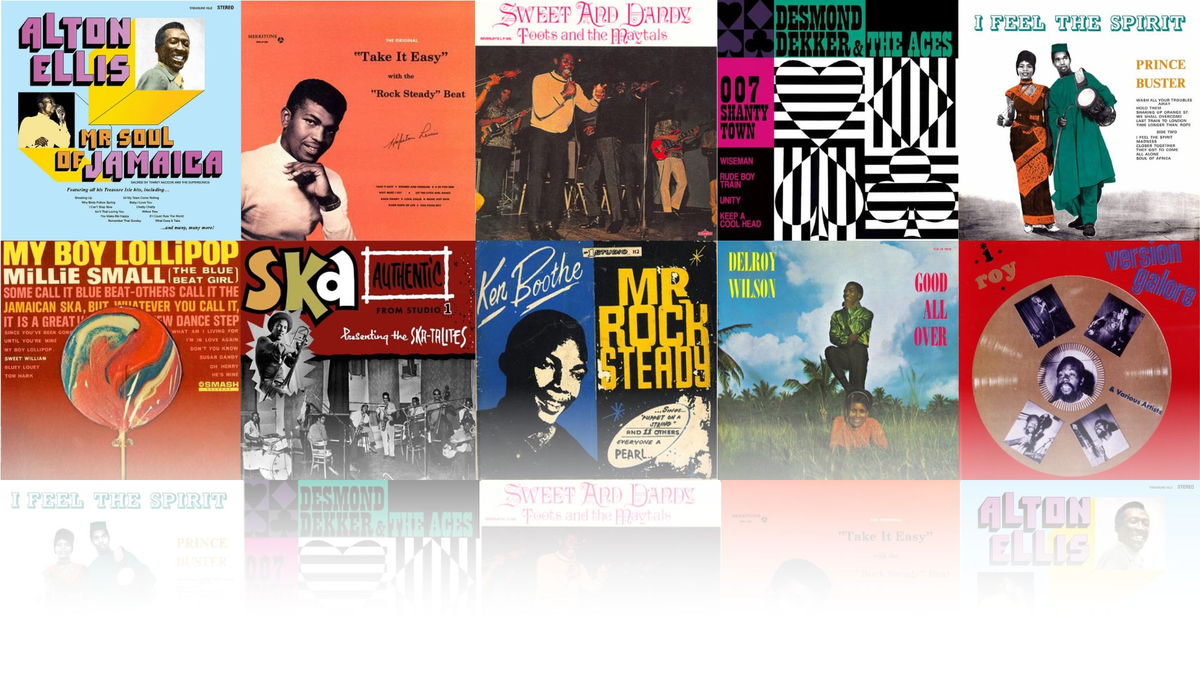
In his telling, guitarist and bandleader Lynn Taitt slowed the beat during the 1964 session for Hopeton Lewis’s “Take It Easy,” a record often called the first rocksteady recording.
There is also popular folklore that Kingston’s brutally hot summer of 1966 left dancers wanting something less exhausting. It makes a nice story, even if nobody can pin it down.
Outside forces mattered too. American soul and R&B drifting in on Miami radio stations, especially The Impressions, shaped the vocal style and the romantic mood.
The Voices of Rocksteady
Rocksteady was a singer’s era, and above all an era of harmony groups. The Gaylads, Heptones, Techniques, Paragons and Clarendonians all came up through ska and hit their stride as the beat slowed.
The Melodians, the Jamaicans, the Maytals and The Wailers were also turning out polished three-part harmonies.
Leroy Sibbles, Barry Llewellyn and Earl Morgan of the Heptones are arguably the most influential of the whole crop.
Among the solo stars were Ken Boothe, Slim Smith and Delroy Wilson, and above them all stood Alton Ellis.
He is the informal “Godfather of Rocksteady,” and the Jamaica Observer ranked him No. 1 among the genre’s greatest personalities in April 2026. His album Mr Soul of Jamaica is regarded as one of the definitive rocksteady records.
The era also had a queen. Phyllis Dillon made her first Treasure Isle record, “Don’t Stay Away,” in late 1966. Jackie Jackson, bassist with the studio’s house band, told the Observer: “Phyllis has the nicest voice in Jamaican music.” Dillon died on 15 April 2004.
Many of these singers came from Kingston’s poorest neighbourhoods. That grit sits underneath all the sweetness.
Treasure Isle, Studio One and the Men at the Controls
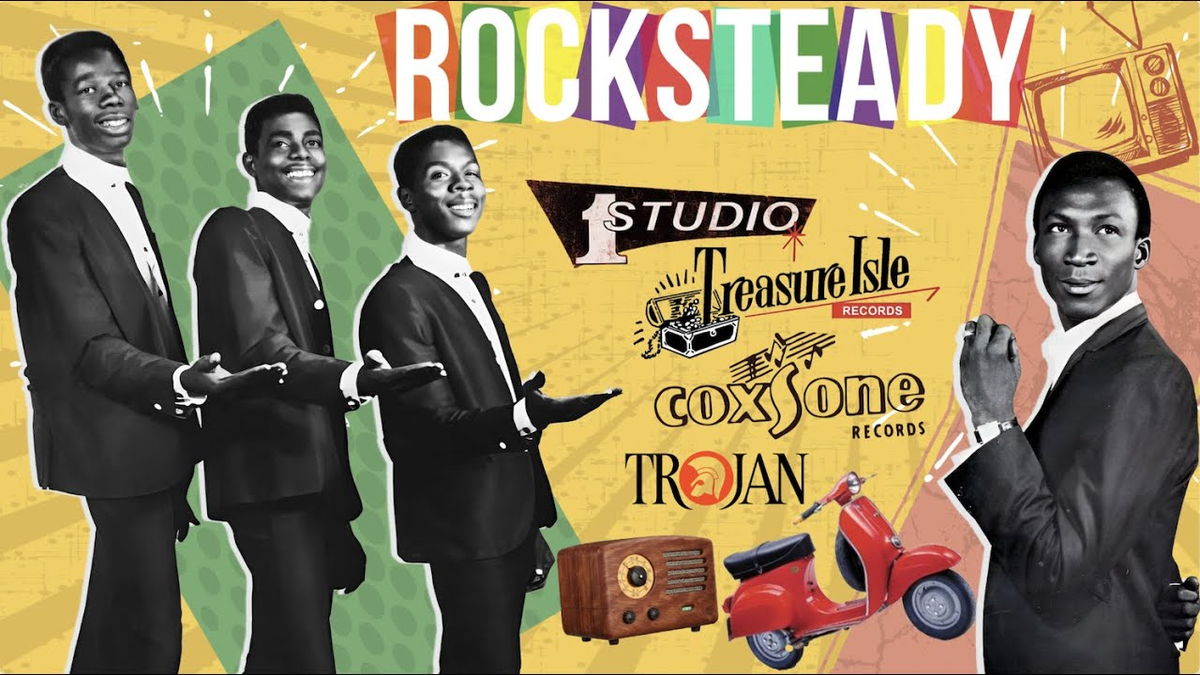
Every label of the day released rocksteady. Studio One, Treasure Isle, Bunny Lee and Prince Buster were the dominant forces.
But the sound’s true home was Duke Reid’s Treasure Isle. Reid had started the Trojan sound system in the early 1950s and launched the label later that decade.
With Alton Ellis and the new beat in 1966, Treasure Isle overtook Coxsone Dodd’s Studio One as Jamaica’s most renowned label.
Tommy McCook and the Supersonics, the house band, gave those records their smooth, horn-kissed polish. Reid died in 1975 at 59, leaving behind a catalogue that still gets reissued and sampled.
Love Songs and Rude Boys
Most rocksteady is romance: smooth, aching love songs built for slow dancing. But the music also spoke to the street.
The rude boys, young Kingston toughs and troublemakers, were a constant theme, and most popular artists cut songs either celebrating or condemning them.
Alton Ellis and the Flames took a consistent anti-rudie stand on records like “Cry Tough” and “Dance Crasher.”
The music could move culture in lighter ways too. The Paragons, led by John Holt, had a song that set off the “Hops” fad, which boosted sales of the beer across the island.
From Rocksteady to Reggae
By mid-1968, reggae had ended rocksteady’s reign. Even so, the new sound grew directly out of the old.
Drummers moved toward the one-drop pattern around 1968 and 1969, and reggae took shape on rocksteady’s template of heavy bass, offbeat guitar and soulful vocals.
The Heptones’ On Top (1969) captures that handover, with rocksteady harmony and bass focus edging into early reggae.
Rocksteady also travelled. Some of its songs became hits beyond Jamaica, as ska had done, which helped build the international audience reggae would later inherit. Jackie Mittoo carried the music with him to Toronto and New York.
Its DNA keeps surfacing. The bass line of Ellis’s “Girl I’ve Got a Date” is said to echo in “The Liquidator” and “I’ll Take You There.”
His “I’m Still in Love” became the foundation for Althea and Donna’s “Uptown Top Ranking,” a UK chart-topper in 1978.
Where to Start Listening
Begin with the classics cut between late 1966 and early 1968:
- The Gaylads, “Little Nut Tree”
- The Maytals, “5446 Was My Number”
- The Wailers, “Nice Time”
- The Jamaicans, “Things You Say You Love”
- The Heptones, “Party Time”
Then go to the albums: Mr Soul of Jamaica for Ellis at his peak. Let’s Do Rocksteady: The Story of Rocksteady 1966-68 (2002) and Treasure Isle 1966-1968 (2019) give the wider picture.
Why Rocksteady Still Matters
Rocksteady lasted about as long as a good summer romance, yet it changed Jamaican music for good. It moved the bass to the centre, made room for harmony and heartbreak, and gave reggae the foundation it built on.
When the genre came back into favour in the 1990s, Alton Ellis found new audiences in Jamaica and Europe and Phyllis Dillon returned to the stage.
Any modern riddim that leans on a fat, melodic bass line owes it something. Put on a Treasure Isle side today and the appeal is immediate. It still sounds like the coolest dance in town.