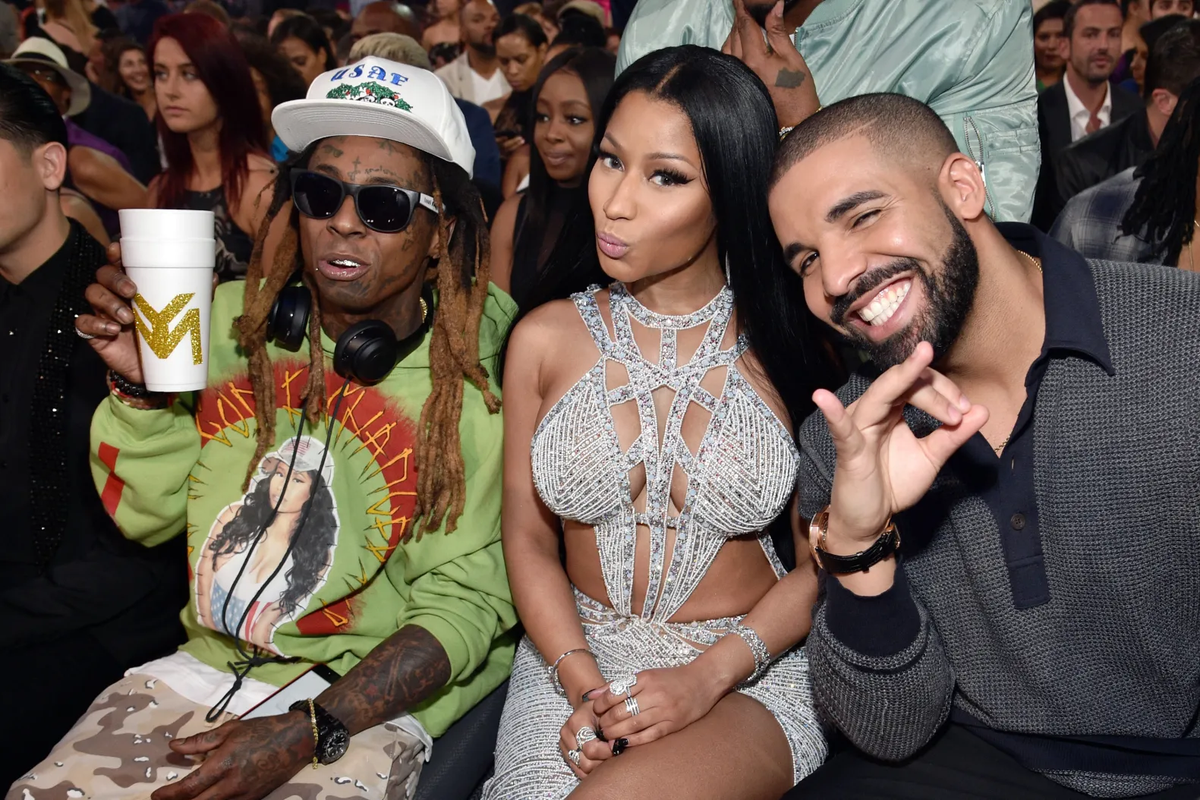
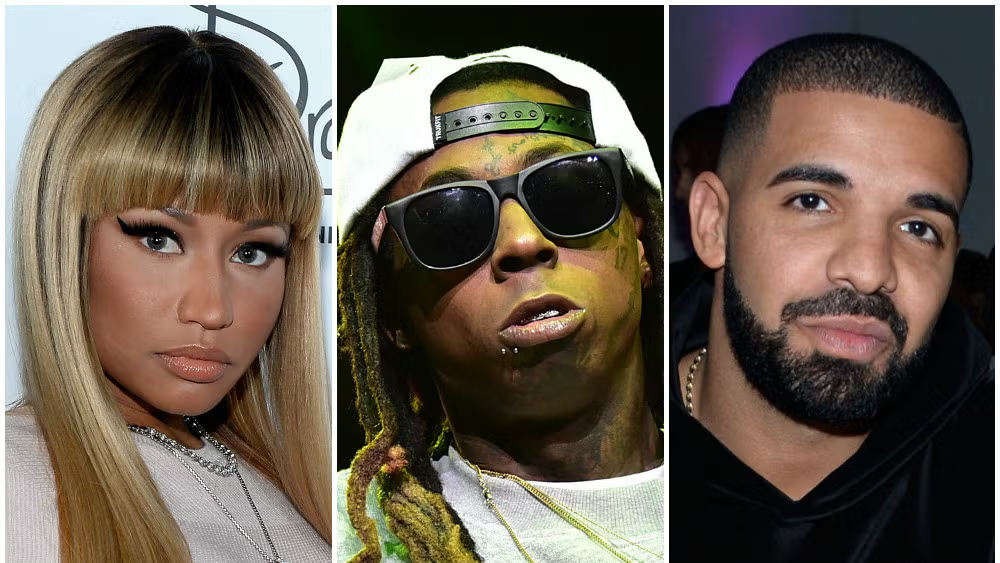
The list of songs that supposedly proved everything was never actually there. A federal judge in Michigan has thrown out a lawsuit claiming Drake, Nicki Minaj and Lil Wayne turned secret surveillance of a woman’s life into music, and one of the biggest holes in the case was an exhibit that didn’t exist.
U.S. District Judge Judith E. Levy issued the dismissal order on November 10 in Michigan’s Eastern District. Her verdict on the complaint was blunt.
“The Court concludes that Plaintiff’s complaint is frivolous because it lacks an arguable basis in fact or law,” Levy wrote.
The suit came from Europe R. Colbert, who represented herself. She accused the defendants of placing surveillance equipment inside her home in Warren, Michigan, and using her private information in their recordings.
Alongside the three stars, the case named Birdman, his brother and Cash Money cofounder Slim, and the label itself.
Colbert didn’t hold back on the legal theories either. She invoked federal racketeering, wiretap and Lanham Act provisions, plus a set of state claims, and asked for damages and public corrections.
Her amended complaint ran to ten causes of action and, in a twist nobody saw coming, also listed Limp Bizkit among the defendants.
The original complaint was dated September 28, with an amended version following in early November. Colbert pointed the court to an attached list of recordings she said infringed on her. Levy went looking and came up empty.
“But there is no Exhibit A attached to the amended complaint, original complaint, or anywhere else on the docket as far as the Court can discern,” the judge wrote. Without that list, the music side of the accusations had nothing concrete holding it up.
It matters how this case reached Levy’s desk. Colbert filed without prepaying court fees, which triggers a mandatory screening process.
That review lets a judge dismiss frivolous claims early, without treating every accusation in the filing as established fact.
To be clear, the surveillance claims were Colbert’s allegations, and the court rejected them. There was no finding that any artist had spied on anyone.
The dismissal was technically without prejudice, though Levy also concluded that letting Colbert amend the complaint again would be futile.
Levy went a step further and denied Colbert permission to appeal without prepaying fees. The judge found an appeal would not be taken in good faith, which makes any next move considerably harder.
For Cash Money, this is the second courtroom win in short order. Birdman and the label were also recently dismissed from a separate Georgia lawsuit brought by a driver over the 2015 shooting of Lil Wayne’s tour bus in the Atlanta area. That case had nothing to do with Colbert’s Michigan complaint.
The Cash Money family’s legal history is long and messy. Wayne himself sued Birdman and the label in 2015, a fight that wasn’t settled until 2018.
Drake and Nicki, who both came up through Wayne’s Young Money imprint under the Cash Money umbrella, have mostly stayed out of these headlines, until a Warren woman’s complaint and a missing Exhibit A pulled them back in.