
Roots reggae was never background music. It was scripture, news bulletin and protest march, pressed onto seven inches of vinyl and carried through Kingston on sound systems that rattled zinc fences.
The best roots reggae songs still carry that weight decades later: Garvey prophecy, Rasta hymns sung in Amharic, warnings about police and politicians, all riding basslines thick enough to lean on.
This list picks twelve that define the form. They come from the studios that built it, from Studio One and Channel One to Joe Gibbs and Lee Perry’s Black Ark, and from voices that turned Jamaican sufferation into a global language.
Some sold in huge numbers. Some barely escaped the island on first pressing. All of them still sound urgent.
1. Burning Spear, “Marcus Garvey” (1975)
Winston Rodney’s voice arrives like a call from a hillside: weary, insistent, impossible to ignore. “Marcus Garvey” came together almost by accident.
Spear and producer Lawrence “Jack Ruby” Lindo realized the song at their very first meeting. It was meant as an exclusive cut for Ruby’s Hi-Power sound system, but it was released as a single instead and became an immediate hit.
The Black Disciples gave it a heavy, rolling bed, with Earl “Chinna” Smith, Valentine Chin, Robbie Shakespeare and Leroy Wallace in the band, and Ruby’s horn arrangements gave it a solemn grandeur.
Island later remixed the album without the group’s permission, judging the originals too raw. Those raw originals are exactly why the song still sounds like a sermon. Its dub shadow, Garvey’s Ghost, followed in 1976.
2. Junior Murvin, “Police and Thieves” (1976)
Lee “Scratch” Perry heard Junior Murvin audition this song and recorded it at the Black Ark that same day. It was the right instinct.
Murvin’s high, aching voice floats over a groove that feels sun-baked and menacing at once, a lament for a city where the law and the lawless had become hard to tell apart.
Released in Jamaica in May 1976 and on Island in the UK that July, it held the UK reggae chart’s Top 10 hostage for almost six months, by AllMusic’s count.
Then The Clash covered it on their 1977 debut. Murvin’s reported verdict was “They have destroyed Jah work!” Joe Strummer later admitted, “We had some brass neck to do that.”
Perry came round and went on to produce the Clash’s “Complete Control.” The original turns up in Rockers and Lock, Stock and Two Smoking Barrels.
3. Culture, “Two Sevens Clash” (1977)
Few songs have ever frightened a capital city. Joseph Hill had a vision on a bus of 1977 as a year of judgment, and his song fixed the date on 7 July, when the sevens would clash.
When the day came, a hush fell over Kingston: people stayed indoors and shops closed. Joe Gibbs and engineer Errol Thompson, working as The Mighty Two, built the track on an old Studio One instrumental, “Heavy Rock,” also known as “Better Dub.” Over it, Hill’s prophecy sounds oddly joyful, with harmonies bouncing off the beat.
The record sold well in Britain, where Joe Strummer and John Lydon reportedly pushed Richard Branson to fly Culture over and sign them to Virgin. A long royalties dispute with Gibbs followed. The song outlived all of it.
4. The Abyssinians, “Satta Massagana” (1971)
Coxsone Dodd recorded “Satta Massagana” at Studio One in March 1969 and then declined to release it. The trio eventually bought back the tape and put it out on their own Clinch label, and roots reggae gained one of its holiest texts.
Sung partly in Amharic, with a title meaning “give thanks and praise,” it moves at the pace of a procession, with the three voices wrapped around each other like incense smoke.
The rhythm traces back to “Happy Land,” a B-side by Carlton and The Shoes, and it became one of the most covered songs in reggae history, with Third World among those paying tribute.
A label battle between Clinch and Studio One followed its release. Some Rastafarian groups have since adopted it as a hymn during services. That is a kind of legacy no chart can measure.
5. Bob Marley & The Wailers, “Exodus” (1977)
After gunmen came for him on 3 December 1976, Marley left Jamaica and recorded in London from January to April 1977.
“Exodus” was his answer to everything he had left behind. He wrote it partly in response to Michael Manley’s campaign slogan, “We know where we’re going,” and drew on the soundtrack of the 1960 film Exodus.
What came out was a seven-minute march with a thrusting, almost disco-like pulse and a funky bassline. That pulse made it his only single on Billboard’s Dance chart and his first to get widespread airplay on Black radio in the United States.
It reached No. 14 on the UK Singles Chart. Greil Marcus found the album short on drama in 1977, but the title track’s command of a dancefloor has never faded.
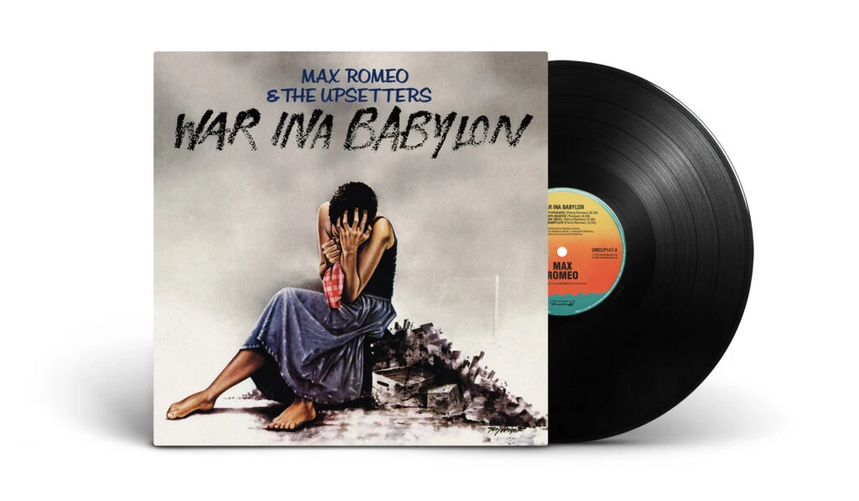
6. Max Romeo & The Upsetters, “War Ina Babylon” (1976)
By 1976 Max Romeo had cut more than 120 singles, many of them the cheeky “rude” records that made his name. “War Ina Babylon” is the sound of a man changing course.
Recorded at the Black Ark with the Upsetters, it opens the first of Perry’s celebrated Black Ark trilogy, alongside the Heptones’ Party Time and Murvin’s Police and Thieves.
Perry wraps Romeo’s warm, accessible roots singing in dark, dense grooves that seem to breathe. Behind him are voices of real pedigree: Marcia Griffiths, Cynthia Schloss, Barry Llewellyn and Earl Morgan.
The refrain about it being “sipple out deh” became shorthand for 1970s Kingston itself. Rolling Stone later counted the album among the best of 1976. The single, backed with “Revelation Dub,” remains a favourite of roots collectors everywhere.
7. The Congos, “Fisherman” (1977)
The first thing you notice is that falsetto. Cedric Myton’s voice rises over the Black Ark’s thick haze while Roydel Johnson’s tenor anchors him.
Together they sing a working man’s hymn that doubles as Rasta parable. Perry assembled a heavyweight cast for Heart of the Congos: Boris Gardiner on bass, Ernest Ranglin on guitar, and backing singers including Gregory Isaacs, the Meditations, and the Heptones’ Barry Llewellyn and Earl Morgan. You can hear all of it in the layered, almost choral finish.
The riddim proved so durable that Blood and Fire built a whole 2006 album, Fisherman Style, around it, with Horace Andy, U-Roy, Gregory Isaacs and Max Romeo among the artists taking turns on the original rhythm. A 1981 single pairing it with “Can’t Come In” kept it spinning for a new generation.
8. The Mighty Diamonds, “Right Time” (1976)
If Perry’s Black Ark was smoke and shadow, Channel One was sharp edges. Joseph Hoo Kim produced “Right Time” there, with Sly Dunbar and Robbie Shakespeare locking the rhythm into something tight and modern.
The song and its album helped establish both the studio and that rhythm team. Tabby Shaw’s lead and the trio’s sweet harmonies give the track a soulful lift that PopMatters’ Sean Murphy described as closer to Motown than Trenchtown. Even so, the message is pure roots: a reckoning is coming.
Virgin signed the group after a talent search in Jamaica, making them among its first reggae acts. Rolling Stone called the album “simply one of the finest reggae LPs ever released.”
The song took on a heavier meaning in 2022, when Shaw was shot dead on 29 March and Bunny Simpson died days later.
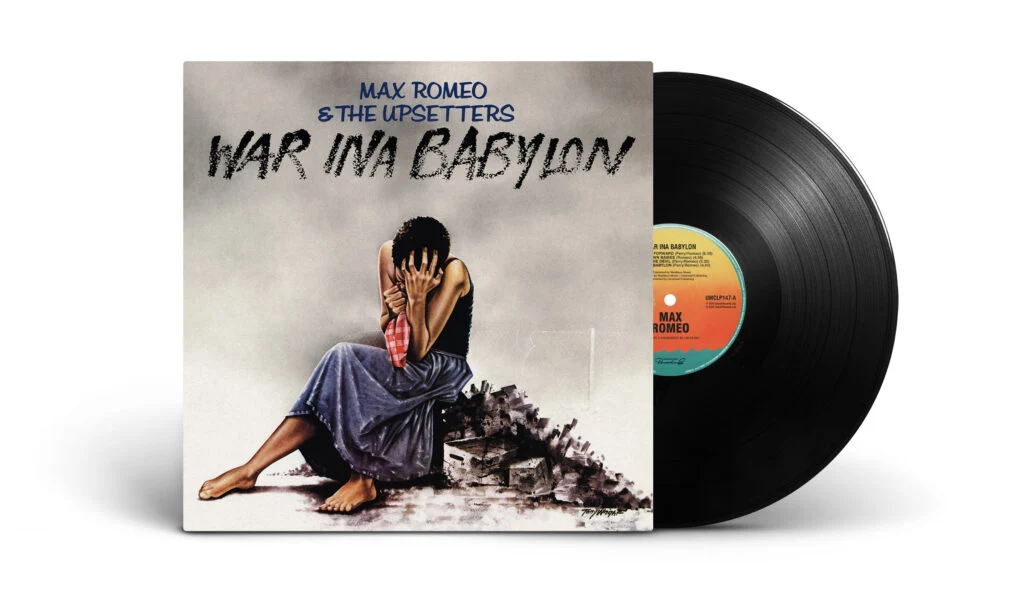
9. Max Romeo & The Upsetters, “Chase the Devil” (1976)
Romeo threatens to put on his iron shirt and chase Satan out of earth, and Perry gives him a rhythm springy enough to make the job sound like fun.
Produced by Perry and Romeo and released on Island as part of War Ina Babylon, “Chase the Devil” is the lighter, catchier sibling of the album’s title track. It is no less devout.
The groove is all bounce and space, with the bass leaving room for every echo Perry chose to throw in.
Perry’s band also cut a separate version with different lyrics in 1976, a reminder of how freely the Black Ark recycled and reshaped its rhythms.
Paired with “One Step Forward” on single, it still sits at or near the top of fan-voted roots rankings. Generations of listeners keep finding their way back to it.
10. Peter Tosh, “Legalize It” (1976)
Peter Tosh never asked politely. His first solo album opened with a demand, and he produced it himself, cutting it at Treasure Isle and Randy’s before Virgin and Columbia carried it abroad.
Over a loping, unhurried groove, Tosh lays out his case for herb with deadpan authority. That baritone makes the argument sound like settled law. The defiance had a cost.
Roger Steffens has said Tosh was almost beaten to death several times by Jamaican police for his anti-establishment views.
Steffens also offered a famous comparison: if Marley was reggae’s Martin Luther King Jr., Tosh was its Malcolm X. Legalize It” arrived the same year as Bunny Wailer’s Blackheart Man, so 1976 saw two former Wailers stake out fiercely independent paths. Tosh’s remains the harder-edged of the two.
11. Bob Marley & The Wailers, “Natural Mystic” (1977)
No reggae song makes a better entrance. “Natural Mystic” opens Exodus with a long, slow fade-in, so that the rhythm seems to drift toward you from a vast horizon before Marley’s voice settles over it.
It was recorded during the same London exile sessions as the title track, but where “Exodus” marches, this one meditates. It is a quiet warning that hard times and hard truths are on the way, delivered almost in a whisper.
Rolling Stone’s 1977 review singled it out as the best song on the album’s first side, and listeners have agreed ever since.
It remains one of the most loved deep cuts in Marley’s catalogue. Its hushed power is the reason so many roots fans treat it as the real heart of Exodus.
12. The Congos, “Open Up the Gate” (1977)
Here is a cruel irony: one of the finest roots albums ever made barely reached anyone at first. Heart of the Congos was due for an overseas Island release.
Instead it appeared on Perry’s own Black Art label in a Jamaican pressing said to run to only several hundred copies.
“Open Up the Gate” shows what the world missed. Across four and a half minutes, the Congos’ harmonies stretch toward something like a spiritual plea, with the Black Ark’s swampy reverb pulling every line into the dark.
The album’s rescue took decades: a 1980 reissue on The Beat’s Go-Feet label, a 1996 Blood and Fire edition, and finally the original mix in 2017. Alongside “Ark of Covenant,” it remains one of the most treasured album tracks in roots reggae.
Why Roots Reggae Still Speaks
Put these twelve records side by side and a picture of 1970s Jamaica comes into focus. Garveyite prophecy sits next to Rasta devotion.
Political violence shares space with police harassment and the fight to be heard. The producers were as much authors as the singers: Jack Ruby’s horns, Joe Gibbs and Errol Thompson’s crisp mixes, Channel One’s steel-tight drums, and above all Lee Perry’s Black Ark, which turns up again and again here.
The music also travelled. Punk bands in London covered it, labels fought over it, and churches adopted it. Its riddims are still being revoiced, and today’s sound system selectors still drop “Satta Massagana” or “Right Time” and watch a room go silent and then start moving. Roots reggae was built to outlast the moment that made it, and it has.