
The rivers of babylon meaning has resonated across cultures, continents, and centuries. At its core, “Rivers of Babylon” is a Rastafarian anthem rooted in ancient scripture, written by Jamaican reggae group The Melodians and later carried to global pop audiences by Boney M.
Understanding the song means tracing a thread that runs from the banks of the Tigris and Euphrates in 586 BC, through the streets of Kingston, Jamaica, and into the pop charts of 1978.
This article breaks down where the song came from, what every verse really means, and why it still matters today.
Who Wrote “Rivers of Babylon” and When?
Rivers of Babylon” was written and recorded by Brent Dowe and Trevor McNaughton of the Jamaican reggae group The Melodians in 1970.
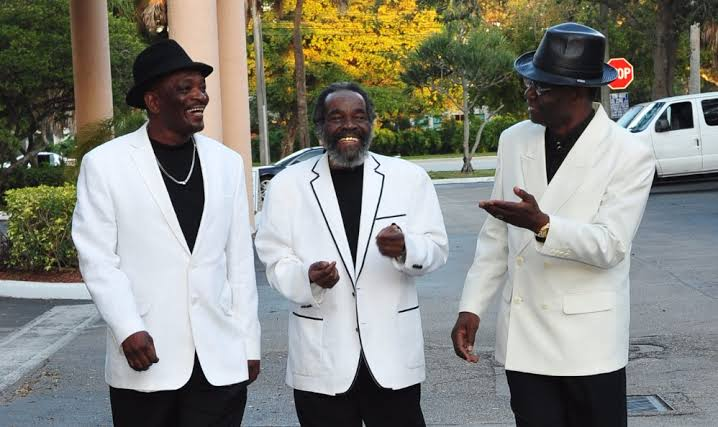
Vocal trio The Melodians were one of Jamaica’s greatest rocksteady groups, cutting a series of classic singles during the late 1960s and early 1970s.
The group was formed in the Greenwich Town area of Kingston and included Tony Brevett and Brent Dowe, who split lead vocal duties, plus full-time harmony singer Trevor McNaughton.
In 1967, the group took “Rivers of Babylon” to record producer Leslie Kong. Although the lyrics were drawn from scripture and the melody bore a striking resemblance to the traditional “How Dry I Am,” it was Dowe and McNaughton who claimed composer credits.
When the song was first released, it was reportedly banned from Jamaican radio because of its Rasta-themed lyrics. Leslie Kong argued that it was unheard of for a song based on a Psalm from the Bible to be banned, and soon the song filled the Jamaican airwaves.
The Biblical Foundation: Psalm 137 and Psalm 19
The song is based on the Biblical Psalm 137:1-4, a hymn expressing the lamentations of the Jewish people in exile following the Babylonian conquest of Jerusalem in 586 BC. The lyrics are adapted from the texts of Psalms 19 and 137 in the Hebrew Bible.
Psalm 137 is the only one out of 150 psalms to be set in a particular time and place: the Babylonian exile, the period between 587 and 586 BC in Israel’s history, when Jews were taken captive in Babylon and the Jerusalem temple was destroyed.
The namesake rivers of Babylon, located in present-day Iraq, are the Tigris and Euphrates rivers. The psalm paints a scene of captives mourning by the rivers of Babylon, mocked by their captors.
It expresses a vow to remember Jerusalem even in exile and closes with fantasies of vengeance against the oppressors.
Psalm 137 is a text of dramatic lament and longing. Its lines convey a sense of deep sorrow, traumatically recalling the horror caused when others completely upend one’s life.
A second scripture, Psalm 19 verse 14, “Let the words of my mouth and the meditation of my heart be acceptable in thy sight,” was used for another verse of “Rivers of Babylon.”
This addition transforms the song from pure lament into a prayer of spiritual submission, anchoring the listener’s cry to God alongside the cry for freedom.
Dowe and McNaughton used only the first four verses of Psalm 137 for their song. The final two verses of the psalm contain the lines: “Daughter Babylon, doomed, happy is the one who seizes your infants and dashes them against the rocks.”
By ending before those violent closing verses, the songwriters kept the message focused on sorrow, longing, and faith, rather than retribution, making it accessible as both a spiritual anthem and a universally resonant pop song.
The Rastafarian Meaning: Babylon, Zion, and King Alpha
Understanding the rivers of babylon meaning in full requires understanding the Rastafarian framework the Melodians used to reinterpret the biblical text.
In the Rastafarian faith, the term “Babylon” is used for any governmental system that is either oppressive or unjust.
In Jamaica, Rastafarians also use “Babylon” to refer to the police, often seen as a source of oppression because they arrest members for the use of marijuana, which is sacramental for Rastafarians.
The Babylonian exile has obvious appeal to Rastafarians, who consider themselves in exile from their African homeland, which they call Zion, and living under an oppressive European power system they refer to as Babylon.

In the Rastafarian tradition, “Zion” is Africa, and the two borrowed psalm verses together describe the Black African diaspora living as exiles in Western society, having been taken from their home in Zion.
The original version of the song specifically refers to the Rastafarian belief in Haile Selassie by changing references to “the Lord” in the Biblical text to “Far-I,” a shortened form of Selassie’s name before he was crowned (Ras Tafari), and “King Alpha.” Both terms refer to Selassie; his wife, Menen Asfaw, is known as Queen Omega.
Therefore, “By the rivers of Babylon,” according to Rastafarian interpretation, refers to living in a repressive society and the longing for freedom, just like the Israelites in captivity.
Verse-by-Verse Lyric Breakdown
The opening lines draw directly from Psalm 137:1. The image of sitting by the rivers, weeping, and remembering Zion is one of the most powerful in all of scripture.
The song’s lyrics depict the Israelites’ longing for their homeland, their memories of Zion, and their sadness at being forced to leave.
In the Rastafarian context, these lines are simultaneously a memory of African enslavement and a present-tense description of Black life in the Western world.
The harps hung silent on the willows evoke the cruel mockery of captors demanding songs. In Psalm 137, the captors demand the Israelites sing songs of Zion for their entertainment, a humiliation the exiles refuse.
The Melodians channel this refusal into the central, rhetorical question of the song: how can we sing the Lord’s song in a strange land?
The chorus, adapted from Psalm 19:14, shifts the song’s posture from lament to prayer. Where the opening lines look outward at oppression, the chorus turns inward, asking that even the words of the mouth and the meditations of the heart be acceptable.
Despite the adversity and displacement, the song carries a message of resilience and faith, speaking of not forgetting one’s cultural and religious roots and the hope of returning to the beloved homeland someday
The Rastafarian movement, a hybrid of Black nationalism and concepts developed through a trawl of Old Testament scripture, proved particularly popular among the rocksteady and reggae musicians who by the 1960s were performing and recording regularly in Kingston, Jamaica.
“Rivers of Babylon” became the clearest musical expression of that worldview. It did not preach; it lamented, and in its lamentation, it indicted.
The wicked who carried the singers away in captivity are not named, but every listener in 1970s Kingston knew exactly who was meant.
The Road to International Fame
The Melodians’ original version of the song appeared on the soundtrack album for the 1972 movie The Harder They Come, which made it internationally known.
The remainder of that soundtrack album was a compilation of singles released in Jamaica from 1967 through 1972, assembled by film director Perry Henzell from songs by favored reggae singers, including The Melodians, The Slickers, Desmond Dekker, and Toots and the Maytals. The Melodians’ recording became a hit in Jamaica and was seen as something of a Rastafarian anthem.
The song was covered in 1978 by Germany-based disco band Boney M., with a version released as a single.
The result was one of the most commercially successful recordings of the decade. Boney M.’s release stayed at the number one position in the UK for five weeks and was also the group’s only significant US chart entry, peaking at number 30 on the pop charts.
In the UK, Boney M. sold more than 1,985,000 copies of the song, meaning the single was awarded a platinum disc and is one of the top ten all-time best-selling singles in the UK.
The single was the biggest-selling single of 1978 in the UK and is also reported to be the biggest-ever selling record by a Black act in the UK.
The song also broke the record for most weeks at number one in Germany, reaching 17 weeks.
The song was the first single from the band’s equally successful 1978 album Nightflight to Venus.
Some controversy arose when the first single pressings only credited Frank Farian and Reyam (also known as Hans-Jorg Mayer) of Boney M. After an agreement with Dowe and McNaughton, the original Melodians songwriters were also credited on later pressings.
Legacy and Lasting Impact
Rivers of Babylon” has been adopted and adapted by various cultures and artists, making it a symbol of cultural identity and the enduring connection to one’s roots, even in the face of challenges.
The song was later used in the 1999 film Bringing Out the Dead and the 2010 film Jack Goes Boating. Its presence in film and television over more than five decades confirms what the numbers already suggest: this is a song that refuses to become a period piece.
Tragically, both of the song’s principal architects are no longer living. Brent Dowe, born June 29, 1946, suffered a fatal heart attack on January 29, 2006, at the age of 59, following a rehearsal in preparation for a performance at the Jamaican Prime Minister’s residence.
Tony Brevett passed away in Miami from the effects of cancer on October 25, 2013. Trevor McNaughton, born December 16, 1940, died November 20, 2018, and was the last surviving original member of the group.
Their song, however, carries on. The rivers of babylon meaning has proven elastic enough to speak to Jewish exile in ancient Mesopotamia, to Rastafarian resistance in 20th-century Jamaica, and to anyone who has ever mourned a home they could not return to.
That elasticity is the secret of its immortality. It is a song about memory, faith, and the refusal to be silenced, and those themes do not age.
Summary: What Does “Rivers of Babylon” Mean?
“Rivers of Babylon” by The Melodians means several things simultaneously:
1. Biblically: It is an adaptation of Psalm 137, a lament sung by Jewish exiles in Babylon after the destruction of Jerusalem in 586 BC, blended with a prayer from Psalm 19:14.
2. In Rastafarian theology: It is a protest against Babylon, defined as any system of oppression, and a longing for Zion, understood as Africa and spiritual freedom.
3. Historically: It is a reference to the forced displacement of African peoples through enslavement, filtered through a deeply spiritual Jamaican musical tradition.
4. Universally: It is a meditation on exile, cultural memory, and the courage required to hold onto identity when everything around you demands you forget.