
Tracing the biggest reggae hits by year is not simply an exercise in chart archaeology. It is a guided tour through one of the most consequential musical movements of the past six decades, from the Kingston dancehalls that coined the word “reggae” to the streaming era stars reshaping what the genre can sound like.
What follows is the most authoritative year-by-year guide we could build, anchored to documented chart positions, certified sales, and genre-defining cultural moments. Where precise chart data for a given year is not publicly confirmed, that is stated rather than invented.
How Reggae Got Its Name (and Its First Hits)
Before any hit can be discussed, the genre itself needs a birth year.
Reggae emerged after Jamaica gained independence from Britain in 1962, when musicians began giving the jazz, swing, pop, and rock and roll tunes they performed a quirky local twist, notably a jerking off-beat guitar rhythm and patois-rich vocals.
First came the loping sounds of ska artists such as Prince Buster and The Skatalites, followed, in the abnormally hot summer of 1966, by the sweet, slowed-down pop of rocksteady.
Then, in 1968, a word was born.
1968: “Do the Reggay”, Toots and the Maytals
Do the Reggay,” released in 1968 by Toots and the Maytals, was the first song to use the word “reggae” and gave the developing genre its name.
The track is not merely a curiosity of naming rights. It announced a new rhythmic logic and a new cultural identity.
That same year, another record made waves in a very different way: Max Romeo’s “Wet Dream,” released in 1968, remains his biggest commercial hit, though its controversial lyrics kept it off airwaves even as it sold in large quantities in the UK.
1969: “The Israelites”, Desmond Dekker and the Aces
The biggest reggae hits by year cannot be measured without acknowledging 1969 as the genre’s first true international breakthrough moment. “Israelites,” written by Desmond Dekker and Leslie Kong, reached the top of the charts in numerous countries in 1969.
In March 1969, it went mainstream in the UK, where thousands of West Indian immigrants had settled in the postwar years, when Desmond Dekker and The Aces scored a Number 1 hit.
It topped numerous international charts that year and was at least partly responsible for the introduction of reggae music in mainstream markets in the US and the UK.
1970: “You Can Get It If You Really Want”, Desmond Dekker
Hot off the success of “Israelites,” Desmond Dekker had major success with his recording of Jimmy Cliff’s “You Can Get It If You Really Want,” which peaked at number two in the UK singles chart in 1970.
Written by Cliff, the song would gain a second life when Cliff himself included it on the landmark 1972 film soundtrack for The Harder They Come.
1971: “Many Rivers to Cross”, Jimmy Cliff
Written in 1969 by Jimmy Cliff and released on his earlier 1969 album, “Many Rivers to Cross” has often been described for its church-like or hymnal quality, arranged with organ and gospel backing. Its reach expanded considerably during 1971 and into 1972 as Cliff’s international profile grew.
Artists like John Lennon and Cher eventually covered the track, and it has found a place on several prestigious lists of the greatest songs of all time.
1972: “The Harder They Come”, Jimmy Cliff
Audiences in both America and the UK became infatuated with the distinctive tones of Jimmy Cliff in 1972, thanks to the soundtrack of Jamaica’s first blockbuster, The Harder They Come.
In 1972, it featured on the soundtrack to the film, a film often considered to have introduced reggae to the rest of the world.
The title track gave the year its defining reggae moment. Toots and the Maytals’ “Pressure Drop,” already circulating since its recording in 1969, also gained renewed international exposure when it was featured on the same soundtrack.
1973: “Satta Massagana”, The Abyssinians
No single track dominated the international charts in 1973 the way “Israelites” had in 1969, but within the roots reggae community, The Abyssinians’ “Satta Massagana” was, and remains, canonical. It is regarded as a spiritual Rastafarian chant central to roots reggae culture.
Its influence on subsequent generations of roots artists is well documented even if its original release did not register on mainstream pop charts.
1974: “No Woman, No Cry”, Bob Marley and the Wailers
Bob Marley boasted one of the biggest-selling reggae songs of the 1970s in the form of “No Woman, No Cry.”
Originally released in 1974 from his Natty Dread album, a live version of the song released as a single the following year arguably became the defining version, reaching number 22 in the UK charts and becoming a bona fide platinum-selling record.
The track was dedicated to a friend named Vincent Ford who ran a soup kitchen in Kingston, Jamaica. The royalties from the song ensured that the kitchen would always stay open.
1975: “Legalize It”, Peter Tosh
Peter Tosh released the track in 1976 as the title track of his debut solo album, after he left the Wailers along with Bunny Wailer.
The recording sessions, however, began in 1975, and the album’s title track became one of the most politically charged reggae songs of the mid-decade period.
It did not chart in the mainstream pop sense, but its cultural weight inside the reggae world was enormous.
1976: “Police and Thieves”, Junior Murvin
“Police and Thieves” by Junior Murvin is a haunting depiction of political unrest and social tension. Released in 1976 and produced by Lee “Scratch” Perry, the song became one of the year’s most urgent reggae statements.
Its reach extended beyond Jamaica when The Clash covered it on their 1977 debut album, introducing the track to a new generation of rock listeners.
1977: “Exodus” / “One Love”, Bob Marley and the Wailers
1977 was arguably the most concentrated year of Marley’s commercial peak. When the more famous version of “One Love” was released in 1977, it was retitled and credited to Curtis Mayfield.
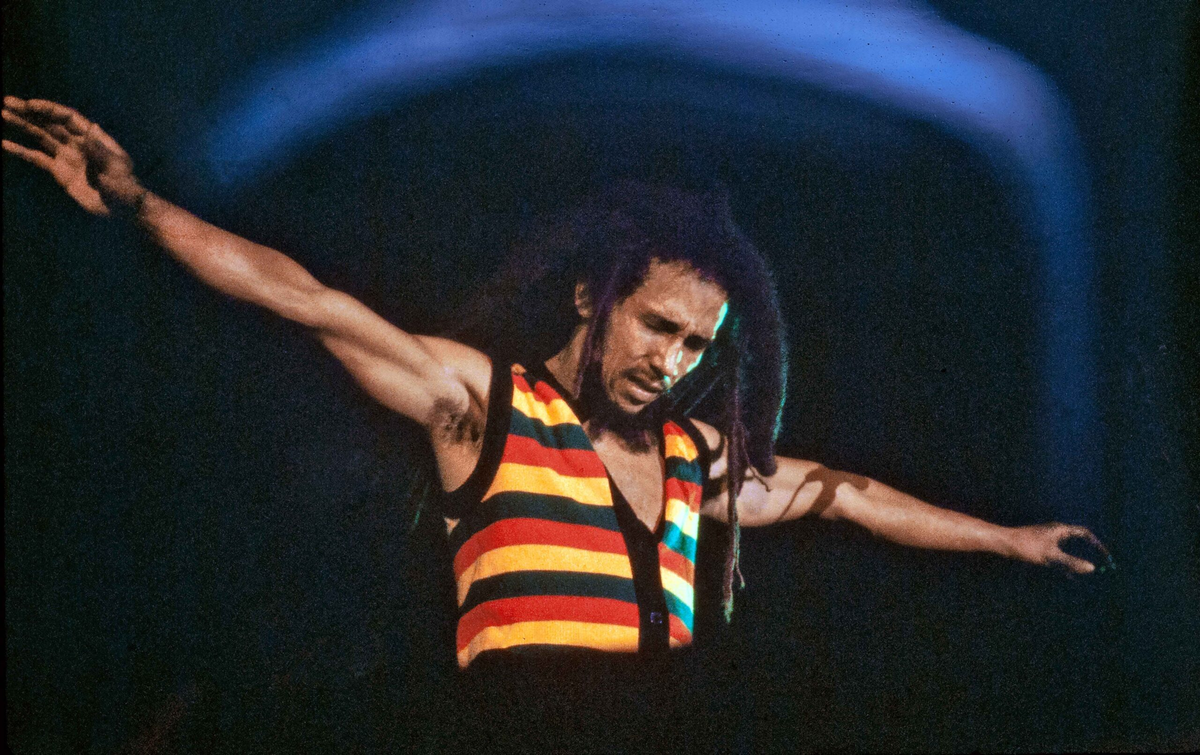
The Exodus album, released in June 1977, spent 56 consecutive weeks on the UK charts according to widely cited historical accounts, though the specific chart position figure for any single from that album requires verification from official chart archives that are not fully reproduced here. What is not in dispute is the album’s dominance of the cultural conversation that year.
Also significant in 1977: “Two Sevens Clash” by Culture became a mystic warning and revolutionary anthem, an international roots classic.
1978: “Uptown Top Ranking”, Althea and Donna
The single was by Jamaican teenage singers Althea Forrest and Donna Reid, recorded when they were 17 and 18 years old respectively. Released in 1977, the song comprises the girls ad-libbing to deejay track “Three Piece Suit” by Trinity.
The song was a huge hit in the UK, reaching number one and becoming the third best-selling single of the year. Its chart peak was officially registered in January 1978, making it the genre’s biggest commercial moment of that year.
1979: “Redemption Song” recorded / “Money in My Pocket”, Dennis Brown
Dennis Brown’s “Money in My Pocket,” a soulful expression of heartbreak and survival, helped establish Brown as the “Crown Prince of Reggae.” The track was a significant UK hit in 1979.
Brown’s run of form across the late 1970s was one of the genre’s most consistent creative periods, even if his chart profile in America lagged behind his Jamaican and British standing.
1980: “Redemption Song”, Bob Marley and the Wailers
Released in October 1980 on the album Uprising, “Redemption Song” stands as one of the most remarkable recordings in any genre. “Redemption Song” is an acoustic protest song rooted in freedom and Black liberation.
Marley’s cancer diagnosis in 1977 and his declining health through 1980 gave the song an additional weight that listeners felt immediately. It remains among the most-streamed reggae songs of all time.
1981: “Under Mi Sleng Teng” era begins / “Good Thing Going”, Sugar Minott
Sugar Minott’s “Good Thing Going” was one of reggae’s sweetest lovers rock tunes; it charted in the UK and made Minott a household name.
The early 1980s in Jamaica were dominated by the sound system culture and deejay toasting, a transition period before the digital revolution arrived mid-decade.
1982-1984: The Roots Hold / Yellowman Rises
Yellowman became the dominant force in Jamaican dancehall through the early 1980s. “Zungguzungguguzungguzeng” by Yellowman is regarded as a foundational dancehall track.
Specific UK or US chart positions for Yellowman’s singles in this period are not confirmed in the sources consulted here, but his dominance of the Jamaican sound system circuit is part of documented reggae history.
1985: “Under Mi Sleng Teng”, Wayne Smith
This is arguably the single most transformative year in reggae’s post-Marley history. No other riddim had the instantaneous, transformative impact of the Sleng Teng.
Musician Noel Davey was given a Casio MT-40 keyboard. He brought it to his neighbor, singer Wayne Smith, and after playing around with the keyboard’s “rock” preset, they came up with a sequence they liked.

They brought the riddim to producer Lloyd “King Jammy” James, who slowed it down to make it palatable to a reggae audience; Smith recorded his song “Under Mi Sleng Teng,” and when Jammy played it on his sound system, the crowd’s reaction was so overwhelming he decided to release it commercially.
Sleng Teng launched reggae’s digital explosion: more than 250 songs have been recorded on the beat. It was the first fully computerized riddim in reggae history. The digital age was born.
1986-1988: Shabba Ranks Emerges / “Telephone Love”, JC Lodge
The late 1980s saw dancehall consolidate its digital blueprint. “Telephone Love” by JC Lodge, released in 1988, was among dancehall’s earliest crossover hits.
Shabba Ranks, born Rexton Gordon in Saint Ann, Jamaica, was one of the most popular Jamaican musicians in the world by the late 1980s and early 1990s.
1990: “Dem Bow”, Shabba Ranks
“Dem Bow,” released in 1990, was performed by Jamaican reggae artist Shabba Ranks and produced by Bobby Digital. It uses the “Ku-Klung-Klung” riddim, created by Jamaican producers Steely and Clevie in the late 1980s.
The track became one of the most consequential recordings in the entire Caribbean diaspora. Shabba Ranks’s “Dem Bow” is an influential rhythm that went on to shape reggaeton, and understanding the track means understanding one of the most consequential exports in Jamaican music history: the pattern that underlies an entire Latin genre.
1991-1993: “Mr. Loverman” and the Shaggy Breakthrough
“Mr. Loverman” by Shabba Ranks was released in 1991 as a single by Epic Records. It was a major hit in both the UK and the US and cemented Shabba’s status as a crossover star.
By 1993, Shaggy’s cover of the 1960s rocksteady track “Oh Carolina” had become a significant UK hit. Shaggy is a Jamaican-American reggae musician who scored hits with “It Wasn’t Me,” “Boombastic,” “Oh Carolina,” and “Angel.”
1994: “Here Comes the Hotstepper”, Ini Kamoze
“Here Comes the Hotstepper” by Ini Kamoze peaked at number one on the US Billboard Hot 100 on 17 December 1994 and remained there for two weeks.
The song has sold more than 2.2 million copies globally and has been certified platinum in both the United States and the United Kingdom. Boosted by its placement on the Pret-a-Porter film soundtrack, it was a global pop moment.
1995: “Boombastic”, Shaggy
Released in May 1995 by Virgin Records as the second single from his third studio album, “Boombastic” is a pop-reggae fusion record that broke into the mainstream.
Shaggy’s first platinum album dropped in 1995 and took over radio waves with “Boombastic,” which peaked at No. 3 overall on the Billboard Hot 100. He won the Grammy Award for Best Reggae Album with Boombastic in 1996.
1996-1999: Buju, Beenie Man, and the Dancehall Wars
The second half of the 1990s belonged to Buju Banton, Beenie Man, and a fierce creative competition in Kingston. The decade is fondly remembered for legends like Buju Banton and Shabba Ranks dropping hit after hit.
No single song from this four-year window reached the mainstream chart heights of “Boombastic” or what was coming next, but the sheer volume of quality dancehall output from Kingston during this period has no equal.
2000-2001: “It Wasn’t Me”, Shaggy featuring RikRok
“It Wasn’t Me” has been regarded as Shaggy’s breakthrough in the pop market. The single topped the charts in Australia, France, Ireland, the Netherlands, Poland, the United Kingdom, and the United States. It was the best-selling single of 2001 in the UK, selling over 1.15 million copies that year.
His album Hot Shot spawned two number-one singles on the Billboard Hot 100, “It Wasn’t Me” and “Angel.” For two years running, Shaggy was the most commercially dominant reggae artist on the planet.
2003: “Get Busy”, Sean Paul
Sean Paul first gained international recognition with the release in 2002 of his second studio album Dutty Rock.
It hit the top 10 on the US album chart and included the number one charting pop hit single “Get Busy.” The album won a Grammy Award for Best Reggae Album.
2006: “Temperature”, Sean Paul
Produced by Rohan “Snowcone” Fuller, “Temperature” peaked at number one on the Billboard Hot 100 and spent a whopping 31 weeks on the chart, 17 of them in the top ten.
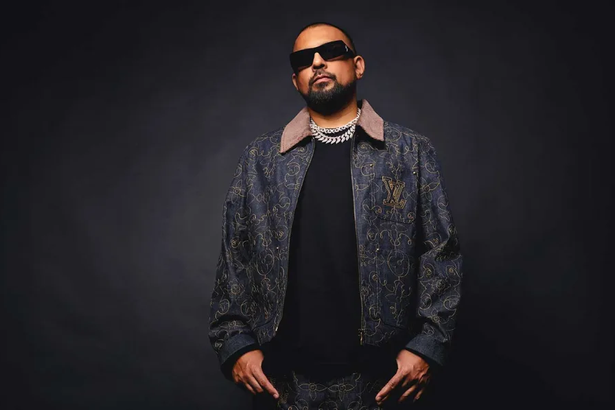
The song earned an MTV Video Music Award for Best Dance Video. Sean Paul’s run through the mid-2000s was the most commercially successful stretch any reggae or dancehall artist had enjoyed since Bob Marley.
2010-2013: The Reggae Revival
Protoje, Chronixx, Jah9, and others helped kick off the reggae revival about a decade ago. Chronixx’s “Here Comes Trouble” was the most popular single from his acclaimed breakout 2014 EP Dread and Terrible.
The revival prioritized acoustic instrumentation, conscious lyricism, and a direct debt to the 1970s roots era, standing in deliberate contrast to the dancehall maximalism of the preceding decade.
2014-2016: Protoje and Chronixx Define a Movement
The 2014 collaboration “Who Knows” by Protoje and Chronixx earned the two their first UK certification in February 2022, issued a Brit-certified silver award having sold over 200,000 copies in the UK.
The song formed part of Protoje’s third studio album Ancient Future, which spent 17 weeks on the Billboard Reggae Albums chart after peaking at No. 1.
2018-2019: “Toast”, Koffee
Jamaican sensation Koffee was just 18 when she recorded “Toast,” a joyous expression of gratitude that resonated with audiences of various ages and backgrounds.
“Toast” featured on her Grammy Award-winning EP Rapture and has earned more than 132 million streams on Spotify.
Koffee’s debut EP Rapture made history: it debuted at No. 1 on Billboard’s Reggae Albums chart and stayed there for 32 weeks.
The Grammy win that followed at the 2020 ceremony made her the youngest solo act and the first female artist to win the Grammy for Best Reggae Album.
2020-2026: The Streaming Era
Koffee breathed new life into the reggae revival when she hit the scene, with Protoje noting that “Koffee has changed what it means to be reggae or dancehall.” Through the early 2020s, artists including Popcaan, Skillibeng, and Masicka have dominated the Jamaican streaming charts, while the lines between roots reggae, dancehall, and Afrobeats have continued to blur.
Specific year-by-year streaming chart positions for individual songs in this period are not confirmed in the sources consulted here, but the overall trend is clear: Shaggy, Bob Marley, and Sean Paul remain among the top three streamed reggae artists of all time on Spotify, even as a new generation of Jamaican artists builds its own streaming legacy.
What the Biggest Reggae Hits by Year Tell Us
The throughline across nearly six decades is not difficult to identify. From the deeply spiritual messages of Marley and Burning Spear to the hardcore dancehall energy of Yellowman and Shabba Ranks, reggae music evolved without ever losing its soul.
These hits not only rocked Jamaican dancehalls and international charts but also influenced hip-hop, punk, R&B, and pop across the globe.
Whether a given year’s biggest reggae song was a plea for workers’ dignity from Desmond Dekker in 1969, a fully digitized riddim from a Casio keyboard in 1985, or a teenager’s grateful toast to life in 2019, the genre’s core impulse, to speak plainly and rhythmically about real experience, has never wavered.