
Dub music is one of recorded music’s most consequential inventions, and yet it remains one of the least understood.
At its simplest, dub music is a Jamaican genre that traditionally strips reggae recordings back to drums and bass, then rebuilds them live at the mixing desk with echo, reverb, and delay.
At its most ambitious, it is a complete reimagining of what a recording can be. The original practitioners established dub not just as a distinctive reggae offshoot, but as the prototype for all electronic music and its associated practices.
If you have ever heard a remix, a dubstep drop, a hip-hop breakbeat, or a drum-and-bass roll, you have heard dub music’s fingerprints.
This guide covers what dub music is, where it came from, who made it, how it works, and why it still matters in 2026.
What Is Dub Music, Exactly?
Dub is a musical style that grew out of reggae in the late 1960s and early 1970s. It is commonly considered a subgenre of reggae, though it has developed to extend beyond that style.
Dub music grew out of reggae in the late 1960s and early 1970s. Songs in the style largely consisted of heavily edited remixes of existing records, which were created by removing the vocal sections and placing even more focus on the rhythm section, or riddim.
Novel audio effects like reverb and delay would then be applied, often generously, and vocal snippets and other instruments from the original song (or even other songs) could make their way into the track by means of dubbing or sampling.
Dub music is characterized by a “version” or “double” of an existing song, often instrumental, initially almost always pressed on the B-sides of Jamaican 45-rpm records and typically emphasizing the drums and bass for a sound popular in local sound systems.
The word “dub” in the genre’s name traces directly to the physical format. The style is named for the dubplates used in the manufacture of vinyl records.
These one-off acetate discs were cut exclusively for individual sound systems, giving selectors a competitive edge that no rival could replicate.
Dub music represented an organic and often psychedelic fusion of acoustic sounds with electronic effects. It notably empowered the producer and engineer to take on a new role as a musician in their own right, stepping out from behind the scenes to showcase creativity, taste, and technique in ways that would influence both mainstream and underground music for decades to come.
The Four Defining Characteristics of Dub
Understanding what dub music sounds like requires identifying the features that separate it from the reggae it grew out of.
Dub music began by removing lead vocal tracks from reggae records. Although the genre has evolved, the absence of sung lead vocals remains a defining characteristic.
Early dub songs were instrumental versions of reggae tracks. Lead vocals were removed from dub mixes, although some dub producers would preserve backing vocals.
Dub music emphasizes drum-and-bass tracks called riddim. Dub and reggae drummer Sly Dunbar of Sly and Robbie calls drum-and-bass focused productions “dubwise.”
The riddim is the engine of a dub track: every other element orbits around it, enters briefly, and then retreats into the mix.
At the mixing board, dub producers tend to add sound effects and plugins, including echo, reverb, and delay.
These are not decorative flourishes. Effects are composition, not polish. A dry vocal and a vocal thrown into a half-second echo are two different artistic statements.
Dub is the clearest proof available that the mix is where meaning gets decided, not just where levels get balanced.
With its lack of lead vocals, dub music offers space for toasting, a form of rapping that is improvised over a dub record. During the 1960s and 1970s, studio engineers began to remix B-sides of reggae singles, dropping out the vocals and emphasising the instrumental texture of the song.
These “versions” allowed DJs to “toast,” or MC, over the record at local dance halls. This relationship between the stripped instrumental track and the live vocalist would prove enormously generative, feeding directly into hip-hop, grime, and dancehall decades later.
The Origins of Dub: Sound Systems and the Kingston Dancehall
To understand what dub music is, you have to understand the world it was born into.
It was in the late 1960s that the origins of dub can be traced. Sound systems in Jamaica were the main form of entertainment, especially for the poorer classes who couldn’t afford Kingston’s uptown clubs.
Mobile sound systems, usually large stacks of amps and speakers packed into converted delivery trucks or Jeeps, provided the amplification that was known to shake Jamaican neighborhoods to their foundations.
Rivalry between sound systems was fierce, with operators seeking to gain a competitive edge via the exclusivity of their music.
Some Jamaican studios had their own cutting lathes on hand, important for the easy manufacturing of the exclusive, one-off dubplates so beloved of sound system selectors.
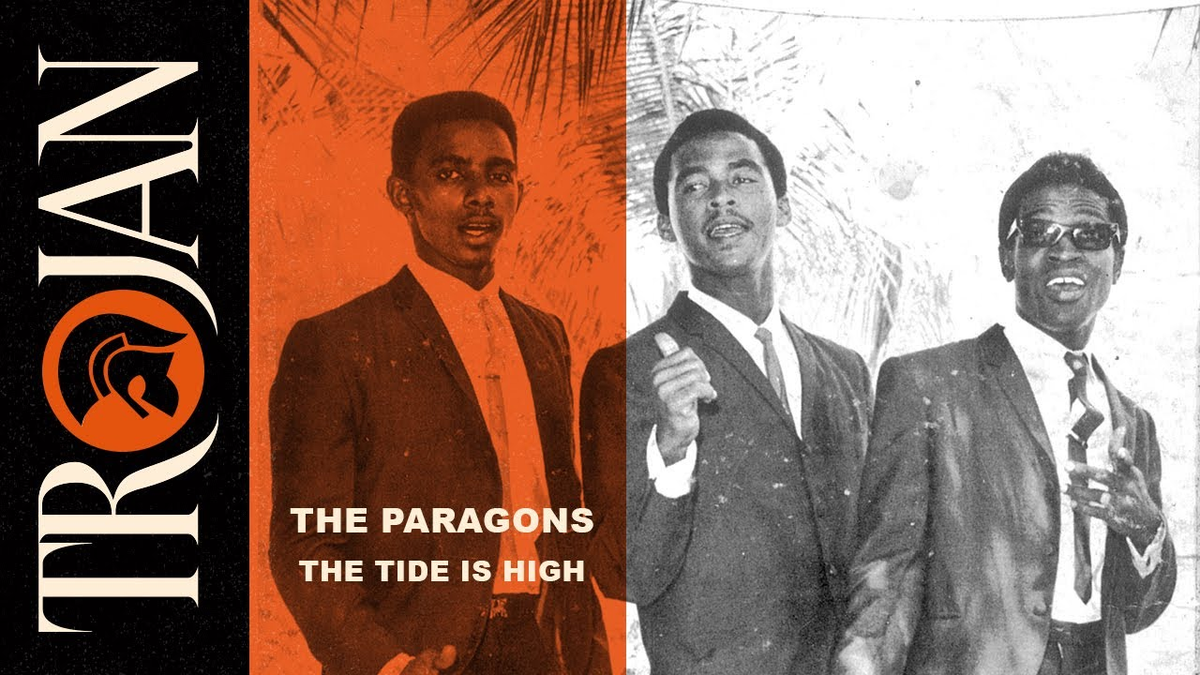
The dub style of Jamaican music began on a 1968 mix of the hit single “On the Beach” by the Paragons. At the time, DJ and producer collectives called sound systems guided popular music, and sound system producer Rudolph “Ruddy” Redwood commissioned the Treasure Isle studio to press a special instrumental cut.
When the engineer accidentally left the vocal track off, Redwood played the bare riddim anyway, and the crowd responded. A genre was sparked.
Dub evolved from the instrumental versions that Kingston producers started issuing circa 1969 as B-sides to vocal releases.
The great sound system engineers of Jamaica in the late 1960s and early 1970s pioneered the instrumental remix and were the first to make the style popular.
Using only primitive recording and mixing equipment, the mixing engineer took a lead role in defining the sound of the recording, using the mixing board as his instrument.
King Tubby: The Architect of Dub
No figure is more central to the story of dub music than Osbourne Ruddock, known to the world as King Tubby.
Born Osbourne Ruddock on January 28, 1941, in Kingston, Jamaica, King Tubby was not just a sound engineer or producer, he was a visionary innovator who fundamentally changed the course of modern music.
Tubby’s journey into music was not typical. He was not a singer or a guitarist; he was a self-taught electronics wizard.
In the late 1950s, he opened a small radio and TV repair shop in Kingston, where he quickly built a reputation for his unmatched expertise with tube amplifiers, earning him the nickname “Tubby.”
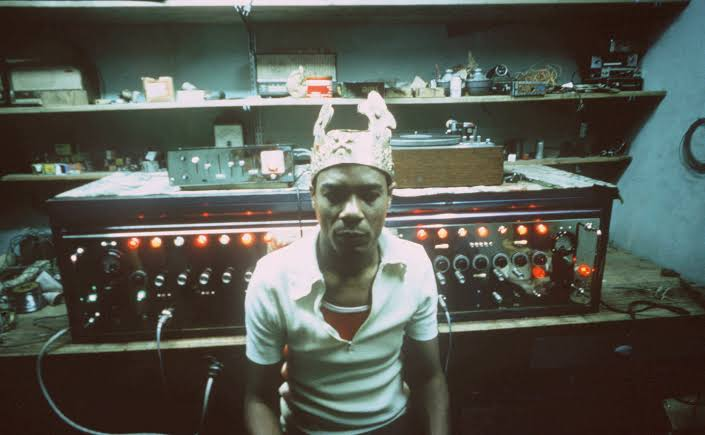
Dromilly Avenue, in the Waterhouse neighborhood of Western Kingston, was where electrical engineer and sound system owner Osbourne Ruddock operated from.
Known to the world as King Tubby, by 1972 his “Tubby’s Home Town Hi-Fi” was one of the leading sound systems on the island.
King Tubby started his career in the music industry as a disc cutter before joining Duke Reid’s Treasure Isle studio in 1968. It was there that his signature method crystallized. It was while working with Reid that Tubby began what seemed to be a deceptively simple bit of experimentation: he would remix songs starting by dropping the vocal track, boosting parts of the instrumental track, and add subtle effects like echo or delay to the instruments he had isolated.
In 1971, King Tubby opened his own studio, which became the hotbed of dub music. During the late 1960s and early 1970s, Tubby was responsible for turning dub into an art form, the creative remixing he pioneered at a tiny front-room studio in the Waterhouse ghetto making a long-reaching impact.
King Tubby was not content to keep his brilliance to himself. He took budding engineers under his wing, mentoring talents like Scientist, Prince Jammy, and Prince Philip Smart.
These proteges went on to become icons in their own right, carrying the dub torch forward while paying homage to the man who taught them.
Tragically, on the early morning of February 6, 1989, King Tubby was murdered by a lone gunman outside his home in Duhaney Park.
The gunman was never identified, let alone brought to justice. The very idea of a remix or alternate version stems largely from Tubby’s work in the dub tradition.
Lee “Scratch” Perry and the Black Ark
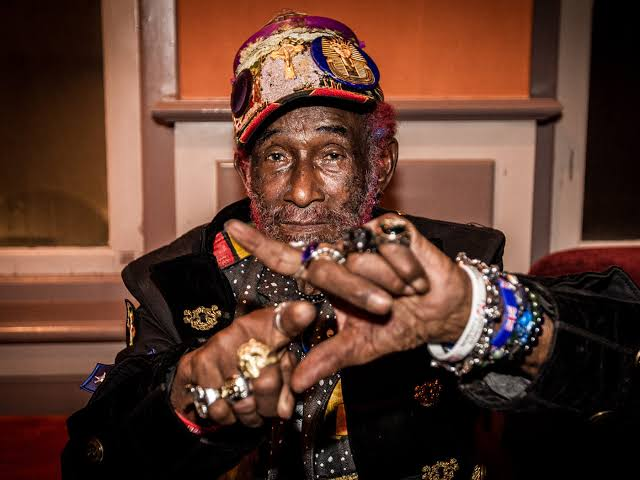
If King Tubby was dub’s technical mastermind, Lee “Scratch” Perry was its most anarchic creative force.
Famous for his 1973 record The Upsetters 14 Dub Blackboard Jungle (also called Blackboard Jungle Dub), Perry collaborated with King Tubby to establish the sound of early dub.
The album, originally released in 1973 under the artist name “Upsetters 14 Dub,” was pressed in only 300 copies and issued only in Jamaica. It was the first stereo dub album, as well as the first to include reverb.
Allmusic has noted that while the album’s status as the very first dub LP is contested, Upsetters 14 Dub Blackboard Jungle is the first album that fully dived into the possibilities of dub, creating the blueprint for a genre that could survive on its own, attract its own audience, and have its own set of masters.
Perry’s Black Ark studio became a laboratory of sonic experimentation throughout the 1970s. He produced landmark albums such as Super Ape in 1976, using found sounds, spoken word, and environmental noises to push dub into genuinely strange, visionary territory.
His approach confirmed what Tubby had discovered at the mixing board: the engineer was now as much an author as the vocalist.
The Dub Sound Palette: Tools and Techniques
The gear available to the original dub engineers was modest by any modern standard. A four-track mixing console, a spring reverb unit, a tape echo machine, and basic equalization hardware were the essential tools. What these engineers accomplished with such limited equipment remains remarkable.
Engineers would remove vocals, highlight the bass and drums, and apply effects such as echo, reverb, and delay to create a new, spacious, and hypnotic soundscape.
Spontaneous live mixing, where engineers acted as improvising musicians, was central, as was the issuance on dubplates, unique acetates played on sound systems.
The philosophical logic of dub arranging is almost the inverse of pop production. Dub arranges by removing, and the drama comes from what is missing. Most producers arrange by adding.
Dub arranges by removing, and the drama comes from what is missing. A bass line that drops out for four bars and returns creates more impact than one that plays continuously. Silence becomes structural.
Modern studio producers use digital plugins to replicate Tubby’s analog effects, and his approach to spatial mixing is now a global standard.
Key Artists Beyond Tubby and Perry
The dub canon extends well beyond its two most famous names.
Augustus Pablo: A melodica virtuoso whose collaboration with King Tubby produced some of the genre’s most beloved recordings. His “King Tubby Meets Rockers Uptown” (with Augustus Pablo) is often cited as the definitive dub track.
Scientist (Hopeton Brown): A dub prodigy who worked under King Tubby, his albums like Scientist Rids the World of the Evil Curse of the Vampires (1981) show dub’s storytelling potential through sound.
Mad Professor (Neil Fraser): In the 1980s, Britain became a new center for dub production, with Mad Professor and Jah Shaka being the most famous practitioners of that era.
Keith Hudson: Alongside Perry and Tubby, early pioneers of the genre included producer Keith Hudson, whose dense, sinister productions explored sonic territory that even the genre’s founders had not yet mapped.
Dub Goes Global: From Kingston to the World
The route dub traveled from the yards of West Kingston to global influence followed the path of Jamaican migration.
Jamaican records traveled with Jamaican migration, and by the late 1970s London bands were building dub space into rock records.
Public Image Ltd’s “Metal Box” (1979) and The Clash’s “Sandinista!” (1980) are the usual examples. Adrian Sherwood’s On-U Sound, founded around 1980, turned the crossover into a permanent working method rather than a phase.
Many bands characterized as post-punk were heavily influenced by dub. Better-known bands such as The Police, The Clash, and UB40 helped popularize dub, with UB40’s Present Arms in Dub album being the first dub album to hit the UK top 40.
Bronx DJs in the 1970s adopted dub’s remix ethos, influencing the birth of rap and breakbeat culture. Electronic dance music’s techniques of echo, reverb, and bass drops underpin techno, house, jungle, and drum-and-bass.
Dubstep’s name is the clearest evidence of the lineage. It is commonly explained as “dub” plus the two-step rhythm of UK garage, and early London producers cited dub reggae directly.
Over the years, dub and the culture associated with it has influenced genres from techno, punk, trip-hop, and ambient to hip-hop, jungle, and dubstep.
Dub Music Today
Dub is currently enjoying a renaissance on the island of Jamaica and beyond its shores, whether through live dubbing performances in clubs and at music festivals or the rediscovery of classic dub albums by the genre’s forefathers including Lee “Scratch” Perry, Augustus Pablo, Hopeton “Scientist” Brown, Neil “Mad Professor” Fraser, and the late Osbourne “King Tubby” Ruddock.
The 21st century has seen a whole new wave of young dub enthusiasts and sound systems in the UK and worldwide, such as Mungo’s Hi-Fi and Lionpulse Sound, joining veterans like Aba Shanti-I and Channel One.
In the studio, dub’s methods have migrated wholesale into the digital domain. Digital tools have lowered the barrier to entry, leading to a boom in DIY dub producers.
Software reverb, tape echo emulation, and real-time parameter automation place King Tubby’s techniques in the hands of anyone with a laptop.
The philosophical inheritance matters as much as the tools: a recording is raw material, and version culture treats a finished track as a starting point.
Why Dub Music Matters
Dub music answers a question that every producer and engineer eventually confronts: who is the author of a recording? The vocalist who sang it? The players who recorded it?
Or the person who shaped it in the mix? In Kingston in the early 1970s, engineers like King Tubby and Lee “Scratch” Perry made the mix itself the performance.
Blackboard Jungle signaled not only the birth of dub as a genre, but also the dawn of remixing, the concept of the producer as an artist, and the power of an independent home studio to create world-class music, ideas that impacted so many people around the world that they have essentially become the blueprint for music in the 21st century.
That blueprint, drawn in a tiny studio on Dromilly Avenue with primitive equipment and radical imagination, is still being redrawn every time a producer drops a fader, throws a vocal into an echo tail, or lets a bass line breathe in empty space.
King Tubby taught the world that music could be deconstructed and rebuilt, that silence was as powerful as sound, and that the studio could be a canvas for infinite creativity. That lesson has never needed updating.