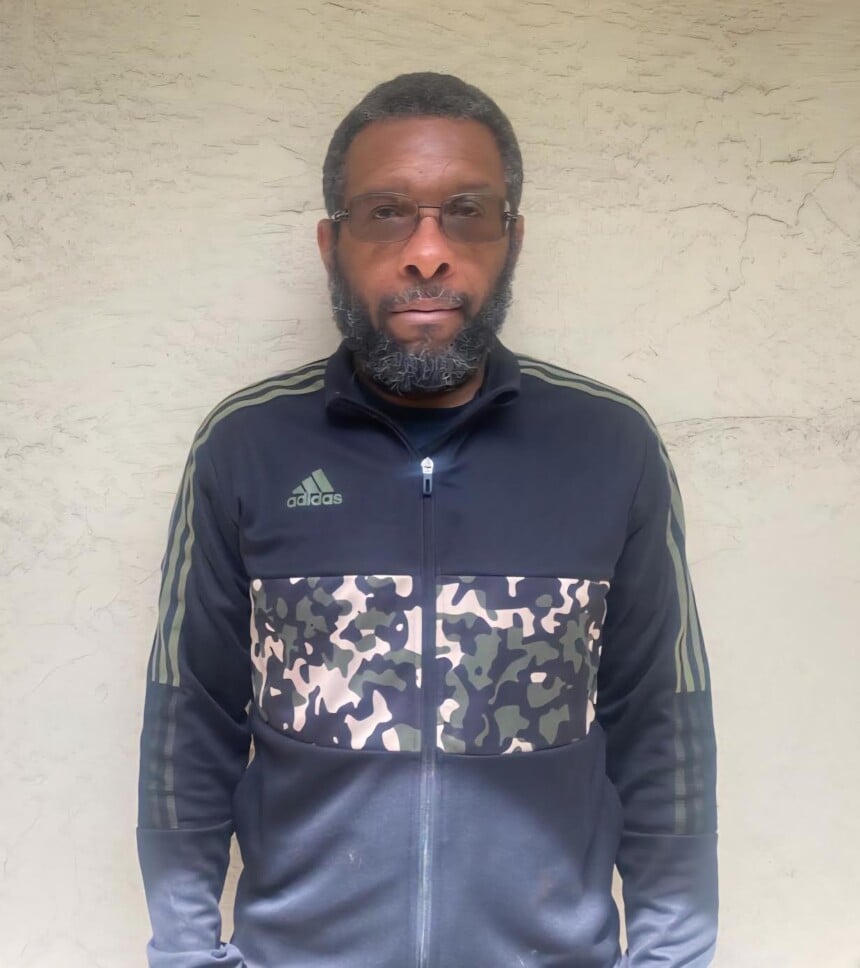

OAKLAND, California — It lasted only a few seconds, but more than three decades later, the words still refuse to die.
“Six million ways to die, choose one.”
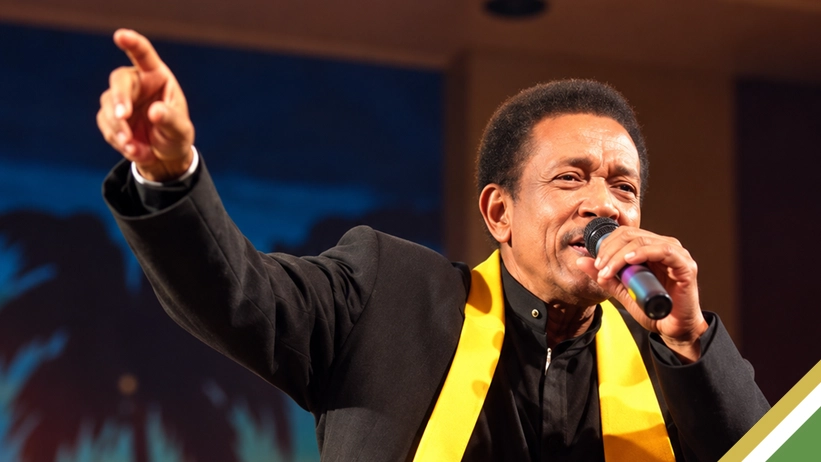
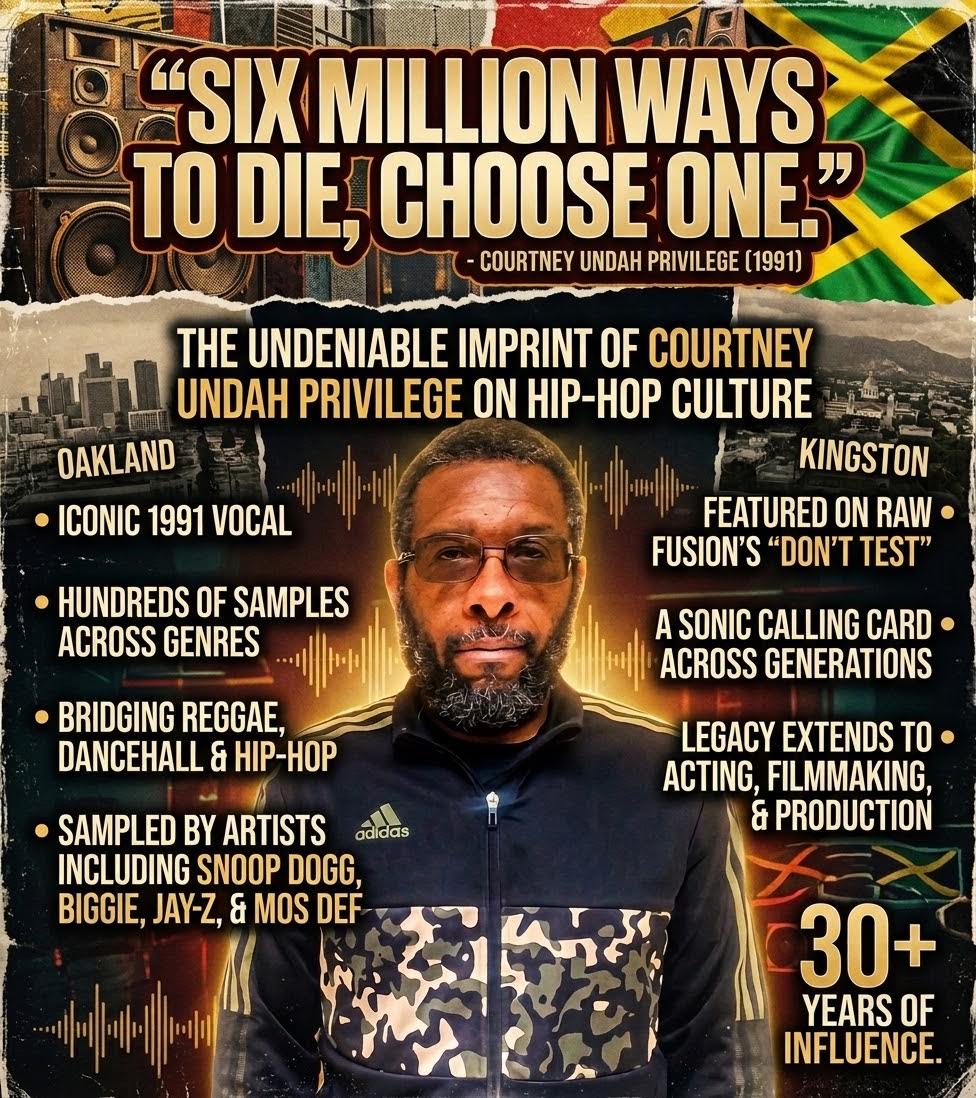
The menacing line, delivered in 1991 by Jamaican artiste, actor and producer Courtney Undah Privilege, credited as Daddy Courtney, became far bigger than the Raw Fusion song on which it first appeared. Sampled, borrowed and reimagined across generations, the vocal has become part of hip-hop’s cultural vocabulary—and another powerful reminder of Jamaica’s fingerprints on American rap.
Courtney recorded the phrase for “Don’t Test,” the third track on Raw Fusion’s Live from the Styleetron. The Oakland duo, comprising Digital Underground members Money-B and DJ Fuze, blended West Coast hip-hop with the swagger and cadence of Jamaican dancehall.
Courtney supplied the Jamaican fire.
What followed could hardly have been predicted.
The “six million ways” vocal travelled through hip-hop, reggae, dancehall, jungle, drum ’n’ bass and electronic music, becoming a sonic warning shot instantly associated with danger and lyrical confrontation.
Its journey through dancehall included Cutty Ranks’ “A Who Seh Me Dun,” which sampled Courtney’s delivery and helped push the phrase deeper into international sound-system culture. The association became so potent that Cutty Ranks later released a 1996 album titled Six Million Ways to Die.
Hip-hop then took the phrase and ran with it.
One of its most celebrated appearances came on Snoop Dogg’s “Serial Killa,” featuring Tha Dogg Pound, RBX and The D.O.C., from the rapper’s blockbuster 1993 debut Doggystyle. Courtney’s Jamaican voice helps set the threatening atmosphere before the track kicks into gear.
The phrase and variations of it subsequently surfaced across music associated with an extraordinary cast of rap heavyweights, including Dr. Dre, Ice Cube, The Notorious B.I.G., Jay-Z, Mos Def, Method Man, Redman and Joey Bada$$, while becoming familiar territory for jungle and drum ’n’ bass producers.
But Courtney’s story is bigger than a sample trail.
His contribution illustrates the creative conversation between Jamaica and hip-hop long before streaming erased geographical boundaries. Sound-system culture, bass-heavy production, rhythmic deejaying and the Jamaican tradition of transforming a few explosive words into crowd-moving theatre all helped provide creative DNA that could travel easily into rap.
Courtney was not watching that exchange from Jamaica.
He was inside it.
His association with Raw Fusion placed a Jamaican creative in the orbit of Digital Underground, the influential Oakland collective that helped reshape West Coast rap and provided an early platform for Tupac Shakur.
Into that environment Courtney brought the cadence, attitude and sound-system sensibility of Jamaica.
Thirty-five years later, those few seconds remain arguably his most enduring musical calling card.
Yet his creative life did not end with “six million ways.”
Courtney has built a career spanning reggae and dancehall, acting, filmmaking and production. His acting credits include Gangsta’s Paradise, Straight Out, Rude Boy: The Jamaican Don and television comedy Arnold’s Caribbean Pizza. He has also moved further behind the camera, producing the upcoming film Dream Chaser.
Technology has changed. Vinyl gave way to CDs, downloads and streaming. Generations of rappers have come and gone.
Yet that Jamaican voice keeps resurfacing.
A lyric became a sample. A sample became a catchphrase. And somewhere along the journey, the catchphrase became culture.
Six million ways. One unmistakable voice. And an echo that still hasn’t died.