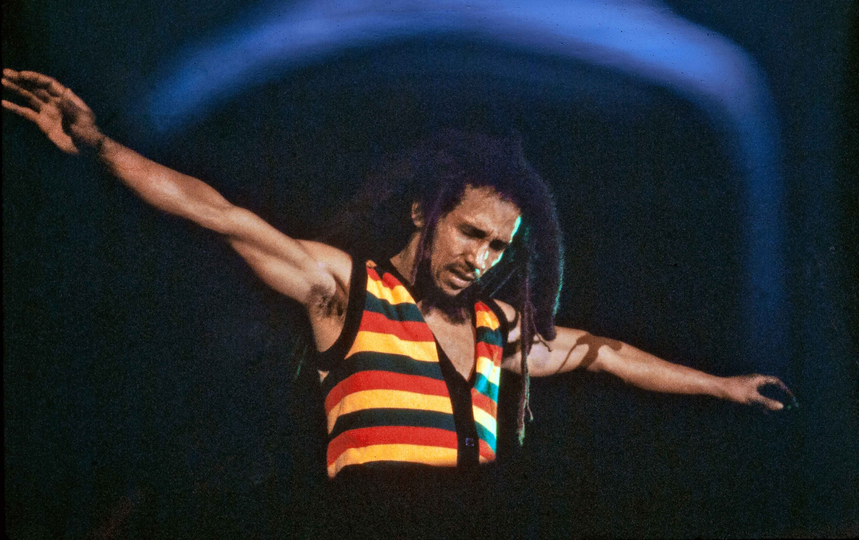

Reggae is one of the most globally influential genres ever born from a single island. For a small Caribbean island, Jamaica has had an extraordinary influence on music.
Its supreme invention, reggae, emerged after the country gained independence from Britain in 1962, when bands started giving the jazz, swing, pop and rock ‘n’ roll tunes they performed a quirky local twist, notably a jerking off-beat guitar rhythm and patois-rich vocals.
What followed was a cascade of sub-genres and movements that changed music worldwide. First came the loping sounds of ska artists such as Prince Buster and The Skatalites, followed, in the abnormally hot summer of 1966, by the sweet, slowed-down pop of rock steady. After that, reggae got fatter and funkier, splintering into myriad different forms and sub-genres.
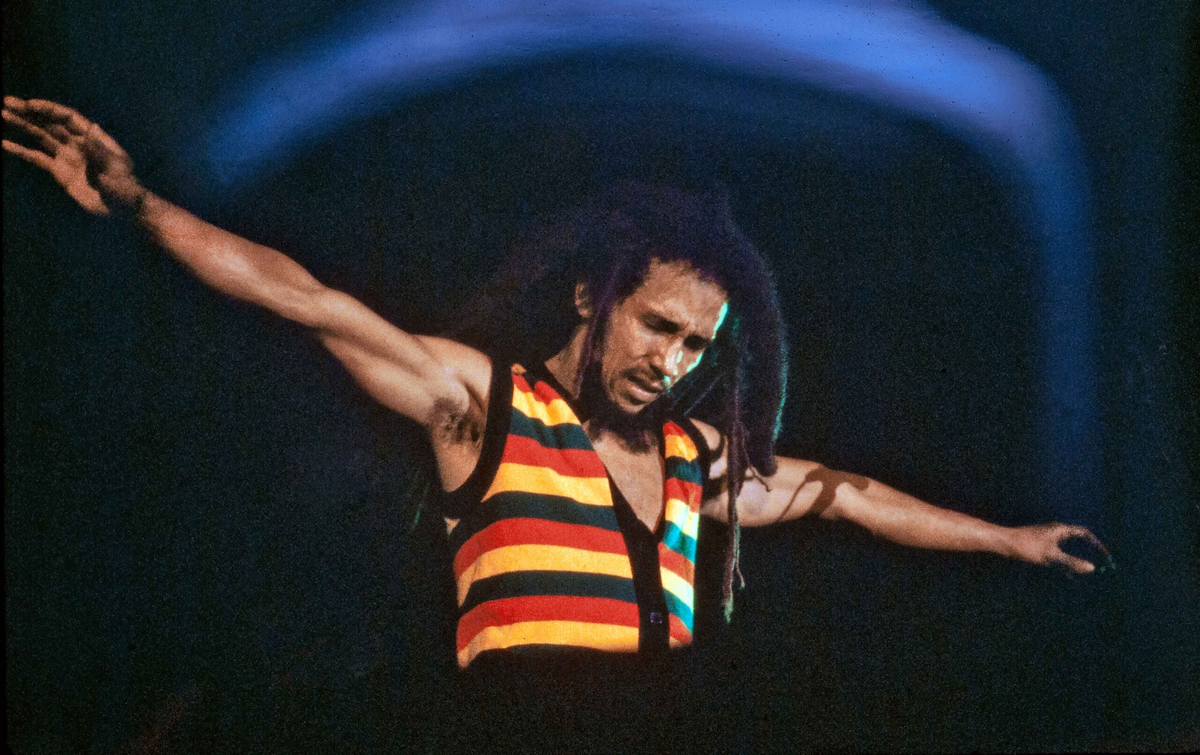
This list of the best reggae albums of all time draws on critical consensus from sources including Rolling Stone’s 500 Greatest Albums list, MOJO’s 50 Greatest Reggae Albums, Rate Your Music aggregates, and Album of the Year data.
No single list exists without debate, but the records below represent the albums that critics, fans, and fellow musicians return to most consistently.
How We Ranked Them
Rankings were synthesized across multiple critical lists and aggregators. Five reggae albums by Jamaican artists appear on Rolling Stone’s 500 Greatest Albums of All Time: Exodus by Bob Marley and The Wailers at number 48; Catch A Fire by The Wailers at number 140; The Harder They Come soundtrack at number 174; Toots and The Maytals’ Funky Kingston at number 344; and Red from Black Uhuru at number 466.
Those placements, combined with Rate Your Music user scores, MOJO editorial rankings, and historical context, inform the order below.
The 50 Best Reggae Albums of All Time
1. Bob Marley and The Wailers: Exodus (1977)
The consensus pick for the single greatest reggae album ever made. Throughout his prolific canon of recordings, the man born Robert Nesta Marley frequently and eloquently examined the shared adversities endured by his global community of spiritually kindred brothers and sisters.
Exodus, released in June 1977, stands as his ninth studio album and, for many, his magnum opus. Marley left Jamaica in December 1976 after he was shot at his home in what many believed was a politically motivated incident, and the album was not recorded in Jamaica.
Despite that displacement, the record remained saturated in Jamaican spirit. The ninth studio album from Marley and The Wailers was released in 1977, and it features a number of the reggae musician’s most famous tracks.
Exodus produced classics including the title track, “One Love,” and “Three Little Birds.” Rolling Stone placed it at number 48 on its 500 Greatest Albums of All Time. According to BBC Culture, it was considered an album that defined the 20th century.
2. Burning Spear: Marcus Garvey (1975)
Many fans cite Burning Spear’s Marcus Garvey as the greatest reggae album ever made. Marcus Garvey is the third album by reggae artist Burning Spear, released in 1975 on Fox Records in Jamaica and then internationally on Island Records later in the year.
Burning Spear is the stage name of Winston Rodney, of Saint Ann’s Bay, Jamaica. Back in the 1970s, Burning Spear was a vocal trio, fronted by Rodney and backed by Rupert Willington and Delroy Hinds.
A key component to the success of Marcus Garvey is Burning Spear’s collaboration with Lawrence “Jack Ruby” Lindo, a record producer and sound system operator known for his distinctive techniques and innovative use of horn arrangements.
Unlike most Jamaican music producers, Lindo did not operate out of Kingston, instead basing himself in Ocho Rios on the island’s northeastern coast. There is not a more visceral, politically skewed reggae crowd-pleaser than Burning Spear’s third album.
The music on this rootsy, conceptual opus is raw, rockin’ and emotive, headed by Burning Spear’s quietly crucial whine.
Producer Jack Ruby’s solid arrangements enlivened his charge’s large-hearted, pan-African manifestos. The 1975 Marcus Garvey album was the first to bring Rodney to wider attention outside Jamaica.
3. The Wailers: Catch a Fire (1973)
Catch a Fire, Bob Marley and The Wailers’ seminal first release on Island Records, is universally regarded as the album that put reggae music on the global stage.
Released on 13 April 1973, Catch a Fire was recorded between May and October 1972 at Dynamic Sound, Harry J’s and Randy’s in Kingston, as well as Island Studios in London.
In April 1973, ten years after Marley founded the Wailers with Hubert Winston McIntosh (known as Peter Tosh) and Neville Livingston (known as Bunny Wailer), the band released their major label debut album through producer Chris Blackwell’s Island Records.
Rolling Stone called it the album with which “Bob Marley and The Wailers had arrived.”
4. The Wailers: Burnin’ (1973)
Released just months after Catch a Fire in October 1973, Burnin’ was the last studio album to feature the original Wailers trio of Marley, Peter Tosh, and Bunny Wailer. Catch a Fire and Burnin’ were both released by Island Records in 1973.
Marley left the group, which included Peter Tosh and Bunny Livingston, in early 1974. Burnin’ contains two of the most covered songs in reggae history: “Get Up, Stand Up” and “I Shot the Sheriff,” the latter of which Eric Clapton would take to number one in the United States in 1974. Rate Your Music users consistently score it among the top tier of the genre’s recordings.
5. The Harder They Come: Original Soundtrack (1972)
The Harder They Come is the soundtrack album to the film of the same name, released in 1972 in the United Kingdom on Island Records.
The soundtrack album played a major part in popularizing reggae in the United States and the world beyond, the film itself preventing the genre from remaining an isolated phenomenon in Jamaica.
It is the soundtrack to the film that took reggae to the world, topped and tailed by singer-actor Jimmy Cliff’s tropical-pop title track and hymnal “Many Rivers to Cross.”
The remainder of the album is a compilation of singles released in Jamaica from 1967 through 1972, assembled by director and co-writer Perry Henzell from songs by favored reggae singers including the Melodians, the Slickers, DJ Scotty, Desmond Dekker, and Toots and the Maytals.
In addition to choice cuts by Toots and The Maytals, Desmond Dekker, and the Melodians, the soundtrack boasts two of Cliff’s biggest hits, “Many Rivers to Cross” and “The Harder They Come,” both listed among Rolling Stone’s 500 Greatest Songs of All Time. Jimmy Cliff was inducted into the Rock and Roll Hall of Fame in 2010.
6. Toots and The Maytals: Funky Kingston (1973)
Funky Kingston, released in 1973 by Island Records, contains songs like the uptempo title track. Rolling Stone placed it at number 344 on its 500 Greatest Albums list.
The magazine noted it is “loose, funky, and exuberant, Kingston is the quintessential document of Jamaica’s greatest act after Bob Marley.”
Toots Hibbert and his band The Maytals were early purveyors of Jamaican ska and rocksteady, coming together in the early 1960s and helping coin the term reggae on their 1968 single “Do the Reggay.”
The rough, rustic and churchy Maytals of the ska era are updated on this album into a raucous rock stew that is impossible not to move to. Rate Your Music users score it among the most beloved reggae recordings of all time, rating it a 3.82.
7. Bob Marley and The Wailers: Natty Dread (1974)
Released on 25 October 1974 and produced by Chris Blackwell and the Wailers at Harry J Studios in Kingston, Jamaica, Natty Dread was the seventh album by Bob Marley and The Wailers.
Previously Marley had recorded with Peter Tosh and Bunny Wailer as the Wailers, and this was his first record without them.
Natty Dread was most popularly received in the UK, where it peaked at number 43 and sold in excess of 100,000 copies, making it a gold album.
The album contains “No Woman No Cry,” which would become one of the most recognizable songs in reggae history when its live version was released a year later.
8. King Tubbys Meets Rockers Uptown: Augustus Pablo (1976)
King Tubbys Meets Rockers Uptown is a dub studio album by Augustus Pablo and King Tubby, released in 1976. It features Carlton Barrett on drums, Robbie Shakespeare and Aston Barrett on bass guitar, and Earl “Chinna” Smith on guitar.
Pablo produced the album and played melodica, piano, organ and clavinet. All sessions with the musicians were recorded at Randy’s studio in Kingston, Jamaica, and then Pablo took the tapes to King Tubby for mixing.
At a time when other dub musicians emphasized bass lines and drums, Pablo and sound engineer King Tubby accentuated the melodica, giving the record a distinctly haunted, melodic quality unlike anything else in the dub canon. Rate Your Music scores it at 3.92, the highest-rated dub album on the platform.
9. The Congos: Heart of the Congos (1977)
One of the most mystical recordings ever to emerge from Lee “Scratch” Perry’s legendary Black Ark Studio. The first Jamaican pressing appears on Perry’s Black Art label in late 1977, a small run said to be only a few hundred copies.
The first release of the LP was a very limited one, only consisting of a couple of hundred copies. When Perry sent the master tapes to Island Records, the label refused to release the album. Despite that early rejection, the record became a cornerstone of the roots reggae canon.
MOJO describes it as “perfect dread harmonies amid a Lee Perry mix of staggering complexity and endless soft-edged density,” calling it the squashiest, most organic-sounding reggae LP ever. Rate Your Music scores it at 3.91 from nearly 7,000 ratings.
10. Bob Marley: Legend (1984)
Strictly a compilation, but its cultural weight demands inclusion. Legend still routinely shifts hundreds of thousands of units worldwide each year and has generated global sales in excess of 25 million units to date.
The compilation is now up to 723 weeks on the Top Album Sales chart and 904 weeks on the Billboard 200.
Legend became only the second album in U.S. history to rack up 900 stays on the Billboard 200. No reggae album, and few albums of any genre, can claim a commercial footprint of that scale.
11. Bob Marley and The Wailers: Rastaman Vibration (1976)
Released in the year of the politically turbulent Jamaican general election, Rastaman Vibration reached the top of the Billboard Pop Albums chart in the United States upon release, marking the commercial peak of Marley’s career during his lifetime.
It produced the single “Roots, Rock, Reggae,” which became the first reggae track to crack the Billboard Hot 100.
12. Peter Tosh: Legalize It (1976)
After departing the Wailers, Peter Tosh returned with a sonically dense, admirably lazy-paced solo jewel promoting maximum spliffage.
Legalize It established him as a formidable solo voice and a more confrontational political presence than Marley, directly demanding the decriminalization of cannabis at a time when that stance carried real legal risk in Jamaica.
13. Black Uhuru: Red (1981)
Produced by Sly and Robbie and released in 1981, Red’s strongest moments are “Sponji Reggae,” “Youth of Eglington,” and “Utterance.” Rolling Stone praised it as “the peak of a landmark five-LP run.”
Rolling Stone placed it at number 466 on its 500 Greatest Albums of All Time. The duo of Sly Dunbar and Robbie Shakespeare, who produced the record, were at this point the most in-demand rhythm section in reggae, and their crisp, drum-machine-assisted production gave the genre a new contemporary urgency.
14. Culture: Two Sevens Clash (1977)
Released on 7 July 1977, the date that Marcus Garvey had reportedly prophesied would bring catastrophe, Two Sevens Clash caused such genuine anxiety in Kingston that some businesses reportedly closed for the day.
Fronted by Joseph Hill, Culture’s debut stands as one of the definitive documents of roots reggae consciousness.
15. Max Romeo and The Upsetters: War Ina Babylon (1976)
Produced by Lee “Scratch” Perry, War Ina Babylon combines Romeo’s earnest social commentary with Perry’s increasingly experimental production at the Black Ark. Rate Your Music ranks it among the top-rated reggae albums of all time.
The title track is a slow-burning prophecy that remains one of the most arresting recordings in Perry’s production catalog.
16. The Upsetters: Super Ape (1976)
Another Black Ark masterwork. Super Ape is often cited as Lee Perry’s most fully realized production, a fever-dream dub album where bass and drums are treated as compositional tools as much as rhythmic ones. Its influence on post-punk, trip-hop, and electronic music is substantial and widely acknowledged.
17. Bunny Wailer: Blackheart Man (1976)
Blackheart Man has been named in some critics’ lists as a roots masterpiece. MOJO describes it as “an iron fist in a silk glove, the gentlest Wailer’s solo debut packs a hazily laid-back cry of Rasta protest.”
Released the same year as Exodus, Blackheart Man is a quieter, more devotional record, drawing heavily on Nyahbinghi drumming and Rastafarian theology.
Its underdog status relative to Marley’s and Tosh’s solo work makes it one of the most rewarding discoveries in the reggae catalog.
18. Augustus Pablo: This Is Augustus Pablo (1974)
Before the landmark collaboration with King Tubby, Pablo was already establishing himself as a uniquely melodic voice in Jamaican music.
His use of the melodica as a lead instrument was without precedent in the genre and would define his career.
This Is Augustus Pablo collects early productions that showcase his gift for melancholy melody over deep, dubwise rhythm tracks.
19. Lee Perry and The Upsetters: Blackboard Jungle Dub (1973)
Often cited as the first dedicated dub album ever released commercially, Blackboard Jungle Dub demonstrates Perry’s alchemical relationship with the recording studio itself.
Jamaica’s failing economy in the 1970s meant recycling was a part of everyday life, so it followed that, with studio time and recording tape expensive, producers like Lee Perry and King Tubby began taking old backing tracks and remixing them into sonically crackpot but undeniably brilliant dubs.
This album is where that practice was first presented as an art form in its own right.
20. Toots and The Maytals: True Love (2004)
Toots and The Maytals’ Grammy-winning 2004 album True Love features them re-recording classics with guest stars including Eric Clapton and Willie Nelson.
It won Best Reggae Album at the Grammy Awards in 2005 and topped the reggae chart upon release.
It proved that Toots Hibbert, one of the original architects of reggae, remained a vital and relevant artist three decades into his career.
21. Jimmy Cliff: The Harder They Come (1972, original songs)
While the soundtrack is listed above as a separate entry, Cliff’s individual contributions to that project, taken alone, represent one of the finest vocalist performances reggae has ever produced.
The Harder They Come, the film that thrust both Jamaican cinema and reggae music into the global spotlight, made Cliff an international figure.
His earliest hit, “Hurricane Hattie,” was recorded when he was just 14 years old.
22. Burning Spear: Man in the Hills (1976)
The follow-up to Marcus Garvey continued Winston Rodney’s meditative exploration of African identity and Rastafari consciousness, this time with a slightly stripped-back production that placed his baritone vocal even more prominently in the mix. Many critics consider it nearly the equal of its predecessor.
23. The Abyssinians: Satta Massagana (1976)
Recorded piecemeal across several years but compiled as a coherent album in 1976, Satta Massagana features the title track, which is sung partly in Amharic and is one of the most revered songs in all of roots reggae.
The Abyssinians’ three-part harmonies set a template for the vocal group sound that would define the genre’s golden era.
24. Gregory Isaacs: Night Nurse (1982)
Gregory Isaacs was the defining lovers rock artist of the early 1980s, and Night Nurse is his commercial and artistic peak.
The title track became a crossover hit in the United Kingdom, demonstrating that reggae’s tender, romantic strain could reach audiences well beyond the genre’s traditional base. Isaacs’ smooth, bruised tenor made heartbreak sound luxurious.
25. Steel Pulse: Handsworth Revolution (1978)
The debut album from Birmingham’s Steel Pulse is one of the finest examples of British reggae ever committed to tape.
The band documented the lived experience of young Black Britons in the late 1970s with a specificity and anger that their Jamaican counterparts could not have supplied. “Ku Klux Klan” and the title track remain searing in their directness.
26. Third World: 96 Degrees in the Shade (1977)
Third World occupied a unique position in reggae’s landscape: a Jamaican group with enough technical sophistication and rock-inflected ambition to bridge roots reggae and mainstream pop without compromising either.
Their 1977 album, produced with care for sonic detail rare in the genre at the time, remains their defining statement.
27. U-Roy: Dread in a Babylon (1975)
Others, like U-Roy and Tapper Zukie, elected to rap over records, foreshadowing hip-hop. U-Roy’s Dread in a Babylon is the clearest document of the deejay style, also known as toasting, at its most inventive.
U-Roy’s revolutionary deejay benchmark debut album popularized the idea of rapping over someone else’s backing track. His influence on hip-hop, though rarely acknowledged in mainstream histories, is direct and traceable.
28. Big Youth: Screaming Target (1973)
Big Youth’s Screaming Target arrived the same year as Catch a Fire and is, in many respects, its alter ego: where Marley was international and smoothed for Western ears, Big Youth was raw, local, and untranslated.
His fast-firing vocal delivery over the heaviest rhythms of the day made this one of the most viscerally exciting debuts in the genre.
29. The Heptones: Night Food (1976)
Produced by Lee Perry at the Black Ark and recorded during the same fertile period that yielded Heart of the Congos and War Ina Babylon, Night Food is a testament to Perry’s genius as a producer of vocal groups.
The Heptones’ harmonies float above an impossibly dense rhythm track with effortless grace.
30. Horace Andy: Skylarking (1972)
One of the earliest and most beautiful pure reggae vocal albums, Skylarking showcases Horace Andy’s extraordinary falsetto in a series of romantic and spiritual meditations.
Andy’s voice is one of the most distinctive instruments in all of Jamaican music, and this debut captures it in its most unguarded form.
His later collaborations with Massive Attack would introduce him to a new generation, but this is where his legend was established.
31. Desmond Dekker: The Israelites (1969)
Desmond Dekker was arguably the first reggae artist to achieve genuine mainstream chart success outside Jamaica.
The title track of this album, “The Israelites,” reached number one in the United Kingdom in 1969 and number nine in the United States, a remarkable commercial achievement for a reggae record at a time when the genre was virtually unknown internationally.
32. The Skatalites: Foundation Ska (1996 compilation)
The definitive Jamaican ska band at their dizzyingly inventive peak, taking the island’s shuffling offbeat dance music into swinging jazz and Far Eastern territory.
Still mindblowing. Though the Skatalites’ recordings were primarily released as singles in the 1960s, this authoritative collection presents their work in its most accessible and complete form.
Without the Skatalites, there is no reggae: they created the rhythmic and melodic vocabulary that every subsequent Jamaican genre built upon.
33. Sly and Robbie: Language Barrier (1985)
The rhythm section that played on more classic reggae recordings than any other duo, Sly Dunbar and Robbie Shakespeare finally stepped fully into the spotlight on Language Barrier.
Produced with Trevor Horn and featuring collaborations with Bob Dylan and Mick Jagger, the album demonstrated that reggae’s rhythmic architecture could sustain an entirely new kind of pop record.
34. Yellowman: Mister Yellowman (1982)
Yellowman’s commercial dominance of dancehall in the early 1980s is difficult to overstate. Mister Yellowman captures him at his most prolific and crowd-pleasing, a deejay with an improbable combination of wit, boastfulness, and melodic sensitivity.
His success helped open the door to the dancehall era proper, where the rhythm track rather than the root became the organizing principle of Jamaican music.
35. Shabba Ranks: As Raw as Ever (1991)
As Raw as Ever won the Grammy Award for Best Reggae Album in 1992, the second Grammy of Shabba Ranks’ career.
It was the album that firmly established dancehall as a commercially viable international genre and introduced producers like Sly and Robbie and Bobby Digital to a global audience on their own commercial terms, not simply as backing musicians for roots artists.
36. Buju Banton: ‘Til Shiloh (1995)
Buju Banton’s conversion to Rastafarianism is one of the most dramatic artistic transformations in reggae history. ‘
Til Shiloh marked the transition from his early dancehall period to a deeply devotional roots sound, and the sincerity of that shift is audible in every groove. The album is widely regarded as one of the finest reggae records of the 1990s.
37. Sizzla: Black Woman and Child (1997)
Released on the Greensleeves label in 1997, Black Woman and Child was Sizzla Kalonji’s breakthrough, a rapid-fire synthesis of roots consciousness and dancehall energy that felt genuinely new.
Its ten tracks arrive in just over thirty minutes, but the density of information, both musical and lyrical, is extraordinary.
38. Damian Marley: Welcome to Jamrock (2005)
Bob Marley’s youngest son announced himself as a generational talent with Welcome to Jamrock. Damian “Jr. Gong” Marley’s album Welcome to Jamrock combined roots production values with hip-hop cadences and dancehall energy.
The title track sampled Ini Kamoze’s “Here Comes the Hotstepper” and became a worldwide crossover hit, introducing a new generation to Jamaican music while refusing to dilute its substance.
39. Barrington Levy: Bounty Hunter (1979)
Barrington Levy’s debut arrived when he was still a teenager, and the youth in his voice is part of its appeal. Bounty Hunter is pure roots dancehall from Kingston’s Roots Radics session band, and Levy’s light, almost innocent tenor over heavy Rasta rhythms creates a tension that the genre had rarely managed before.
40. Burning Spear: Hail H.I.M. (1980)
By 1980, Burning Spear had transitioned from Island Records to the Heartbeat label and was in full command of his sound.
Hail H.I.M. is a direct invocation of Haile Selassie I, Ethiopia’s last emperor and the central figure of Rastafarian theology. The album is among his most disciplined and focused.
41. Junior Murvin: Police and Thieves (1977)
The title track was originally produced by Lee Perry and became one of the most influential songs to cross from reggae into punk, covered by The Clash on their self-titled debut in 1977.
The full album, also produced by Perry at the Black Ark, matches the brilliance of the single with a series of tightly constructed roots tracks that showcase Murvin’s extraordinary falsetto
42. Toots and The Maytals: In the Dark (1974)
Released on Trojan Records and cited in multiple all-time lists, In the Dark captures the Maytals in a rawer, less polished state than the Island-era work that brought them international recognition. It is, for many devotees, the sound of the group at their most emotionally direct.
43. Dennis Brown: Wolf and Leopards (1977)
Dennis Brown was known as the Crown Prince of Reggae, a title bestowed by Bob Marley himself. Wolf and Leopards, produced by Joe Gibbs, is a textbook example of the warm, melodically generous roots style that made Brown one of the most beloved artists in the genre. His voice, a rich, rounded baritone, is heard here at its peak.
44. Mighty Diamonds: Right Time (1976)
Produced by Joseph Hoo Kim at Channel One Studio and mixed with a distinctive reverb-heavy sound by Sly Dunbar, Right Time is one of the most harmonically sophisticated reggae albums ever recorded.
The Mighty Diamonds’ three-part harmonies drew on American gospel as much as Rastafarian tradition, giving the record a warmth and accessibility that crossed genre lines.
45. Bob Andy: Song Book (1970)
Bob Andy’s Song Book is a foundational document of early reggae songwriting, demonstrating that the genre had ambitions beyond dancehall entertainment from its very earliest years.
His introspective, literary approach to lyric-writing influenced an entire generation of roots singers and established Kingston’s recording studios as places where serious artistry was possible.
46. The Paragons: On the Beach (1967)
In the abnormally hot summer of 1966, the sweet, slowed-down pop of rock steady emerged, and The Paragons were among its finest practitioners.
On the Beach is a masterclass in rock steady vocal harmony, the sound of Jamaica’s pop moment before reggae proper arrived. Its influence on subsequent lovers rock is immeasurable.
47. Sister Nancy: Bam Bam (1982)
The title track of Sister Nancy’s debut became one of the most sampled songs in the history of popular music.
Nancy was one of the first women to establish herself as a solo deejay in a genre that was, and largely remains, male-dominated. Bam Bam’s significance is both cultural and musical.
48. Aswad: New Chapter (1981)
Aswad’s New Chapter is classy British reggae blending keening harmonies, doleful brass and an early 1980s inner-London edge.
Aswad, like Steel Pulse, represented the second wave of British reggae, the children of West Indian immigrants who had grown up in London and Birmingham and absorbed both Jamaican tradition and British post-punk energy into something new.
49. Ini Kamoze: Ini Kamoze (1984)
Produced by Sly and Robbie, Ini Kamoze’s debut is a textbook example of the modern roots sound that the rhythm duo had been perfecting throughout the early 1980s.
It is a lean, focused record with a bass-heavy authority that anticipated the digital era without yet surrendering to it.
50. Beenie Man Many Moods of Moses (1997)
Beenie Man entered the 1990s as a child prodigy who had first performed at age eight and had been recording since his early teens.
Many Moods of Moses consolidated his reputation as one of dancehall’s most versatile deejays, capable of switching between comedic slackness and earnest social commentary within a single track. It remains the definitive