
The exodus meaning at the heart of Bob Marley’s 1977 anthem is simultaneously personal, political, and spiritual. In the most literal sense, exodus means the movement of a group of people from a particular location, and that dictionary definition maps precisely onto every layer of what Marley was living, preaching, and singing when he wrote the song.
At its core, “Exodus” is a seven-minute call for the oppressed to move, physically and spiritually, toward freedom, framed through Rastafarian theology, the biblical story of Moses, and the raw autobiography of a man who had just survived an assassination attempt. Understanding those three layers together is the only way to fully grasp what Marley meant.
The Event That Started It All: The 1976 Assassination Attempt
No analysis of the exodus meaning in this song is credible without first establishing the violent crisis that produced it. On 3 December 1976, an assassination attempt was made on Bob Marley’s life in which his chest was grazed and his arm was struck with a bullet, but he survived.
The attack happened at his home in Kingston at a moment of acute political tension. In the years leading up to the recording of Bob Marley’s ninth album in early 1977, Jamaica had experienced a tremendous swell in political violence, with gang and paramilitary groups affiliated with the country’s two main parties killing each other in triple-digit numbers.
Marley had stepped in to try and alleviate the mood with the Smile Jamaica Concert shortly before the country’s elections in December 1976, only to be shot during a home invasion two days before the show. He played anyway.
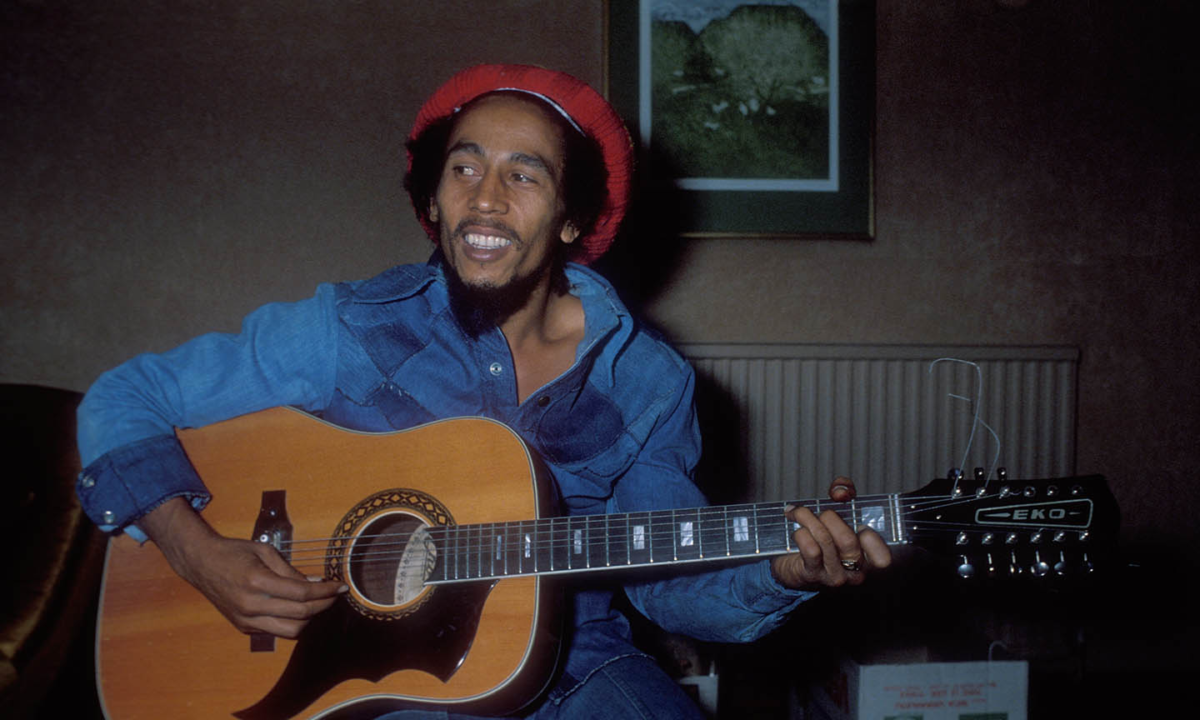
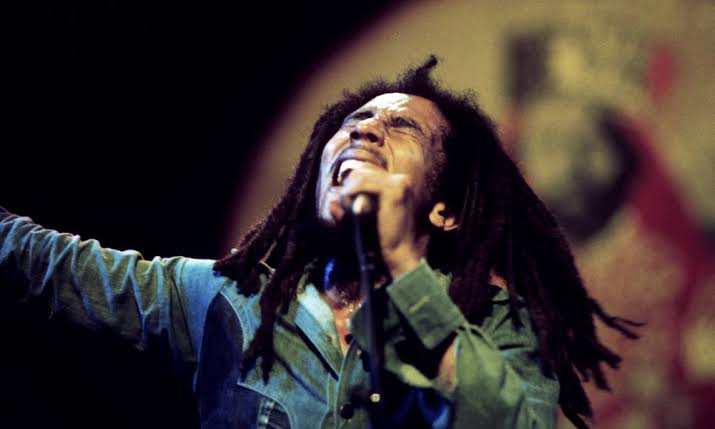
Two days after the ambush at his home, following much deliberation, his arm still bandaged, Marley performed a 90-minute set at the Smile Jamaica concert before a crowd estimated at 70,000. Then he left.
Following the assassination attempt on his life on December 3, 1976 and the Smile Jamaica concert two days later, Bob flew to London where he stayed for the next 14 months in a self-imposed exile. That departure was his own personal exodus, and it gave the album both its name and its fire.
Recording in London: The Making of a Masterpiece
After a period of convalescence in America, Marley and the Wailers convened in London to start work on Exodus in February 1977. Marley lived at various addresses in the capital, which was in the middle of a musical and cultural upheaval caused by the upsurge of punk.
The Notting Hill Carnival riots of the preceding year had left a legacy of unease and unrest on the streets of West London where Marley and the Wailers were based for much of the time recording in Island’s Basing Street Studios.
Recorded during a period of exile in London in the aftermath of a gun attack on Marley’s home in Jamaica, it was a musical statement of towering authority that combined visions of Biblical drama with profound expressions of solidarity and tender personal feelings.
Producer Chris Blackwell later noted the emotional weight of those sessions. Island Records founder Chris Blackwell told Billboard that “Exodus was a very important album for Bob because he was very depressed after the assassination attempt and really shocked that people in Jamaica would want to kill him.
During their 14-month London sojourn, Bob Marley and the Wailers recorded numerous songs, which Chris Blackwell divided into two albums, Exodus and its follow-up, Kaya, released in 1978. The album itself bears the marks of that emotional split.
Exodus, in fact, sounds like two distinct albums: side one is a revolutionary call to action, each track inspired by or directly commenting on the shooting; side two is dominated by love songs, whether romantic or humanitarian, as in the anthemic “One Love” that closes the album.
The Exodus Meaning: Three Interlocking Layers
The most immediate meaning is autobiographical. Marley’s escape from Jamaica to England likely inspired “Exodus.” Exodus actually means the movement of a group of people from a particular location, and this is exactly what Marley and his crew did after the attempt on his life.
The title itself was conceived before the song was even finished. He had conceived “Exodus” as the album title before even writing the song.
The very act of naming came before the writing, which tells you how deeply the concept of departure and displacement had already settled into Marley’s thinking.
The word “exodus” is, of course, also the name of the second book of the Old Testament, and that is no accident. As a committed Rastafarian, Marley would often quote from the Bible, so it was no surprise that he chose to name his album after the Old Testament’s second book, which portrays the exodus of the Israelites.
The song ties together the Biblical story of Moses leading the Israelites out of Egypt to the hope of Rastafarians to be led to freedom.
Within Rastafarian belief, this parallel is not merely metaphorical. Rastafarians can be counted amongst the religious sects who generally believe that Black people are the descendants of the ancient Israelites.
To them the Transatlantic Slave Trade and subsequent oppression of Black people, especially in places like the Caribbean and North America, is considered to be symbolically akin to the Babylonian captivity of the Israelites in the Old Testament.
In this framework, “Babylon” is not a geographical location but a spiritual condition. The song portrays the movement of Jah (God) people away from oppression towards freedom, echoing Rastafarian beliefs of liberation from Babylon, a metaphor for oppressive systems.
Marley uses this powerful historical and religious narrative as a metaphor for the Rastafarian people’s yearning to return to their spiritual homeland, Africa, and to break free from the spiritual and physical bondage of Babylon, the corrupt, materialistic world.
As a Rastafarian, an adherent of an Abrahamic religion and social movement that developed in Jamaica during the 1930s, Marley was a student of the second book of the Torah, among other Jewish sacred writings. That study is audible in the song’s imagery.
The lyrics call for “another brother Moses” to lead the people across the Red Sea and back to their father’s land. What Marley and the crew are calling for is “another brother Moses,” simply put, a modern prophet to lead the people “across the Red Sea” and back to “our Father’s land.”
Marley was deliberate in leaving the song’s language porous enough to speak beyond any single community. One has to presume that, Rastafarian beliefs aside, Bob intentionally left a considerable degree of personally-interpretable terms in the lyrics.
What he is envisioning, most simply put, is that those who feel oppressed in their current settings make some type of definitive, divinely-enabled move to get physically away from it.
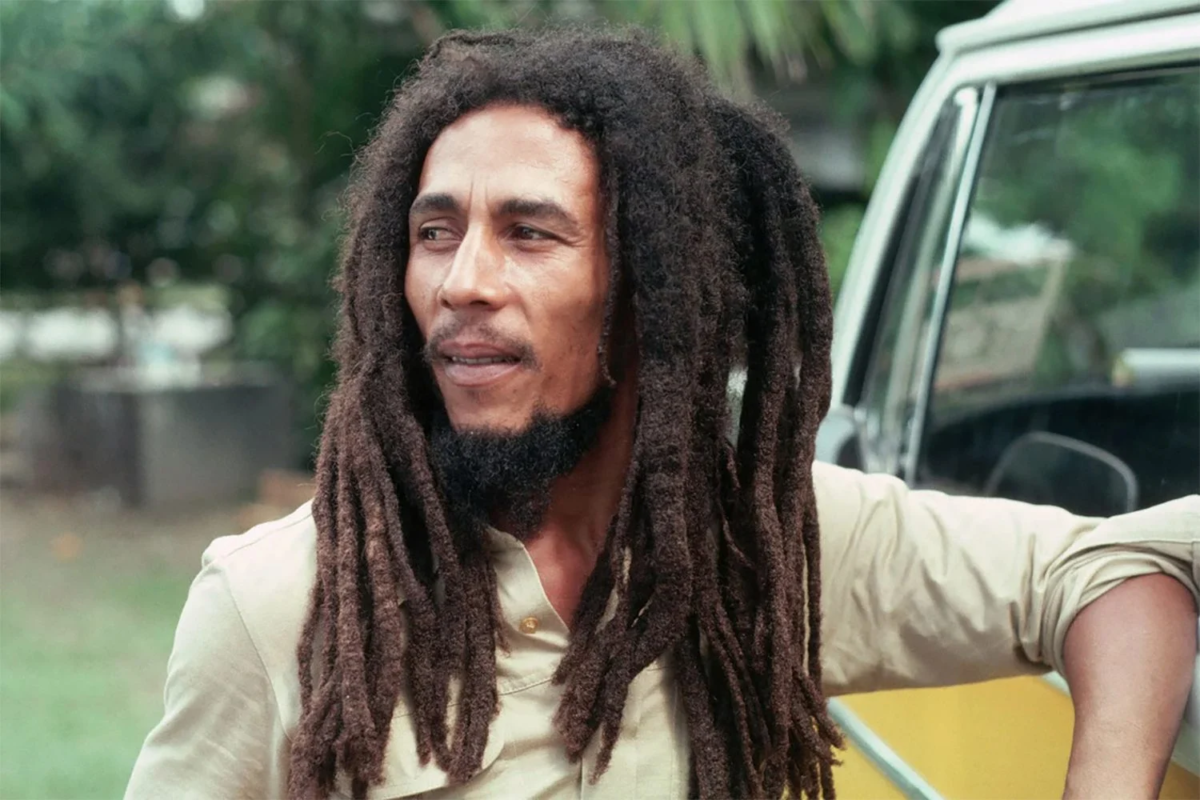
The track opens drivingly exclaiming “exodus!” and then specifies that this is a “movement of Jah people.” It reassures Rastas that they’re correct in their beliefs even if they’re persecuted for them.
Marley also declares that theirs is the generation that will “trod through great tribulation” to get to the “Father-Land.”
He asks his listeners to look inside themselves and see if they’re satisfied with their lives. That inward turn is key. The song is as much a spiritual interrogation as a political anthem.
Bob Marley’s message of social justice and unity reverberates throughout the song, underscoring resilience in the face of adversity, reflecting his struggles and those of his community.
The Song’s Structure and Sound
“Exodus,” for which the album is named, is the longest song at 7 minutes and 39 seconds long. Its length is part of its design. The first half of the track builds a slow, hypnotic groove, the bass and drums locking into a groove that feels like a march, a procession of people on the move.
The production reflected a wider musical ambition. While in self-imposed exile in England, Marley recorded Exodus, embellished with elements of rock, soul and funk.
The album’s production has been characterized as laid-back with pulsating bass beats and an emphasis on piano, trumpet and guitar.
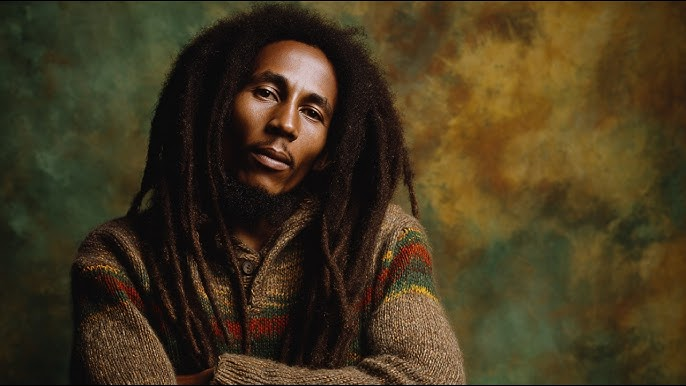
The album featured a new backing band including brothers Carlton and Aston “Family Man” Barrett on drums and bass, Tyrone Downie on keyboards, Alvin “Seeco” Patterson on percussion, and the I Threes, Judy Mowatt, Marcia Griffiths and Rita Marley on backing vocals, and newest member Julian “Junior Marvin” on guitar.
The I Threes’ harmonies on the title track give the song its congregational quality, less a solo performance than a communal declaration.
Chart Performance and Commercial Impact
Exodus is the ninth studio album by Bob Marley and the Wailers, first released in June 1977 through Island Records. As a single, “Exodus” reached number 14 on the UK Singles Chart. “Exodus” was also Marley’s first single to receive widespread airplay on black radio stations in the US, expanding the artist’s predominantly white college age and Caribbean expats fanbase in the country.
The album as a whole performed even more impressively. Exodus peaked at number 20 on the Billboard 200 and at number 15 on the Black Albums chart, as well as remaining in the UK charts for 56 consecutive weeks, where it peaked at number 8.
The album was a success both critically and commercially; it received gold certifications in the US, UK and Canada, and was the album that propelled Marley to international stardom.
Legacy: The Album That Defined a Century
The critical consensus around Exodus has only grown with time. While Bob Marley and the Wailers’ 1977 LP, Exodus, is universally heralded as a classic reggae opus, in 1999 Time magazine went so far as to label it the best album of the 20th century.
The BBC named it the “album that defined the 20th century.” Its track “One Love” was designated Song of the Millennium by the BBC.
In 2001, the TV network VH1 named it the 26th greatest album of all time. Recognized as the bestselling reggae album of all time, it has spent over 800 weeks on the Billboard 200 album chart and recently surpassed sales of 18 million copies in the U.S.
In 2024, its recording became a huge plot point in the celebrated biopic of Marley’s life, One Love. Marley returned to Jamaica in 1978, and Marley returned to Jamaica to headline the One Love Peace Concert on April 22, 1978.
During his mesmerizing rendition of “Jamming,” Marley clasped, then held aloft, the hands of rivals Prime Minister Michael Manley and opposition leader Edward Seaga, then intoned, “love, prosperity be with us all, Jah Rastafari.”
It was the culmination of the very movement the song had described: a man who had fled violence returning, not in defeat, but as a peacemaker.
Why the Exodus Meaning Still Resonates in 2026
The genius of Bob Marley’s “Exodus” is that its meaning operates on every frequency at once. On the personal level, it is the story of a wounded man refusing to be silenced. On the political level, it is a charge against oppressive systems across the African diaspora and beyond.
On the spiritual level, it is a Rastafarian sermon drawn from the Old Testament, asking every listener to examine whether the life they are living is the life they were promised.
The intricate tapestry of his lyrics weaves together themes of faith, resistance, unity, and the ultimate triumph of the human spirit. It is a song that resonates across cultures and generations because its core message of seeking a better, freer existence is universal.
Nearly five decades after its release, the exodus meaning Marley encoded into that seven-minute track has lost none of its urgency. Every generation finds in it the prophet, the movement, and the promised land they need.