
Before there was a global reggae industry, there was a chant, a drum and a people giving thanks to the Most High.
Reggae songs about Jah are the backbone of the music, the records where Rastafari stopped being a rumour in the hills and became a sound that filled Kingston yards, London blues dances and stadiums worldwide.
Haile Selassie I’s 1966 visit to Jamaica stirred a deeper awareness of Rasta in the capital. Within a decade the music was carrying that faith into every corner of the planet.
The list below runs from the late 1960s Studio One sessions to the 2010s Reggae Revival. Some of these songs are hymns, some are battle cries, and one was written in direct answer to news that shook Rastafari to its core. All twelve keep the same promise: Jah is alive, and Jah people are moving.
1. Bob Marley & the Wailers, “Jah Live” (1975)
When word spread in 1975 that Haile Selassie I had died, the report sparked an existential crisis for Rastafari. Bob Marley answered within days.
“Jah Live” was recorded at Harry J in Kingston and rushed out as a direct rebuttal to the Ethiopian government and every detractor who claimed the Emperor was gone.
Marley’s reported reaction to the news that no body had been produced says it all: “Yuh cyant kill God.” Lee “Scratch” Perry was part of the session, and the single landed on Tuff Gong with “Concrete” on the flip.
It is short, urgent and defiant, a faith statement cut at the speed of crisis. Marley carried it onto the stage at the Smile Jamaica Concert in 1976 and the One Love Peace Concert in 1978.
2. The Abyssinians, “Satta Massagana” (1971)
Few records have travelled as far as this one. The Abyssinians cut “Satta Massagana” at Studio One in 1969, a Rastafarian hymn sung partly in Amharic, its title translating roughly as “give thanks.”
Coxsone Dodd heard no commercial future in what he considered cultural subversion and shelved it. The group bought back the master, put it out on their own Clinch label and proved him wrong.
Built on the bones of Carlton and the Shoes’ “Happy Land,” the track floats on harmonies so solemn they feel like a church service.
Some Rastafarian groups adopted it as a hymn for worship, and the riddim became one of the most versioned in all of reggae. It has fairly been called “reggae’s national anthem.”
3. Bob Marley & the Wailers, “Exodus” (1977)
Marley wrote “Exodus” in London, in exile after the 1976 assassination attempt, and you can hear the restlessness in every bar.
At over seven and a half minutes it is a march, the rhythm section locked in a relentless forward roll while the chorus, “Exodus, movement of Jah people,” lands like a summons.
The lyric frames Jah as the force that comes “to break downpression” and casts the song as a journey out of Babylon.
It reached No. 14 on the UK Singles Chart and became Marley’s first single to win widespread airplay on US black radio.
That breakthrough put Rasta theology into American homes on a scale nobody had managed before, and the song still opens doors today.
4. The Wailers, “Get Up, Stand Up” (1973)
Co-written by Bob Marley and Peter Tosh for Burnin’, “Get Up, Stand Up” is usually filed under protest music.
Its roots, though, run straight to the Nyabinghi drum: the lyric draws on the chant “Blackman Get Up Stand Up,” a call that echoed through Rasta gatherings long before it hit vinyl.
The Wailers used the song to name Selassie as a living god and to reject the idea of waiting for salvation from the sky.
Spiritual and militant at once, it served as a wake-up call to the world about what Rastafarian reggae actually stood for.
Tosh thought enough of it to re-record it on his 1977 album Equal Rights. Half a century on, it remains the chant at every rally where people need courage.
5. Culture, “Two Sevens Clash” (1977)
Joseph Hill was riding a bus when the vision came to him: 1977 would be a year of judgment, the moment when the sevens clashed. He turned that revelation into one of the most consequential records in roots history.
Drawing on a prophecy attributed to Marcus Garvey and on apocalyptic readings of the number seven held in some Rastafarian circles, “Two Sevens Clash” was produced by Joe Gibbs with engineer Errol Thompson, the duo known as The Mighty Two.
Hill’s quivering lead and the group’s tight harmonies made doom sound almost joyful. The song took on a life beyond music.
On 7 July 1977, many in Kingston stayed indoors, waiting to see whether the prophecy would come true.
6. Bob Marley & the Wailers, “War” (1976)
Here the Emperor speaks through the music almost word for word. The lyrics of “War” come nearly entirely from Haile Selassie I’s address to the UN General Assembly on 4 October 1963, a speech demanding that racial discrimination and the doctrine of one race’s superiority be abolished before peace could come.
Credited to Carlton Barrett and Allan Cole, the song sits on Rastaman Vibration, which became Marley’s only top 10 album in the United States.
Over a heavy, brooding groove, Marley delivers Selassie’s words like scripture read aloud at a reasoning. It turned a diplomatic text into a global anthem against apartheid and colonial rule, and it remains the clearest example of Rasta theology meeting politics.
7. The Wailers, “Rastaman Chant” (1973)
The closing track of Burnin’ pulls back the curtain on where reggae came from. Credited as traditional and arranged by Bob Marley, “Rastaman Chant” was recorded at Harry J’s in April 1973 and comes directly from the Nyabinghi chant “Babylon Throne Gone Down.”
The hand drums thunder and the voices rise in unison, closer to a grounation in the hills than to anything on the radio at the time.
Putting a sacred chant on an Island Records album aimed at international audiences was a bold choice, and it worked.
For many listeners abroad, this was their first encounter with the drumming and devotion at the heart of the faith, and it still sounds like an invitation inside.
8. Sizzla, “Praise Ye Jah” (1997)
By the late 1970s, conscious reggae had given way as dancehall arrived with young artists chasing far less spiritual matters.
Then came the 1990s cultural revival, and Sizzla Kalonji stood at its fiery centre. Praise Ye Jah,” the title song of his 1997 album for Philip “Fatis” Burrell’s Xterminator label, is a stunning declaration of allegiance to Rastafari, delivered with the raw urgency of a man preaching on a street corner.
Sizzla has always been complicated: his devotional lyrics sit alongside explicit and violent material more in line with hardcore dancehall.
That tension is part of his story. “Praise Ye Jah” proved that the faith could thrive inside the rough, modern sound, and a 25th anniversary edition of the album arrived in 2022.
9. Burning Spear, “Calling Rastafari” (1999)
Winston Rodney has long been called “the voice of Rastafarian orthodoxy,” and the title track of his 1999 album shows why.
Recorded at Grove Music Studio in Ocho Rios and released on Heartbeat, Calling Rastafari found Spear producing himself, with Sonia Rodney as executive producer, and leaning into the deep, meditative groove that defines his work.
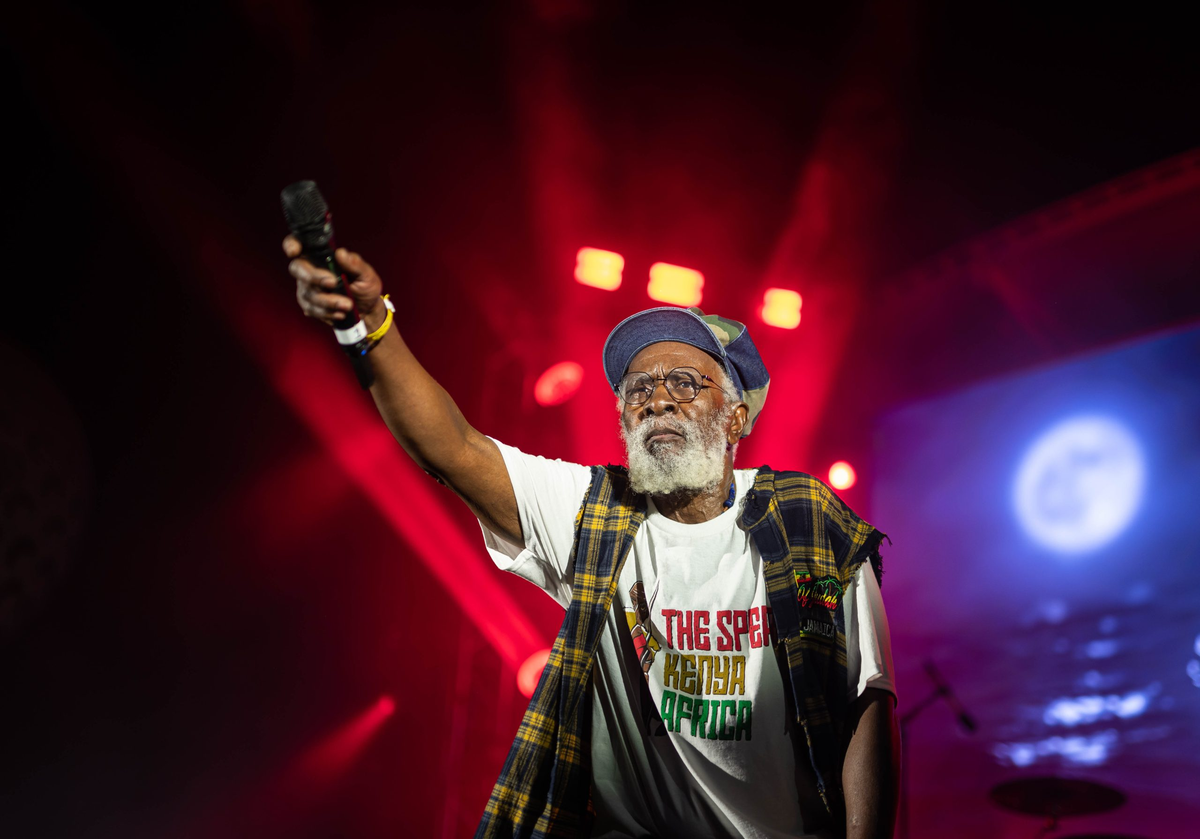
His voice moves like a slow procession, repeating and building until the invocation feels like prayer. The album won the Grammy for Best Reggae Album at the 42nd Annual Grammy Awards and peaked at No. 9 on the Billboard Reggae Albums chart.
It continued a devotional path he had walked on 1991’s Jah Kingdom, and he followed it with a second Grammy for Jah Is Real in 2009.
10. Bunny Wailer, “Blackheart Man” (1976)
Ask anyone who grew up in Jamaica in the decades before reggae went global, and they may remember being warned about the Blackheart Man.
Children were told to keep away from Rastas, who were cast as bogeymen lurking at the edge of the community. Bunny Wailer took that childhood fear and flipped it.
The title track of his 1976 solo debut blends folklore, memories of his own upbringing and the Rastafarian beliefs he embraced as he grew older.
The result is haunting and gentle, a testimony of a man who became the very figure he was taught to fear. It was an instant classic on release, and it remains one of the most moving accounts of the stigma Rasta faced.
11. Chronixx, “Here Comes Trouble” (2013)
A generation after the roots era, a young singer from Spanish Town reminded the world that the fire never went out.
“Here Comes Trouble” arrived as a 2013 single on Soul Circle, carrying references to Selassie I and to Marcus Garvey’s prophecy over a crisp, modern roots arrangement.
It became a flagship of the Reggae Revival, with The Guardian noting that Chronixx was “putting Rastafarianism back into Reggae.”
The song anchored his 2014 EP Dread & Terrible, alongside devotional cuts like “Jah Is There” and “Alpha & Omega.”
When he performed it on The Tonight Show in July 2014, it felt like a win for the whole genre. It still connects new fans to the old faith.
12. Peter Tosh, “Rastafari Is” (1981)
Peter Tosh never softened his message, and “Rastafari Is” finds him in full declaration mode.
The song comes from Wanted Dread & Alive, released in June 1981 and produced by Tosh himself, with Rolling Stones Records handling Europe and EMI America taking it to Jamaica and the US.
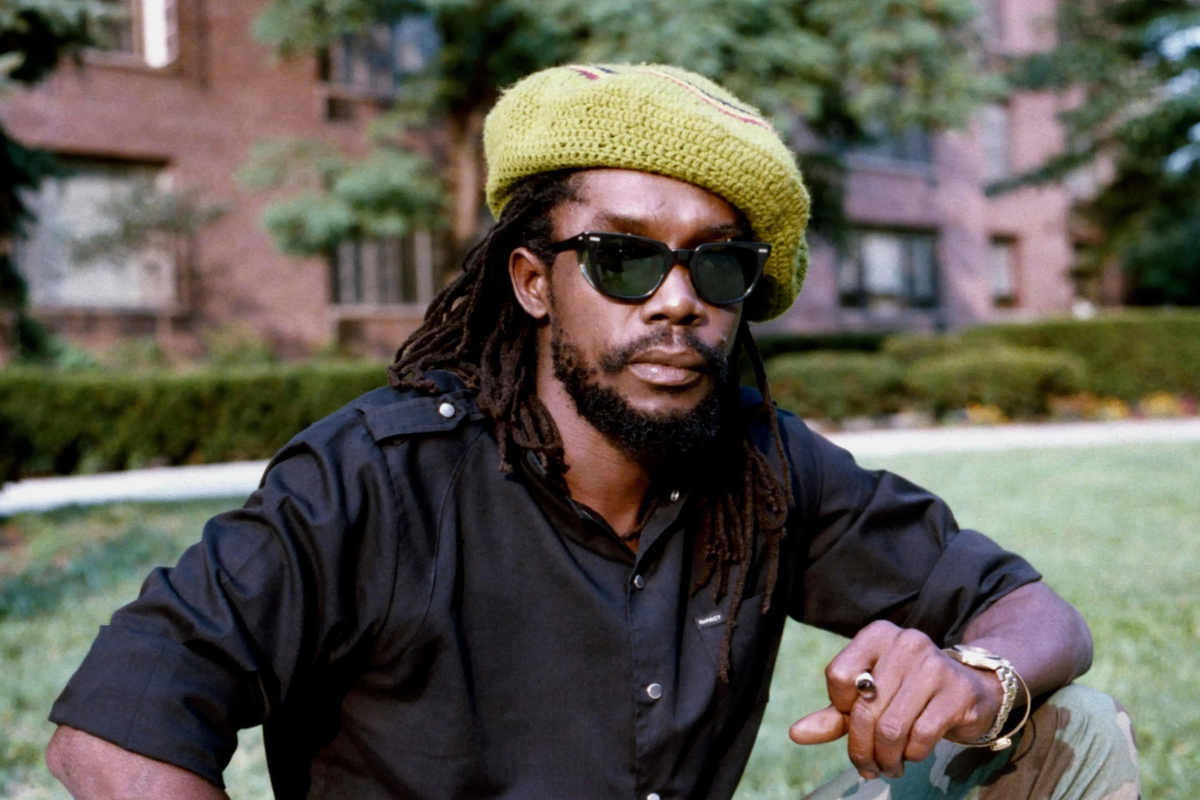
At more than six and a half minutes, it has room to breathe, settling into a steady, chant-like pulse that lets the title phrase ring out like a creed.
The album climbed to No. 91 on the Billboard 200, a real reach for an artist this uncompromising in the early 1980s. Coming from the Stepping Razor, “Rastafari Is” works as a summary of everything Tosh stood for.
Why These Songs Still Call Out to Jah
From a shelved Studio One master to a late night American TV stage, these twelve songs trace a faith that refused to be silenced.
They answered the 1975 crisis over Selassie’s reported death, turned a UN speech into a dancefloor sermon, carried Nyabinghi drums onto international albums and kept the flame alive when dancehall turned its attention elsewhere.
Each generation found its own way to say the same thing: Jah lives, and Jah people are still moving.
That is why these records keep turning up on sound systems, in reasoning sessions and in the playlists of listeners who were born long after Marley’s passing. Reggae songs about Jah are not relics.
They are the music’s conscience, and every time a new artist like Chronixx steps up with Selassie on their tongue, the lineage grows stronger.