

Dancehall has always been loud, crowded and fiercely competitive, and for decades the microphone was treated as a man’s property.
The women who seized it anyway did more than survive. They rewrote what the music could say, who it could speak for and how far it could travel.
From a teenage deejay on a Winston Riley riddim in 1982 to a Grammy-nominated Queen of Dancehall racking up hundreds of millions of views in 2026, the best female dancehall artists have shaped the genre as much as any sound system champion.
This ranking picks one signature song per artist and weighs it against everything around it: the moment it landed, the doors it opened and the way it still moves a dance today.
Some picks are pure hardcore dancehall. Others sit closer to reggae and fusion. All of them changed the game.
1. Lady Saw, “Stab Up De Meat” (1994)
No woman has defined the role of the female deejay like Marion Hall. “Stab Up De Meat” came off her first album, Lover Girl, released in August 1994, at a time when West Kingston dancehalls ran on gun talk and masculine bravado.
Lady Saw answered with slackness sung unapologetically from a woman’s point of view, and she paid for it with bans from many events. The scholar Carolyn Cooper read the song as a sly allusion to women curing meat in the kitchen, but the crowd knew exactly what it meant.
“I’m famous because of my slackness,” Saw herself put it. She later crossed over with Vitamin C’s “Smile,” a No. 18 Hot 100 hit, and with No Doubt’s “Underneath It All,” which went triple platinum and won the Grammy for No Doubt.
In 2015 she left dancehall for gospel as Minister Marion Hall, but every bold woman on this list walks a road she cleared.
2. Sister Nancy, “Bam Bam” (1982)
Few records have lived as many lives as this one. Produced by Winston Riley for his Techniques label and featured on the album One, Two, “Bam Bam” rides the Stalag riddim, built from Ansell Collins’s 1974 “Stalag 17,” with a chorus borrowed from the Maytals’ 1966 song of the same name.
Sister Nancy’s toast is breezy, confident and impossible to forget. The tune found its audience slowly, first in New York, where Main Source and Pete Rock & CL Smooth sampled it in the early 1990s.
Then came Kanye West’s “Famous” in 2016 and Jay-Z’s “Bam” with Damian Marley in 2017. “Jay-Z is my No. 1,” she said of the latter.
By 2022 it had been sampled in more than 130 tracks, and Pitchfork has named it the best dancehall song of all time.
The shadow on the story: Toots Hibbert and the original writers never saw royalties from her version or its samples.
3. Spice, “Go Down Deh” (2021)
Spice had already earned the crown long before this, but “Go Down Deh” turned her reign global. Produced by Constantin “Costi” Ioniță and released on VP Records with Shaggy and Sean Paul riding shotgun, the song was meant for 2020 until the pandemic held it back.
When it finally arrived, it was pure heat: a bouncing, flirtatious party record that NPR’s Otis Hart called “the dancehall track of the year,” placing it at No. 48 on the outlet’s 100 Best Songs of 2021.
It lifted her album 10 to No. 6 on Billboard’s Reggae Albums chart and to a nomination at the 64th Grammys, the first time a hardcore female dancehall artist was nominated for Best Reggae Album.
In October 2026 the video passed 400 million YouTube views, a first for a collaboration led by a Jamaican woman, with Spotify streams at 474 million. Long before that, “So Mi Like It” had already made her a YouTube giant.
4. Shenseea, “Loodi” (2016)
Every modern dancehall success story needs a launchpad, and Shenseea’s was a remix of Vybz Kartel’s “Loodi.”
Recording for Rockstar through Lemuel Samuel, the young singer from Jamaica’s new wave turned the tune into a breakout, matching Kartel line for line with a melodic sweetness that hinted at bigger rooms ahead.
She had already played a side stage at Reggae Sumfest in 2015, but this was the record that made the island pay attention. Those bigger rooms arrived fast.
She signed with Rich Immigrants and Interscope in 2019, then appeared on Kanye West’s “Pure Souls,” which entered the Hot 100 at No. 52 in September 2021 and made her the first Jamaican female dancehall artist on that chart in 17 years.
Her debut album Alpha opened at No. 2 on Billboard’s Reggae Albums chart, and “R U That” with 21 Savage put her on four Billboard charts at once as lead artist.
5. Patra, “Queen of the Pack” (1993)
Patra was among the first women in dancehall to go fully international, and her 1993 album on Epic was built like a major label statement.
Clifton “Specialist” Dillon and Anthony “CD” Kelly produced, with Mafia & Fluxy on mix and programming and Bobby “Digital” Dixon credited as engineer, so the title track carries real Kingston muscle under its polished sheen.
The album reached across genres too, pulling in Yo-Yo on “Romantic Call,” Christopher Williams on “Sexual Feeling,” and Lyn Collins on the Salaam Remi produced “Think (About It).”
A year earlier her single “Loverman” had climbed to No. 40 on the Hot 100, and her take on “Pull Up to the Bumper” remains the song many fans associate with her first.
Patra proved a dancehall woman could sell on her own terms in America, and plenty of later crossover careers trace back to her.
6. Tanya Stephens, “It’s a Pity” (2003)
If dancehall has a poet laureate, it might be Tanya Stephens. “It’s a Pity” floats over the Night Nurse riddim, a 2002 production from Pierre “Enuff” Baigorry, Jerome “Tchamp” Bugnon and Leander “Pionear” Topp for the Germaican label.
Released as a single in December 2003, it became the lead single from Gangsta Blues, which VP and Tarantula issued on 30 March 2004.
The song is a bittersweet confession from the other side of a love triangle, a woman who meets the right man at the wrong time, and Stephens sings it with a vulnerability few deejays would dare.
That is her gift: songwriting that brings a woman’s honest, often feminist perspective into a space built on bravado. More than two decades later, “It’s a Pity” still gets the loudest singalong of the night whenever a selector drops it.
7. Diana King, “Shy Guy” (1995)
Here is where the dancehall versus fusion debate begins, and “Shy Guy” wins it on impact alone. Co-written by King, producer Andy Marvel and Kingsley Gardner, and released through Work/Sony, the song mixed ragga toasting with swingbeat polish into something radio could not resist.
It was the lead single from her debut album Tougher Than Love and from the Bad Boys soundtrack, with Marcus Nispel shooting a black and white video and Michael Bay directing the movie version.
The numbers matched the hype: No. 13 on the Hot 100 in July 1995, No. 2 in the UK, and Gold certifications in both countries.
That makes it among the most-certified solo singles by a Jamaican woman. Thirty years on, the opening bars still feel like summer, and King’s voice remains one of the most distinctive the island has exported.
8. Koffee, “Toast” (2018)
Koffee stands closer to reggae than to hardcore dancehall, but no list of Jamaican women on the mic can ignore what she achieved.
She first caught attention in August 2017, at 17, with an acoustic tribute to Usain Bolt called “Legend.” Then “Toast” arrived, a gratitude anthem with a rolling, sunny groove and a hook made for raised glasses.
It anchored her Rapture EP on Columbia and Promised Land Recordings, which won Best Reggae Album at the 62nd Grammys on 26 January 2020.
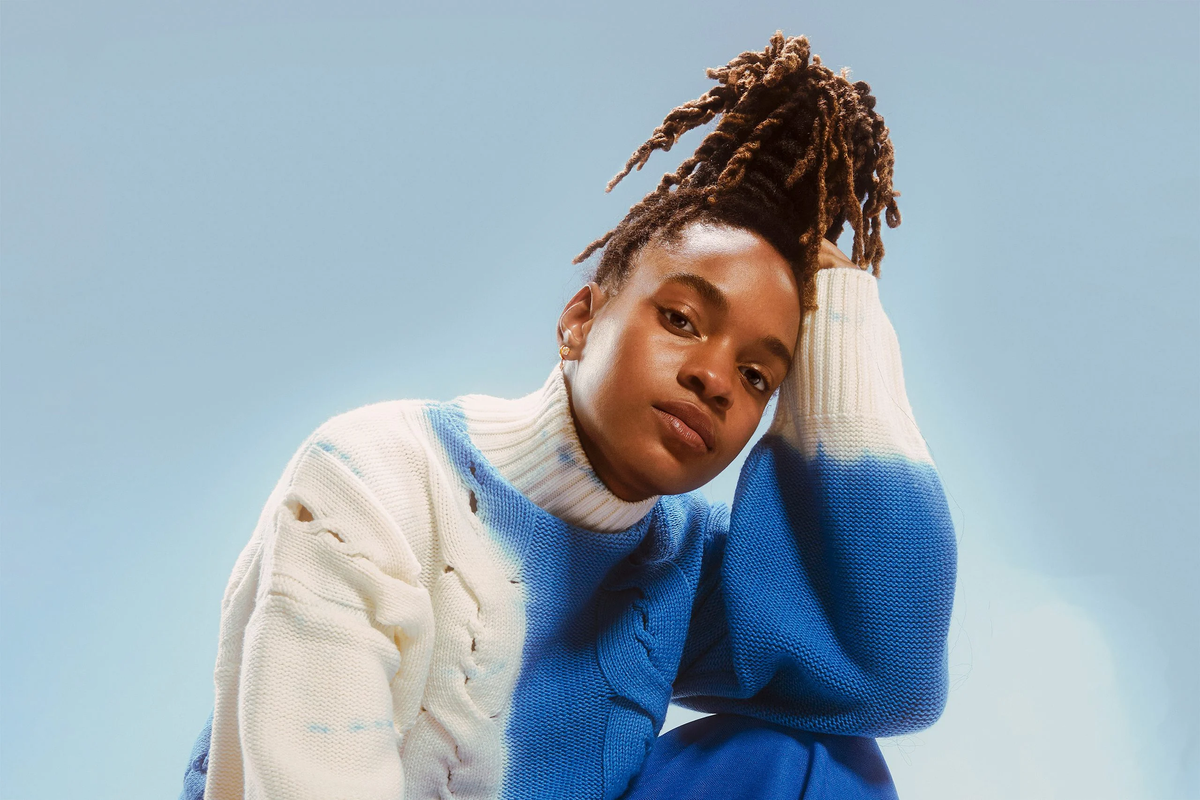
At 19, Koffee became both the first woman and the youngest artist to win the category. “This one is for all of us. This one is for Jamaica,” she said on accepting it.
“Toast” remains a fixture at celebrations from Kingston to London, proof that a song about being thankful can hit as hard as any war tune.
9. Lady G, “Thank You” (1995)
Lady G arrived in the late 1980s and built a reputation as one of the sharpest, most respected women in the dance.
Mentored by Papa San and celebrated for their collaborations, she gave the era “Nuff Respect,” a title that doubled as her calling card, and “Man A Bad Man,” which landed on the soundtrack of the film Third World Cop.
“Thank You,” her 1995 pairing with singer Chevelle Franklyn, showed another side: warm, devotional and melodic, with Lady G’s steady delivery set against Franklyn’s soaring voice. It reached No. 2 on the Jamaica airplay chart and stands as one of the defining duets of the mid-1990s.
Lady G’s legacy is dignity and skill in equal measure, a deejay who commanded the crowd without ever needing to shout over it.
10. Ms. Thing, “Dude” (2004)
For 17 years, Ms. Thing held a quietly remarkable distinction. Her turn on Beenie Man’s “Dude” took the song to No. 3 on the Billboard Hot 100 in 2004, and no Jamaican female dancehall star would appear on that chart again until Shenseea in 2021.
The record itself is a slick, swaggering conversation between a woman sizing up a man and the Doctor himself playing along, and Ms. Thing’s cool, teasing delivery is a huge part of why it worked on American radio.
It came at the height of dancehall’s mid-2000s crossover wave, when Jamaican voices were all over US playlists.
Her career never matched that peak, but “Dude” remains a reminder of how much space a woman’s verse can take up on a global hit.
11. Jada Kingdom, “Love Situations” (2017)
The Kingston native introduced herself in 2017 with “Love Situations,” a moody, melodic entry that announced a different kind of dancehall woman: as comfortable in R&B tenderness as in raw, confrontational energy.
She followed it with a string of songs that kept fans guessing, from “WiN” and “Tek It” to “Banana,” “Dickmatized” and “GPP,” each one pushing her voice and her persona in a new direction.
Jada Kingdom belongs to the generation that grew up with Lady Saw’s example in plain view, and she is often named alongside Spice and Shenseea as one of the artists Saw paved the way for. “Love Situations” still feels like the honest starting point of a career built on saying exactly what she feels.
12. Lisa Hyper, “Friday” (2026)
Lisa Hyper earned her stripes as the sole female deejay on Vybz Kartel’s Portmore Empire roster, a dancer first who found her way to the mic and held her own in a crew full of heavyweights.
Early favourites like “Bill” with Gaza Kim, “How Yuh Do It Like Dat” and “Whine Fi Me” with Kartel himself made her a name in the dances.
Then came the hard years. She has said her career stalled during Kartel’s 13-year incarceration and that his release reignited her drive. “Friday,” released on 29 May 2026, is the sound of that comeback, part of a run that also includes “Self Love” and “Top Striker” with Slick876. It closes this list as a reminder that dancehall careers can rise again when the timing is right.
Why These Women Still Run the Dance
Line these songs up and you hear dancehall’s whole history told from a different seat. Sister Nancy proved a woman’s toast could echo for 40 years.
Lady Saw made female desire impossible to censor. Patra and Diana King carried Jamaican voices onto American and British charts, while Tanya Stephens and Lady G showed the music could hold tenderness and wit.
Spice, Shenseea and Koffee turned that groundwork into Grammy nominations, Billboard firsts and streaming numbers once unthinkable for women from the island.
The list could easily run longer. Nadine Sutherland, Bob Marley’s teenage protégé turned dancehall star on “Action” and “Anything for You” with Snow, and Queen Ifrica, whose “Daddy” took her worldwide in the mid-2000s, both have strong cases.
The point stands either way: dancehall was never only a man’s game. The women just had to fight harder for the mic.