

Ask ten selectors to name the best reggae songs of all time and you will get ten different answers, a few heated arguments and at least one demand for a rewind.
Still, some records have earned a place beyond personal taste. They helped carry Jamaican music from Kingston sound systems and recording studios to international radio, British clubs, American charts and eventually generations of listeners who had never set foot on the island.
This list focuses on twelve landmark recordings that helped define reggae’s sound, message and international reach.
It stretches from the late 1960s through the roots explosion and into the early dancehall era, with an emphasis on songs that changed what Jamaican music could say and how it could sound.
There is no claim that these are the only twelve great reggae songs. But each one left a mark that is difficult to erase.
1. Bob Marley & The Wailers, “No Woman, No Cry” (1975)
Few recordings capture the communal power of reggae like Bob Marley & The Wailers‘ live version of “No Woman, No Cry.
The song had already appeared in a studio version on Marley’s 1974 album Natty Dread, but the performance that became definitive was recorded at London’s Lyceum Theatre on July 17, 1975, during the Natty Dread Tour. It was released later that year on Live! and became one of Marley’s most celebrated recordings.
The audience singing along is part of the record’s magic. Rather than sounding like a distant concert crowd, the voices become part of the arrangement, turning the song’s memories of Trench Town into something communal.
The song was officially credited to Vincent Ford, a friend of Marley who ran a soup kitchen in Trench Town. Royalties from the song helped support Ford’s work there.
Marley’s former manager Danny Sims later challenged the songwriting credit, arguing that Marley had written the song and assigned the credit to Ford, but the Marley estate ultimately retained control.
The live single reached No. 22 on the UK chart in 1975 and returned to the chart at No. 8 after its 1981 reissue following Marley’s death.
More than a concert recording, it became a reggae standard.
2. Bob Marley & The Wailers, “Redemption Song” (1980)
If “No Woman, No Cry” represents reggae at its most communal, “Redemption Song” represents Marley at his most intimate.
Released on October 7, 1980, as the closing track on Uprising, the song is striking because it barely resembles a conventional full-band reggae recording. The final version features Marley singing over acoustic guitar alone.
That was not how the song began.
Marley recorded multiple versions with The Wailers during the sessions, including at least 15 versions with the group.
Island founder Chris Blackwell suggested that an acoustic arrangement might give the song greater impact, and Marley ultimately recorded the stripped-down version that became famous.
The song’s lyrics draw in part on ideas from Marcus Garvey’s speech “The Work That Has Been Done,” a text Marley had been reciting publicly before recording the song.
“Redemption Song” became one of Marley’s clearest statements about freedom, mental liberation and the legacy of oppression. It also demonstrated that reggae’s most powerful message did not always need a bass-heavy rhythm section to make its impact.
3. Desmond Dekker & The Aces, “Israelites” (1969)
Before Bob Marley became reggae’s global face, Desmond Dekker & The Aces had already demonstrated how far Jamaican music could travel.
Produced by Leslie Kong, “Israelites” became one of the earliest major international reggae crossover records. It topped the UK chart and reached No. 9 on the Billboard Hot 100.
Dekker’s vocal delivery was unmistakably Jamaican, yet the song connected with listeners far beyond the island. Its story of work, hunger, money and everyday struggle gave international audiences a glimpse of Jamaican life without sacrificing the rhythm that made the record danceable.
The song’s success was especially significant because it arrived before reggae had fully established itself as a worldwide genre. It helped prove that Jamaican records could compete on international pop charts on their own terms.
Dekker would later appear on The Harder They Come soundtrack with another important recording, “007 (Shanty Town),” further cementing his role in the international breakthrough of Jamaican music.
“Israelites” was not simply an early reggae hit. It was one of the records that helped open the door.
4. Toots & The Maytals, “Pressure Drop” (1970)
Frederick “Toots” Hibbert possessed one of the great voices in Jamaican music: rough-edged, soulful and capable of moving effortlessly between celebration and warning.
“Pressure Drop” was recorded in 1969 for producer Leslie Kong and released in 1970. Hibbert is credited as the songwriter. The song’s message is simple: actions have consequences.
Built around a bouncing reggae rhythm and Hibbert’s gospel-influenced delivery, “Pressure Drop” turns the idea of karmic justice into something almost joyful.
Toots does not sound like someone delivering a lecture. He sounds like someone enjoying the certainty that the balance will eventually be restored.
The song became even more influential after appearing on the soundtrack to the 1972 film The Harder They Come, which helped introduce Jamaican music to a much wider international audience.
The Clash, Robert Palmer and other artists later recorded versions of the song, but the original remains the benchmark.
5. Jimmy Cliff, “The Harder They Come” (1972)
Jimmy Cliff’s “The Harder They Come” is inseparable from the film that gave it its name.
Cliff starred as Ivan, an ambitious young Jamaican musician confronting poverty, exploitation and a system that offers little room for escape.
The title song distilled that struggle into a defiant statement: the harder the system pushes, the harder the individual refuses to surrender.
The film premiered in Jamaica in June 1972, while the soundtrack was released in the UK by Island Records on July 7, 1972. The North American edition followed in February 1973 on Mango Records.
The soundtrack became one of the most important reggae compilations ever released. Alongside Cliff, it featured recordings by Toots & The Maytals, Desmond Dekker, The Melodians, The Slickers and others. Its tracklist included Dekker’s “007 (Shanty Town)” and Toots & The Maytals’ “Pressure Drop.”
The film and soundtrack worked together in a way few music projects have managed. They did not merely export Jamaican music; they gave international audiences a visual and cultural context for understanding it.
That helped make The Harder They Come one of the records that opened reggae’s international market.
6. Junior Murvin, “Police and Thieves” (1976)
Junior Murvin’s “Police and Thieves” is where roots reggae and British punk collided.
Murvin brought the song to Lee “Scratch” Perry’s Black Ark studio in Kingston in May 1976. Perry recorded it that same afternoon and helped shape the finished arrangement.
The track featured Boris Gardiner on bass, Sly Dunbar on drums, Ernest Ranglin on guitar, Keith Sterling on keyboards and Joe Cooper on organ, with Heptones members Barry Llewellyn and Earl Morgan providing backing vocals.
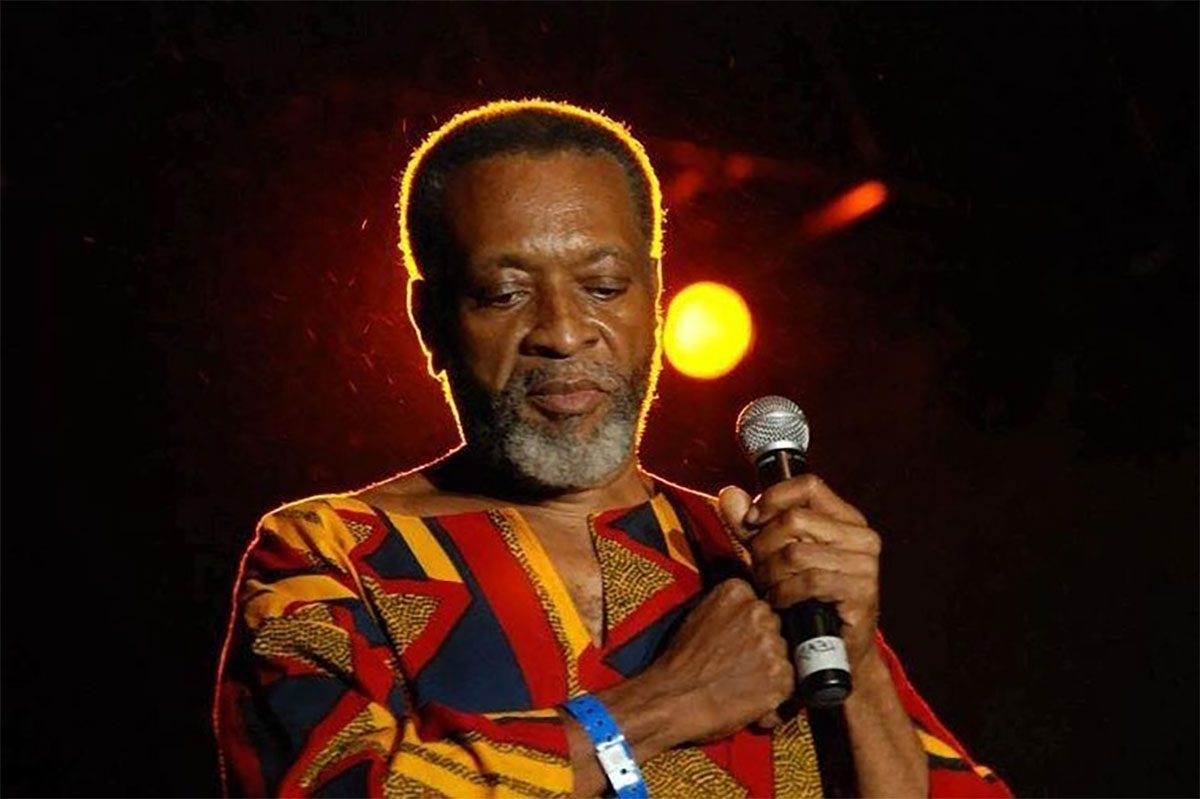
Murvin’s high falsetto gave the song an eerie quality, while the rhythm section supplied a deep, rolling foundation.
The lyrics address gang warfare and police brutality, making the record a portrait of urban violence rather than simply another dancehall or roots anthem.
The song became closely associated with the unrest surrounding London’s Notting Hill Carnival in 1976. The Clash later covered it on their 1977 debut album, helping establish a direct musical connection between Jamaican roots reggae and the emerging British punk movement.
Few reggae recordings demonstrate so clearly how Jamaican music could cross cultural boundaries without losing its identity.
7. Bob Marley & The Wailers, “Get Up, Stand Up” (1973)
“Get Up, Stand Up” is reggae as a call to action.
Written by Bob Marley and Peter Tosh, the song appeared on The Wailers’ 1973 album Burnin’. It was shaped by Marley’s experience in Haiti, where he was reportedly struck by the poverty he encountered while touring there, according to his then-girlfriend Esther Anderson.
The song’s strength comes from its simplicity. The rhythm keeps moving forward while Marley and Tosh repeatedly demand that listeners defend their rights rather than wait for someone else to do it.
Its influence eventually moved far beyond reggae audiences. The song became associated with political demonstrations and campaigns around the world, while its message remained broad enough to be adapted to different struggles.
The recording was inducted into the Grammy Hall of Fame in 1999. In 2020, Rolling Stone ranked it No. 1 on its list of the 50 greatest Bob Marley songs, while The Guardian placed it No. 2 on its own ranking of Marley’s greatest songs.
More than five decades later, the command at the center of the song remains as direct as ever.
8. Sister Nancy, “Bam Bam” (1982)
Sister Nancy’s “Bam Bam” is the record on this list that most clearly points toward the dancehall era.
Recorded in 1982 and produced by Winston Riley, the song rides the Stalag riddim associated with Ansel Collins’ “Stalag 17.”
Nancy’s performance helped establish the riddim as one of the defining instrumental foundations of Jamaican dancehall.
The chorus also draws from the 1966 Toots & The Maytals song “Bam Bam,” creating a direct connection between an earlier generation of Jamaican music and the emerging deejay culture of the early 1980s.
Nancy’s delivery was cool rather than theatrical. She did not need a huge vocal performance to command the record. Her timing, confidence and conversational style became the song’s identity.

Its afterlife has been enormous. “Bam Bam” became a favorite of hip-hop producers and appeared in films, commercials and other forms of popular culture.
The business story behind the record was considerably less celebratory. Nancy said she received no royalties from the song for decades.
After legal action prompted by the song’s commercial uses, she received 10 years of back royalties and royalties going forward in 2016.
That complicated history does not diminish the recording’s influence. If anything, it demonstrates how far a Jamaican dancehall recording could travel without its original artist initially receiving the financial rewards.
9. The Abyssinians, “Satta Massagana” (1971)
Few songs better represent the spiritual foundation of roots reggae than The Abyssinians’ “Satta Massagana.”
The song was recorded at Studio One in 1969, during the period when Clement “Coxsone” Dodd’s operation was one of the central forces in Jamaican music.
Dodd ultimately decided not to release the recording, judging that its Rastafarian message had limited commercial potential.
The Abyssinians eventually acquired the master and released the song through their Clinch label in 1971.
Part of the song is sung in Amharic, the Ethiopian language, and its title is commonly translated as an expression of giving thanks and praise.
Its slow, meditative rhythm and layered harmonies were radically different from the brighter popular sounds that dominated Jamaican music at the time.
The song’s influence grew steadily within Rastafari culture and the emerging roots movement. Its rhythm and spiritual language helped establish a blueprint for the roots reggae explosion of the 1970s.
The story is particularly remarkable because a recording that was initially considered commercially risky became one of the most enduring spiritual anthems in Jamaican music.
10. Culture, “Two Sevens Clash” (1977)
“Two Sevens Clash” captured one of the most unusual moments in Jamaican popular culture.
The Culture song referred to July 7, 1977 the seventh day of the seventh month of the year 77 and a prophecy commonly associated with Marcus Garvey.
The date acquired such a powerful reputation that many Jamaicans reportedly stayed indoors, while businesses closed and Kingston’s streets became unusually quiet.
Joseph Hill’s delivery gives the song an almost celebratory urgency, even as the lyrics describe social disorder and impending catastrophe.
Produced by Joe Gibbs, the song became the title track of Culture’s landmark 1977 album. Its impact extended beyond reggae.
British punk musicians were drawn to the record’s militant energy and apocalyptic mood, helping create a cultural bridge between the Jamaican roots scene and the British punk movement.
Johnny Rotten later helped Culture connect with Virgin Records’ Front Line reggae label, another example of how punk’s fascination with Jamaican music helped carry roots reggae deeper into the British underground.
“Two Sevens Clash” remains one of the clearest examples of reggae turning a political and spiritual idea into a record that could move both a dancefloor and a generation.
11. Augustus Pablo, “King Tubby’s Meets Rockers Uptown” (1974)
If reggae demonstrated the power of the riddim, dub demonstrated the power of the studio.
“King Tubby’s Meets Rockers Uptown” is one of the defining examples.
Augustus Pablo reworked Jacob Miller’s “Baby I Love You So” and took the track into the world of dub, where the bass, drums, echo and space became as important as the original vocal.
King Tubby’s mixing transformed the recording into something that sounded less like a conventional song and more like a new instrument built from an existing one.
The result became one of the landmark recordings of Jamaican dub.
What makes the track so important is not simply its sound. It changed the idea of what a producer or engineer could do with a recording.
The mixing desk became part of the creative process, and effects such as echo and reverb became compositional tools rather than decoration.
That approach would influence generations of reggae producers, electronic musicians, hip-hop producers and remix artists.
The album King Tubby Meets Rockers Uptown remains equally revered. It was ranked No. 2 in Mojo’s list of the 50 greatest reggae albums, behind Bob Marley & The Wailers’ Catch a Fire.
For anyone trying to understand how dub transformed Jamaican music, this is essential listening.
12. Jimmy Cliff, “Many Rivers to Cross” (1969)
Jimmy Cliff’s “Many Rivers to Cross” is one of reggae’s great songs about endurance.
Written and recorded by Cliff in 1969, the song reflected the difficulties he faced while trying to establish himself as a recording artist after moving to the United Kingdom.
The arrangement gives the song the weight of gospel, with Cliff’s voice moving between exhaustion, frustration and determination.
Unlike some of the other songs on this list, its original release was not a major chart breakthrough. Its importance grew through the decades as other artists discovered the song.
UB40 later took their version to No. 16 on the UK Singles Chart in 1983. Cher’s version reached No. 37 in the UK in 1993, while Annie Lennox’s 2008 recording reached No. 80 on the Billboard Hot 100.
Those later versions helped expose Cliff’s composition to new generations, but the original remains the definitive statement: a young artist confronting disappointment and continuing forward anyway.
Why These Songs Still Matter
Put these twelve recordings together and a larger story emerges.
Desmond Dekker and The Aces demonstrated that Jamaican music could become an international pop force. Jimmy Cliff and The Harder They Come gave reggae a cinematic vehicle that introduced its sound and culture to audiences around the world. Toots & The Maytals brought gospel, soul and Jamaican rhythm together in a way that still feels immediate.
Then came the roots era.
The Abyssinians turned Rastafari spirituality into a musical language. Culture transformed prophecy and political anxiety into an anthem.
Bob Marley and Peter Tosh turned reggae into a worldwide language of resistance. Junior Murvin and Lee “Scratch” Perry connected Jamaican roots music to Britain’s punk generation. And then there was dub and dancehall.
King Tubby’s studio experiments demonstrated that the mix itself could become a performance. Sister Nancy’s “Bam Bam” showed how a deejay could take an established riddim and create something that would continue circulating through hip-hop, film and popular culture decades later. The songs also share something deeper.
They are records about hardship, faith, injustice, freedom, survival, spirituality and the refusal to accept defeat.
Some were made in small Kingston studios. Some were recorded with modest equipment. Some initially seemed too strange or too political to have commercial potential. Others crossed borders through films, sound systems, punk clubs and sampling. Yet they survived.
That is ultimately what makes a great reggae song endure. Not simply chart position, sales or critical acclaim, but the ability to remain useful to keep speaking to new listeners, new struggles and new generations. These twelve records did exactly that.