

Before the Oscar, before the Grammys, before he even dropped half his name, Common was a hungry Chicago MC with a spot in The Source’s Unsigned Hype column.
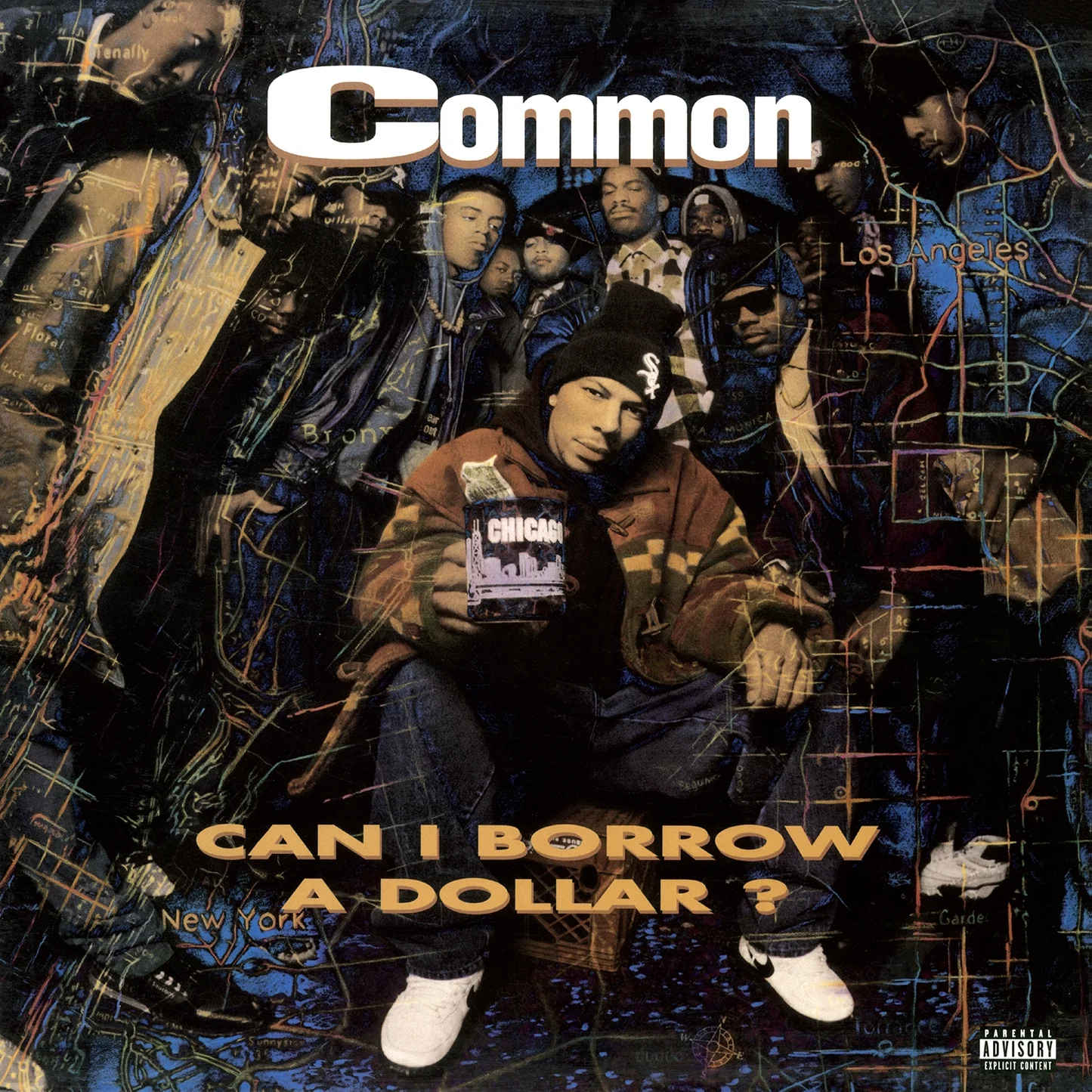
That nod gave him some early buzz heading into his first record deal. Then he had to prove it on wax with Can I Borrow a Dollar?
The album landed on Relativity Records in 1992, credited to Common Sense. It runs 13 tracks and close to 49 minutes, which feels lean by today’s standards. Nothing about it overstays its welcome.
The production credits tell you a lot about where Chicago rap was headed. No I.D. and the Twilite Tone handled beats alongside the Beatnuts, the Queens crew who brought some East Coast grit to the mix.
No I.D. would go on to become one of the most respected producers in the game and a mentor to a young Kanye West.
Three singles carried the record: Take It EZ, Breaker 1/9, and Soul by the Pound. Each one put a rapper on display who loved wordplay and wasn’t shy about having fun with it.
Guest spots came from Immenslope, Miss Jones, and Rayshel, keeping the cast small and the spotlight on Common himself.
Here’s the thing about debut albums from artists who later get huge. They tend to get filed away as warmups. Can I Borrow a Dollar? often lives in the shadow of 1994’s Resurrection, the album that gave us I Used to Love H.E.R. and turned Common into a name serious hip hop heads couldn’t ignore.
Fans who go back to the debut hear something different, though. It’s playful, a little rough around the edges, and full of a young MC figuring out his voice in real time.
You can hear the curiosity that later shaped Like Water for Chocolate and Be, even if the polish isn’t there yet.
The name change came a few years later. A band also called Common Sense took legal action over the moniker, and the rapper shortened it to just Common. That makes this debut a time capsule in more ways than one.
Rap-Up recently revisited the album with a photo post and a simple question for fans: what’s your favorite track off Can I Borrow a Dollar?
The answers show how differently listeners connect with early Common. Some go straight for the singles, while others champion the deeper cuts that never got much radio love.
More than three decades on, the record keeps finding new ears, especially as younger fans trace Common’s catalog backward from his later work.
The Unsigned Hype kid who asked to borrow a dollar ended up with a whole lot more. The debate over the best track from that first outing isn’t settling anytime soon.