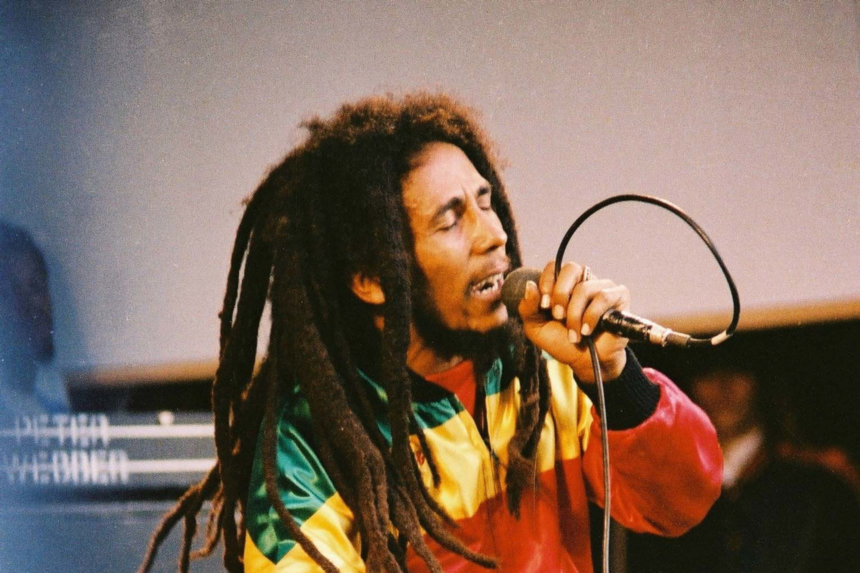

“Could you be loved” is one of the most deceptively layered questions Bob Marley ever set to music. On its surface the song is a groove-driven, rhythmically irresistible track.
Beneath that groove is a Rastafarian sermon, a commercial gamble, a bridge between reggae and disco, and the quiet urgency of a man racing against time.
This guide unpacks the meaning of ” Could You Be Loved ” in full, tracing the song’s origins, its lyrical themes, its chart history, and the enduring legacy that has carried it past one billion streams more than four decades after its release.
Origins: Written on an Aeroplane in 1979
Written in 1979 on an aeroplane while The Wailers were experimenting on guitar, “Could You Be Loved” has been described as a reggae and disco fusion.
The guitar riff at its centre has a specific backstory. Wailers guitarist Junior Marvin originated the song in London. He was fooling around on his guitar and came up with the opening guitar riff.
Marvin recalled to Uncut magazine: “Bob said, ‘What’s that?’ I said it was just something I was messing around with, and he said, ‘Can I use it?’ Then we went to Brazil together with Jacob Miller from Inner Circle, and we completed the song together.”
The Brazil connection left a permanent mark on the recording itself. A cuica, a Brazilian friction drum, slides into the intro, tying the track back to the country that embraced Marley.
Other instruments used on the original record are guitars, bass, drums, acoustic piano, the Hohner Clavinet and an organ, as well as the Brazilian cuica.
Marley’s motivation for writing the song was, in part, strategic. Marley wrote this song with hit potential in mind. He wanted to break into the American market ahead of a big tour that took him into the States, which was his last, the Uprising tour.
He figured that his reggae music would not be easily accepted among mainstream Black audiences, so he wrote this song with a faster, almost disco beat.
That calculation was confirmed years later in print. In the liner notes to the 1992 Marley box set Songs of Freedom, “Could You Be Loved” is described as “consciously recorded with a sound that would appeal to Black American radio programmers.”
Indeed, it’s Marley’s only single to make the Billboard Dance chart, thanks in part to a disco groove and irresistibly fluttering keyboards.
Context within Marley’s health adds another dimension to the song’s urgency. As the Wailers began work on what would be their last album, he was also frequently ill as he had lived with the 1977 diagnosis of the cancer that would kill him a year after Uprising’s release.
Release and Chart Performance
“Could You Be Loved” was released on 16 May 1980 on Island Records, and appeared as the first single from their twelfth and last album, Uprising, which also included it on their greatest-hits album Legend (1984).
Uprising was recorded between January and April 1980 at Tuff Gong Studios in Kingston, Jamaica, and produced by Chris Blackwell and Bob Marley.
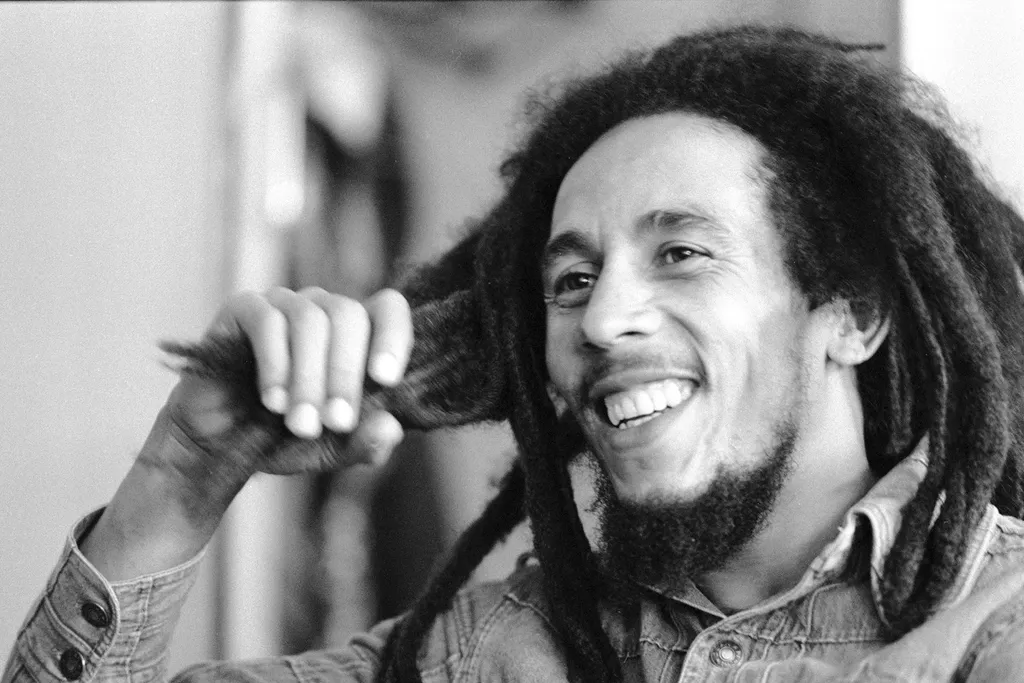
The single was a major commercial success in Europe. It peaked at number 2 on the Dutch Top 40 and number 5 on the UK Singles Chart in 1980. It also charted at number 6 in Spain, number 10 in Norway, and number 13 in West Germany.
According to the Official UK Charts, the single spent 16 weeks on the chart. The song was very successful on the charts in Europe, peaking within the top 10 in Belgium, France, Ireland, Italy, the Netherlands, Norway, Spain, Switzerland and the UK. Additionally, it was a top 20 hit in Sweden and West Germany.
In the United States, where the song had been engineered to break through, results were more modest but still significant.
In the US, it reached number 56 on the Hot Soul Singles chart and became a dance club favorite, reaching number 6 on the Hot Dance Club Play chart.
The push into the American market was backed by a calculated radio strategy. According to industry insider Copeland Forbes, Marley’s manager Danny Sims struck a deal with Frankie Crocker of WBLS FM in New York to give Marley one month of continuous airplay of the single “Could You Be Loved.”
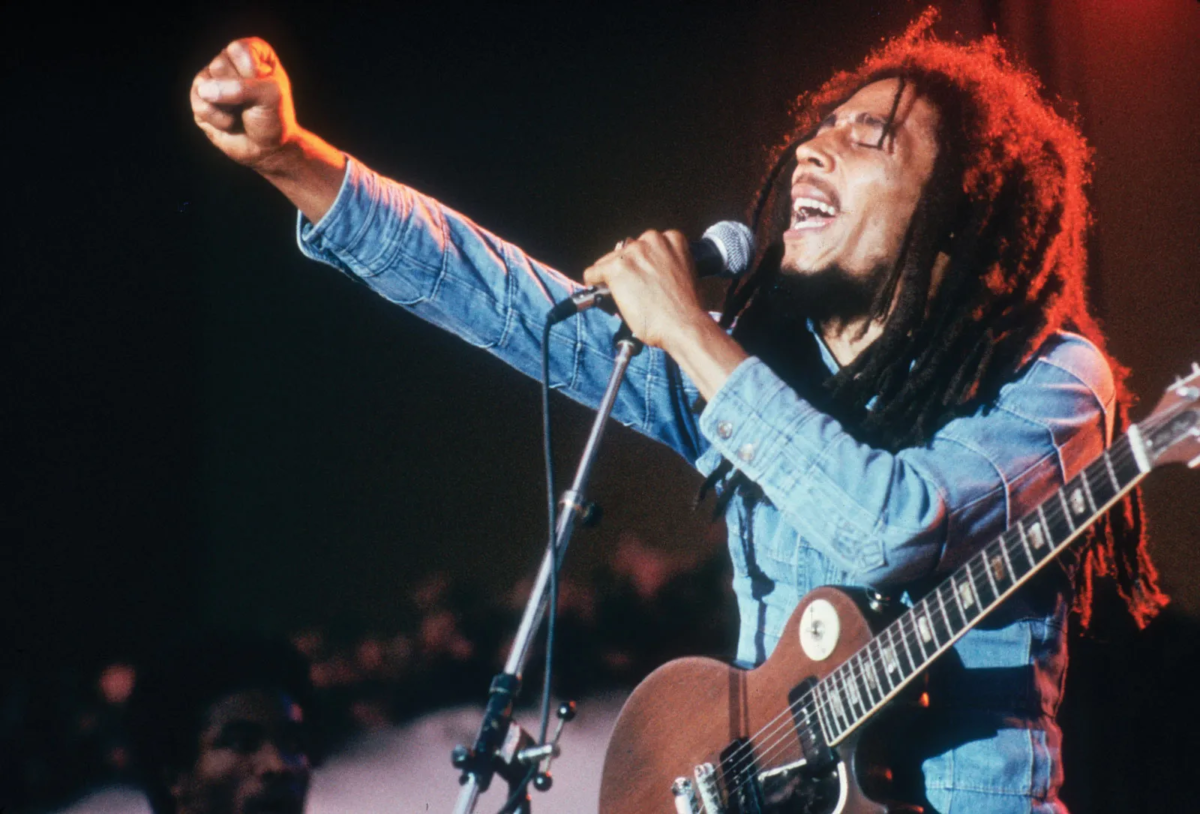
Marley would open for the Commodores at MSG on September 19 and 20, 1980, for a small stipend to cover the band’s expenses, with no funds going into Marley’s own pocket.
Certifications have accumulated across multiple markets. The song has been certified platinum in multiple countries, including the United Kingdom, where it sold over 1.2 million units. Other certifications include platinum in Spain and Italy and 5x platinum in New Zealand.
“Could You Be Loved” Meaning: A Multi-Layered Question
The lyrics to this song read like a disjointed sermon/prayer, where psalms and Bible verses encapsulated into one-liners marry preeminent Rastafarian themes like righteousness and revolution. The central question, “could you be loved?”, resists a single interpretation because Marley designed it that way.
Some think it is a love song. Others say Marley wrote it as a ballad to the poverty and struggle he witnessed, while still others claim he wrote it on a plane from Brazil in response to how much love he received when he performed there. Some even see it as being about a man reaffirming his faith in the face of personal struggle.
At its most direct Rastafarian reading, the song poses a dual question about worthiness. The opening couplet, “Don’t let them fool ya, or even try to school ya,” establishes the song’s adversarial frame immediately.
The line “Don’t let them fool ya, or even try to school ya” is read as a reference to the powers that be that cloud minds from a very early age.
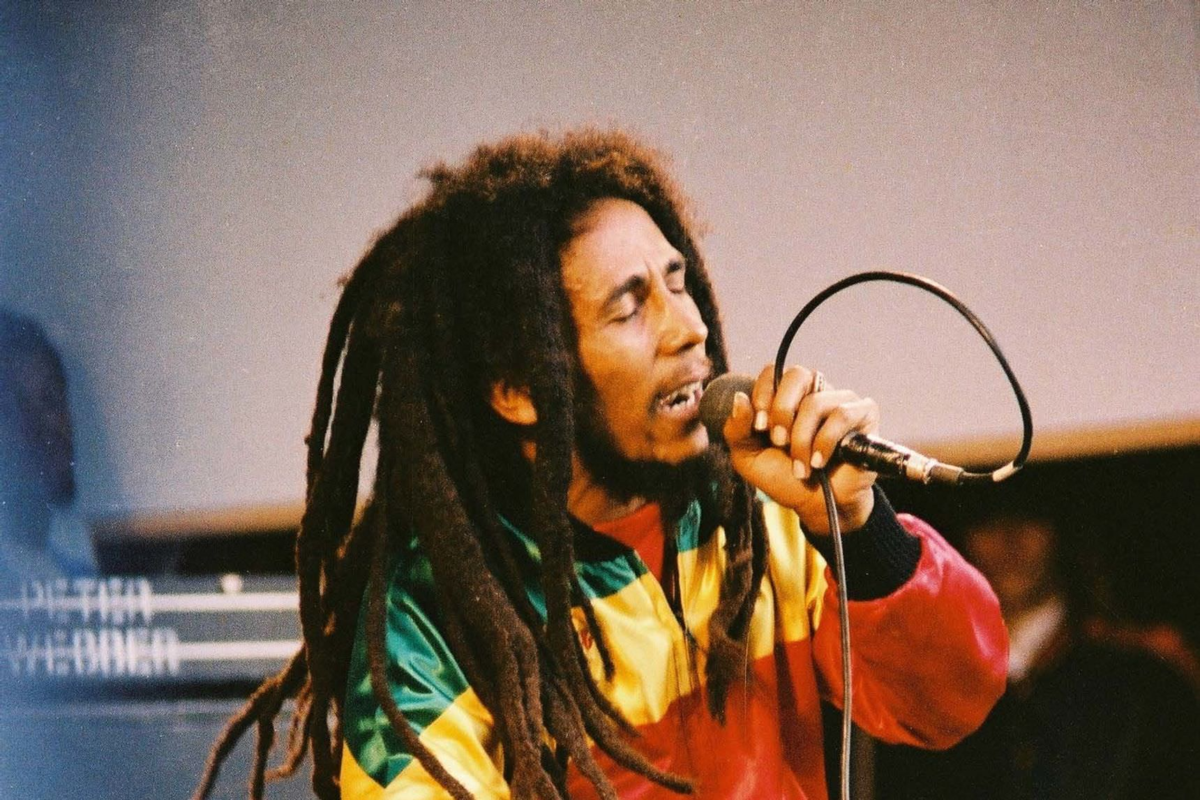
The imperative that follows, “you have a mind of your own,” is not just encouragement. For Marley, love must start from inner strength, not obedience.
The line “Love would never leave us alone” could be a reference to Jah, or God, as “love.” When combined with the imagery of “darkness that must come out the light,” invoking the Bible verse from Luke 8:17, the lyrics may mean that Jah will never leave you, so do not worry about anything oppressing you because Jah will reveal and destroy it.
“Don’t let them change ya! Or even re-arrange ya!” reinforces the opening lines. Both lines could be warnings against allowing agents of Babylon to tamper with the righteousness of Jah’s children.
In Rastafarian cosmology, Babylon is the corrupt social and political order that oppresses the righteous. In the Rasta framework Marley used throughout his work, Jah represents goodness and love, while Babylon is a destructive force.
Every warning in the song, from being fooled to being changed to being “rearranged,” is a warning against surrendering identity and spiritual rootedness to that system.
The recurring phrase “only the fittest of the fittest shall survive” draws on both Darwinian language and Rasta resilience theology. The song is considered by many reggae fans to be disco influenced, and by extension influencing the dancehall genre.
That genre bridge was not accidental: wrapping a theological argument in a rhythm designed for the dance floor was itself an act of subversion, getting the message past the gatekeepers who controlled mainstream radio.
One of the most musically deliberate moments in the song arrives mid-track. In the middle of the song, background singers quote a verse from Bob Marley’s first single, “Judge Not”: “The road of life is rocky; And you may stumble too.
So while you point a finger, someone else is judging you.” The self-quotation is not incidental. The song features sampled lyrics from Marley’s very first single, “Judge Not,” and was featured on the band’s twelfth album, Uprising, and later included in the greatest hits album Legend (1984) and the Songs of Freedom (1992) box set.
By embedding a lyric from the very beginning of his career into one of his final recordings, Marley created a circle: a life’s work in which the warning against judgment and the call toward compassion remained constant from the first song to the last.
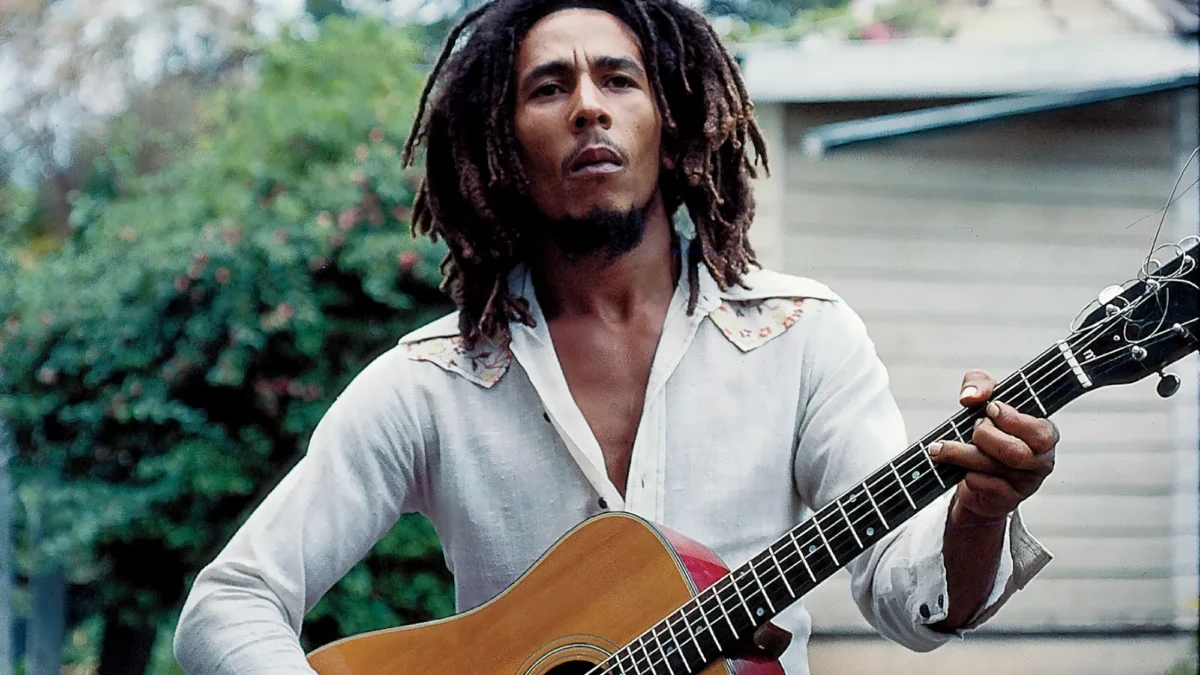
The song also carries a philosophical dimension about self-love as the precondition for receiving love from others or from Jah. Marley not only poses an important question in this song but a challenge: can we truly allow ourselves to love and be loved?
People, society, and corporations will always try to convince us to be who they want us to be, but Marley reminds us that we need to trust our own minds and our own hearts to be who we really are, to love ourselves exactly as we are, rather than conforming to what others want us to be.
The line “Love would never leave us alone, ay in the darkness there must come out the light” further emphasizes that love is not a fleeting feeling; it doesn’t come and go but is always there. It is a guiding force that can be called upon at any time.
It is the light that carries us through even the most challenging times. Marley reminds us that love is constant and critical in overcoming hardship.
Production, Sound, and Genre Fusion
The sonic architecture of “Could You Be Loved” was itself a statement. Marley wanted a song that could break into the American market: faster than roots reggae, with the disco pulse then dominating US radio.
Producer Chris Blackwell worked with Marley to achieve a cleaner, more crossover-ready sound without stripping out the Rastafarian lyrical content.
The result is a track that lives between two worlds, rhythmically accessible and ideologically uncompromising, which is precisely why it has endured.
The cuica, the Brazilian percussion instrument that opens the track, is both a geographical tribute and a sonic signifier.
It announces from the first seconds that this music belongs to the African diaspora as a whole, not to any one market or audience.
Legacy and Streaming Milestones
Released as the first single from Bob Marley and the Wailers’ twelfth studio album Uprising in 1980, “Could You Be Loved” surpassed one billion streams on Spotify as of September 19, 2024.
This milestone marked Marley’s second song to cross the billion-stream threshold, following “Three Little Birds,” which reached the milestone in July.
Bob Marley and the Wailers are now the first reggae act with two solo songs surpassing one billion streams on Spotify. The song currently garners approximately 600,000 streams daily worldwide.
Damian “Jr. Gong” Marley, who sampled the song in his 2002 track “And Be Loved,” once commented on its innovation, stating, “I don’t think he ever went further away from traditional reggae than with this song.
My father was far ahead of his time.” It marked Marley’s only entry on the Billboard Dance chart, peaking at number 6.
The song’s cultural reach has extended beyond music. The track was played right after the 2010 FIFA World Cup Final.
Its popularity has also been sustained through its inclusion on Marley’s Legend compilation album released in 1984, the best-selling reggae album of all time.
Other artists have kept the song alive through reinterpretation. British pop duo Shakespears Sister recorded a cover of the song, which was included on the CD editions of their 1989 album Sacred Heart.
Bob Marley’s sons Damian and Stephen Marley covered the song and renamed it “And Be Loved” for the soundtrack to the 2002 surfing film Blue Crush.
Why the Question Still Matters
The “Could You Be Loved” meaning ultimately rests on the idea that love is not passive. For Marley, it was a discipline requiring resistance to external manipulation, commitment to self-knowledge, and faith in a divine force that does not abandon the righteous.
The question in the title is not rhetorical. It demands an honest self-inventory: have you protected your mind and your identity well enough, held onto your own truth firmly enough, to remain capable of giving and receiving genuine love?
Bob Marley and the Wailers’ 1980 hit “Could You Be Loved” has reached one billion plays on Spotify, marking the reggae legend’s second song to achieve this milestone and the eighth Jamaican-led song to do so on the platform overall.
Numbers of that magnitude suggest the question Marley posed on an aeroplane over the Atlantic in 1979 has not yet been fully answered, which may be the most powerful testament to the song’s writing of all.