
“Is This Love” meaning has intrigued reggae fans and casual listeners alike for nearly five decades. The short answer: Bob Marley’s most beloved romantic song is a declaration of wholehearted, domestically grounded love, threaded through with Rastafarian spirituality and delivered at a moment when Marley was consciously stepping back from political fire. But as with almost everything Marley wrote, the surface warmth conceals layers worth unpacking.
The Song at a Glance
“Is This Love” was released as a single on 3 February 1978, taken from the album Kaya, on the Tuff Gong and Island labels. The song runs 3 minutes and 52 seconds and was written solely by Bob Marley.
It became one of Marley’s best-known songs, was later included on the Legend compilation, and peaked at number 9 in the UK Singles Chart upon its release.
In August 2024, the British Phonographic Industry certified the track 2X Platinum in the United Kingdom, a milestone representing 1,200,000 units sold as measured by The Official Charts Company. On Spotify alone, the song has been streamed over 696 million times.
The Album Context: Kaya and the Road Back to Jamaica
To understand the “Is This Love” meaning fully, you need to understand Kaya and the circumstances under which it was made.
Kaya was released on 23 March 1978 and was recorded in January through April 1977 at Island Studios in London. The album’s tracks were recorded alongside those that appeared on the Exodus album.
Its release coincided with the One Love Peace Concert, heralding Marley’s triumphant return to Jamaica from exile in London.
The album has a very relaxed, laid-back sound, stepping away from the militant quality of the Wailers both lyrically and musically. They received criticism for “going soft” as a result of the general sound of the album as well as the theme: songs primarily revolving around love, as well as marijuana.
That criticism stung some fans, but Island Records founder Chris Blackwell offered a more grounded perspective. In the liner notes for Africa Unite: The Singles Collection, Blackwell noted: “Is This Love is a great song, and I was always very happy with Kaya, the album it came from. It had a very summery, carefree feel.
When the album came out, several reviewers said he’d gone soft. But Bob was feeling great at that time, and those songs reflected how he was feeling.”
Lyrically, the songs on Kaya avoided the political commentary or Rastafarian philosophizing that was at the forefront of Natty Dread and Rastaman Vibration, and instead emphasized tunes about love and ganja. Even the standout “Is This Love,” one of Marley’s definitive love songs, favours simplicity and directness.
After the political turmoil Marley and his band had been involved in, Kaya contained more songs about tamer subjects. The Wailers had only recently survived the December 1976 assassination attempt on Marley at his Kingston home, and the band had spent the intervening period in London.
The warmth radiating from “Is This Love” is not naivety; it is the sound of a man who had genuinely stared down danger and was choosing, deliberately, to write about tenderness.
The album was recorded with the then-new configuration of the Wailers that comprised brothers Carlton and Aston “Family Man” Barrett on drums and bass, Tyrone Downie on keyboards, Alvin “Seeco” Patterson on percussion, and the I Threes — Rita Marley, Marcia Griffiths, and Judy Mowatt — on backing vocals, along with newest member Julian (Junior) Marvin on guitar.
What “Is This Love” Is Actually About: A Verse-by-Verse Reading
The song begins with entreaties of love to a beloved, carrying a promise to be loving and just. It follows with a statement of commitment promising to love “every day and every night,” with the emphasis on “every” as repeated twice reinforcing that commitment.
The narrator is not yet confessing love; he is checking it against reality. The title phrase functions as a sincere question, not a rhetorical flourish. He says he wants to treat her right, share his bed, spend time with her, provide for her, and he is ready and able.
Why then the question “Is This Love?” He clearly is in love. Perhaps he is simply hesitant. Declarations of love putting yourself out there to potentially be rejected are difficult.
The verses lay out a simple, yet deeply intimate tableau: sharing a home, a bed, and life’s necessities. These images a roof over their heads, a single bed, the same room are not accidental. They reflect a specific social reality.
The lyric “share the shelter of my single bed” strengthens the commitment in the human world where they will live together, copulate, and grow together sharing the same room.
The song’s verses paint a picture of a simple yet profound life together, where material possessions take a backseat to the essentials of love and companionship.
Marley’s vision of sharing a single bed and the same room, with the roof over their heads and “Jah” providing for their needs, speaks to a partnership grounded in equality, unity, and faith.
The line in which Jah provides the bread is where “Is This Love” departs from conventional pop romance and enters Marley’s deeper spiritual world.
The divine aspect is instilled with the mention of Jah, a Rastafarian word which is the poetical and Biblical name of God, from a shortened form of Jahweh or Jehovah found in Psalms 68:4.
This is fundamental and deep because it is uncommon in everyday love songs to find such a spiritual balance where a lover commits the upkeep of the family into the hands of the Almighty.
Many scholars view the song as a synthesis of Christian and Rastafarian imagery, particularly the reference to Jah providing bread.
The domestic and the divine are not in tension here; they are woven together. Love, in Marley’s framework, is not complete without a spiritual anchor.
By the song’s closing section, the narrator has resolved his own question. The line “I am willing and able so I put my cards on your table” shows how he has put himself out there now it is up to her to decide if she feels the same. The question mark of the title becomes, by the final verse, a quiet declaration.
The Music Video: A Young Naomi Campbell
The music video, shot in London at the Keskidee Centre, featured nine-year-old Naomi Campbell, who years later expressed nervousness about meeting the reggae legend.
The supermodel recalled: “I remember being really nervous, being brought to this room to meet Bob Marley and I was like ‘I don’t want to meet him, he’s got worms in his hair.’ He was so handsome, he had this presence very much like a lion.”
The original video is notable for including the first public appearance by future supermodel Naomi Campbell.
Chart History and Certifications
The song spent nine weeks on the UK Singles Chart in 1978, peaking at number 9. Internationally, it reached number 11 in Australia (Kent Music Report), number 8 in both New Zealand and Norway, number 16 in Sweden, and number 39 in the Netherlands.
The song’s chart story did not end in 1978. A remix version featuring Lvndscape and Bolier reached number 16 as a single in the UK. Lvndscape and Bolier are Dutch DJs and producers.
The song appeared on the Kaya album and later as the first track on the iconic compilation Legend: The Best of Bob Marley & The Wailers.
According to UK airplay data compiled by PPL, “Is This Love” ranks among the five most-played Bob Marley songs on UK radio and TV in the 21st century, completing the top five alongside “Could You Be Loved,” “One Love,” “Three Little Birds,” and “No Woman, No Cry.
The Live Version and the Babylon by Bus Recording
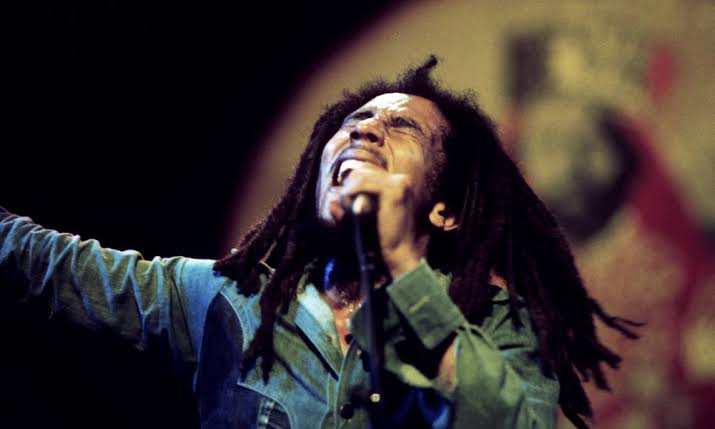
A live rendition of the song can be found on the Babylon by Bus live album, recorded in Paris in 1978. That performance captures the song in a concert environment just months after the studio version was completed, and illustrates how “Is This Love” translated immediately into a crowd favourite, its repeating chorus and unambiguous emotional warmth made it one of the most singalong-ready tracks in the Wailers’ catalogue.
Notable Covers and Samples
The “Is This Love” meaning has proven translatable across genres, attracting cover versions and interpolations from artists spanning rock, R&B, pop, and electronic music.
Corinne Bailey Rae took home the Grammy Award for Best R&B Performance for her 2011 cover of “Is This Love.” The win came at the 54th Grammy Awards, where she beat out competition including Marsha Ambrosius, Ledisi, Kelly Price, and Charlie Wilson.
Pat Travers recorded a cover on his 1980 album Crash and Burn, while Carly Simon covered it on her 1983 album Hello Big Man. The song has been featured in movies including the 2004 film 50 First Dates, and has been covered by artists including Carly Simon, Gwen Guthrie, Rihanna, Corinne Bailey Rae, and former American Idol finalist Adam Lambert.

A reference to the song also appears in the lyrics of James Blunt’s “Stay the Night,” the first single from the 2010 album Some Kind of Trouble.
Bon Jovi’s song “Lay Your Hands on Me” opens with lyrics that bear a clear similarity to the lyrics of “Is This Love.”
Why “Is This Love” Still Resonates in 2026
The “Is This Love” meaning endures because Marley made the universal intimate and the intimate universal. He did not promise riches, status, or grand gestures. He promised a roof, a shared bed, and faith that the basic necessities would follow.
The song demonstrates an unconventional structure that captures listeners with its recurring main hook and extensive verse material.
The album emerged at a time when Marley, a massive star in Europe, the UK, and Jamaica, was primed for a breakout in the United States.
As AllMusic’s Mark Deming later wrote, “Kaya presented a gentler and friendlier version of Bob Marley & the Wailers, but it also documented Marley and his group at the peak of their abilities.”
Within that peak, “Is This Love” stands as the clearest expression of what Marley could do when he stripped politics aside and wrote simply about wanting to be loved and about the quiet, grounded courage it takes to ask whether what you are feeling is real.
Bob Marley’s music has racked up over four years of cumulative airplay since 2001 in the UK alone and “Is This Love” has been one of the most persistent drivers of that legacy.