
The redemption song meaning is not a single, tidy statement. It is a convergence of Transatlantic slavery, Pan-African philosophy, Rastafarian faith, and a dying man’s most personal reckoning with his own mortality.
“Redemption Song” is a folk ballad played entirely with acoustic guitar, and what counts above all else in the composition are the words: Marley crafted a text addressed to all his listeners and able to refer to several historical events.
Forty-six years after its release, the song remains one of the most examined pieces of music ever committed to tape.
Recording and Release: The Final Statement on Uprising
“Redemption Song” is a song by Jamaican singer Bob Marley, and it is the final track on Bob Marley and the Wailers‘ album Uprising, produced by Chris Blackwell and released by Island Records.
The album was recorded between January and April 1980 at Tuff Gong Studios in Kingston, Jamaica, and released on 10 June 1980.
The song was produced by Bob Marley himself, recorded at Tuff Gong Studios in Kingston, Jamaica, and clocks in at 3:47 in its original form.
Unlike most of Bob Marley’s tracks, it is strictly a solo acoustic recording, consisting of Marley singing and playing an acoustic guitar, without accompaniment. The song is in the key of G major.
Redemption Song” was released as a single in the UK and France in October 1980, and included a full band rendering of the song.

That band version was later included as a bonus track on the 2001 reissue of Uprising, as well as on the 2001 compilation One Love: The Very Best of Bob Marley & The Wailers.
Although in live performances the full band was used for the song, the solo recorded performance remains the take most familiar to listeners.
The Marcus Garvey Connection: Mental Slavery and Self-Liberation
The philosophical heart of “Redemption Song” does not originate with Marley alone. The famous lyric “Emancipate yourselves from mental slavery / None but ourselves can free our minds” originated with Marcus Garvey, drawn from his 1937 speech “The Work That Has Been Done,” given at Menelik Hall in Nova Scotia.
Most Canadians know the music of Bob Marley, but few are aware that the lyrics to one of his greatest hits were born in a 1937 speech delivered by Black rights activist Marcus Garvey in Sydney, Nova Scotia.
Garvey’s speech was delivered in Nova Scotia, Canada, on October 1, 1937, in which he said: “We’re going to emancipate ourselves from mental slavery because while others might free the body, none but ourselves can free the mind.”
Marley paraphrased this 1937 speech by Marcus Garvey given in Sydney, Nova Scotia. The title of the song also refers to the Garveyist goal of African redemption.
In invoking Garvey, Marley taps into a lineage of Black radical thought, a continuum that understands freedom not merely as the absence of chains but as the reclamation of one’s humanity. Garvey’s vision of self-reliance and African unity becomes, through Marley, a plea and a prophecy.
The wording is derived from the teachings of Marcus Garvey (1887-1940), who is himself seen by many as the greatest Black prophet of the early 20th century.
Verse by Verse: What the Lyrics Actually Mean
The lyrics start off in the past, with Marley making a reference to the Transatlantic Slave Trade. The opening lines describing pirates who “rob I” and sell the narrator “to the merchant ships” speak directly to the forcible removal of Africans from their homeland and their sale into bondage. Yet the verse does not end in despair.
The speaker’s hand is “made strong / By the hand of the Almighty,” a declaration of Rastafarian faith and divine resilience that carries the narrator, and his people, forward into the present generation “triumphantly.”
The song speaks to slavery, environmentalism, religion, and civil action all within a four-minute composition. The reference to “atomic energy” in the chorus is Marley’s assertion that cosmic and spiritual truth outlasts even the most destructive technology mankind has devised.
The Chorus: A Call for Inner Freedom
The chorus is simultaneously the song’s most intimate and most universal moment. The words refer to an unacceptable condition of mental slavery of the whole of humanity: the listener is told that only they can free themselves from their fears and meet their own future. Marley does not offer an external saviour. He insists that liberation is an internal act.
In paraphrasing Garvey, Marley suggests that those he is addressing have the means within them to break free from any figurative bonds. He also suggests that technological advances pale in comparison to cosmic truths.
The line “How long shall they kill our prophets while we stand aside and look?” carries double resonance. On one level it reads as a lament over the repeated assassination of Black leaders throughout history.
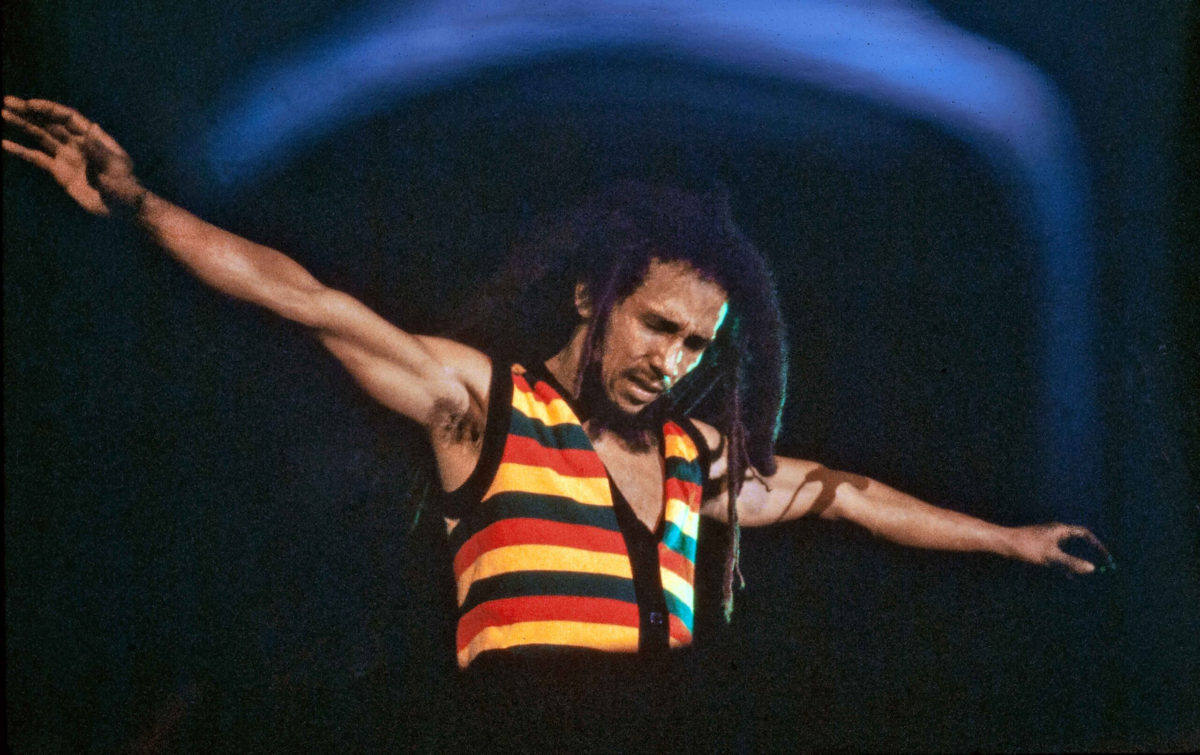
Knowing Marley’s awareness of his own mortality, the line adds a layer of poignancy: Marley, aware he was dying, seemed to be writing his own epitaph, a final testament to his faith in the power of music to inspire change.
The closing invocation, asking the listener to help sing “these songs of freedom,” and the repeated refrain that these redemption songs are “all I ever had,” frames music itself as a form of spiritual salvation.
The song took in Marley’s own feelings about his imminent death, slavery and its impact on the minds of its descendants, religion, and destiny expressed through the line “We’ve got to fulfill the book.”
The Jamaican artist found the right inspiration to compose a ballad that deals with freedom, but not simply physical freedom: rather an abstract, mental freedom that can be reached with the right awareness and shared with others.
Why an Acoustic Song? The Deliberate Departure from Reggae
The fact that “Redemption Song” was such a drastic departure from Marley’s other recordings is evidence that he had a fond farewell in mind.
Instead of the reggae beats for which he was known, the song presents Marley alone with an acoustic guitar.
Musically, “Redemption Song” sounds sparse, and in a sense it is: Marley recorded it with just an acoustic guitar, mixed low at that. But the melody comes through despite the minimalist production, adding power to the lyrics.
Biographer Timothy White called it an “acoustic spiritual,” and another biographer, Stephen Davis, pointed out the song was a “total departure,” a deeply personal verse sung to the bright-sounding acoustic strumming of Bob’s Ovation Adamis guitar.
Written in the Shadow of Illness
The biographical context is inseparable from the redemption song meaning. At the time he wrote the song, circa 1979, Bob Marley had been diagnosed with the cancer that later was to take his life.
According to Rita Marley, “he was already secretly in a lot of pain and dealt with his own mortality, a feature that is clearly apparent in the album, particularly in this song.”
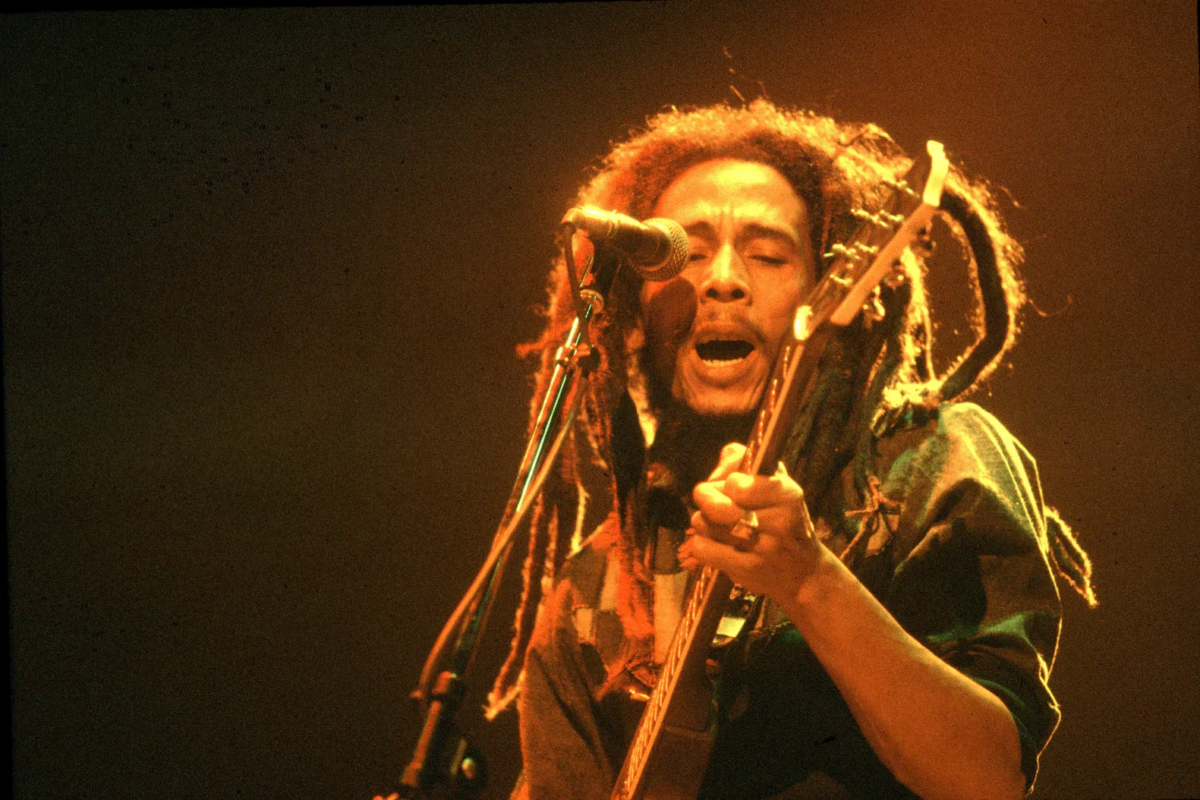
The lyrics of “Redemption Song” are often regarded as the final message he left behind to the world. While there is no indication that Marley knew for certain the song would be his last recorded document, the contemplative mood of Uprising and the fact that he had been battling the cancer for years suggests he knew the end was near.
The Last Performance: Pittsburgh, September 23, 1980
Recorded at the Stanley Theatre in Pittsburgh on September 23, 1980, during the Uprising tour, this was to be Marley’s last recorded concert. He died less than eight months later.
Marley had collapsed while jogging in Central Park days earlier. An examination revealed that the blackout had been caused by a brain tumor, and later tests confirmed that the cancer had spread throughout his lungs, liver, and brain.
Thin, weak but determined, Marley gave what would be his last live performance two days later in Pittsburgh, Pennsylvania on September 23.
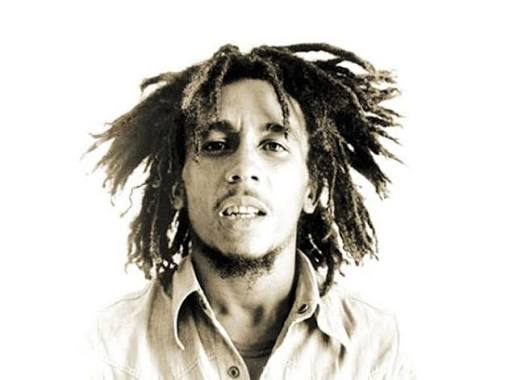
Marley returned for an emotional, stripped-down performance of “Redemption Song,” playing solo on an acoustic guitar, his voice carrying a haunting resonance, filling the room with both melancholy and hope.
After the Pittsburgh show, the rest of the tour was cancelled. Marley’s health had declined to the point where performing was no longer an option, and he returned to Germany for experimental cancer treatment.
Marley died on May 11, 1981, in Miami, Florida, in the midst of trying to fly from Germany, where he had been undergoing an experimental naturopathic treatment, to his native Jamaica.
Legacy and Critical Standing
The song’s reputation has grown steadily in the decades since Marley’s death. In Rolling Stone magazine’s updated list of the 500 Greatest Songs of All Time, Bob Marley and The Wailers is ranked among the top 50 at Number 42 with “Redemption Song,” its highest placement on either edition of the list.
The 2021 list was compiled from a poll of more than 250 artists, writers, and industry stakeholders who reviewed over 4,000 songs. Previously, in 2004 Rolling Stone had placed the song at No. 66 among The 500 Greatest Songs of All Time.
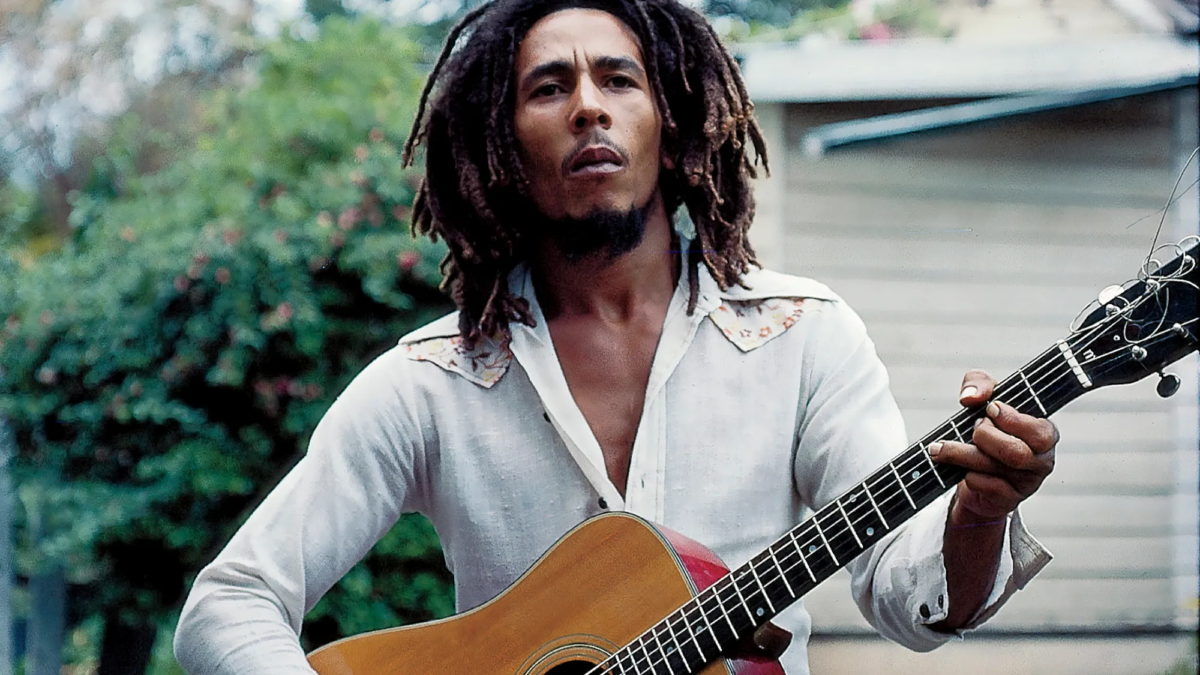
In 2010, the New Statesman listed it as one of the Top 20 Political Songs. In 2009, Jamaican poet and broadcaster Mutabaruka chose “Redemption Song” as the most influential recording in Jamaican music history.
Why “Redemption Song” Still Matters
The song drew from the works of civil-rights campaigner Marcus Garvey and sums up Marley’s life and everything he stood for in his songs: freedom and redemption.
It achieves what only a handful of recordings in any era manage: it exists simultaneously as personal confession, political manifesto, and spiritual hymn.
The redemption song meaning is, at its most essential, a reminder that no external force, whether a slave ship, an atomic bomb, or a failing body, can extinguish the mind that chooses to be free.
It seems everyone who is into music knows this song. It is Bob Marley’s anthem of anthems, a testament passed to us at the end of his life to remind us how we had arrived where we were, and to help us carry on in his absence.